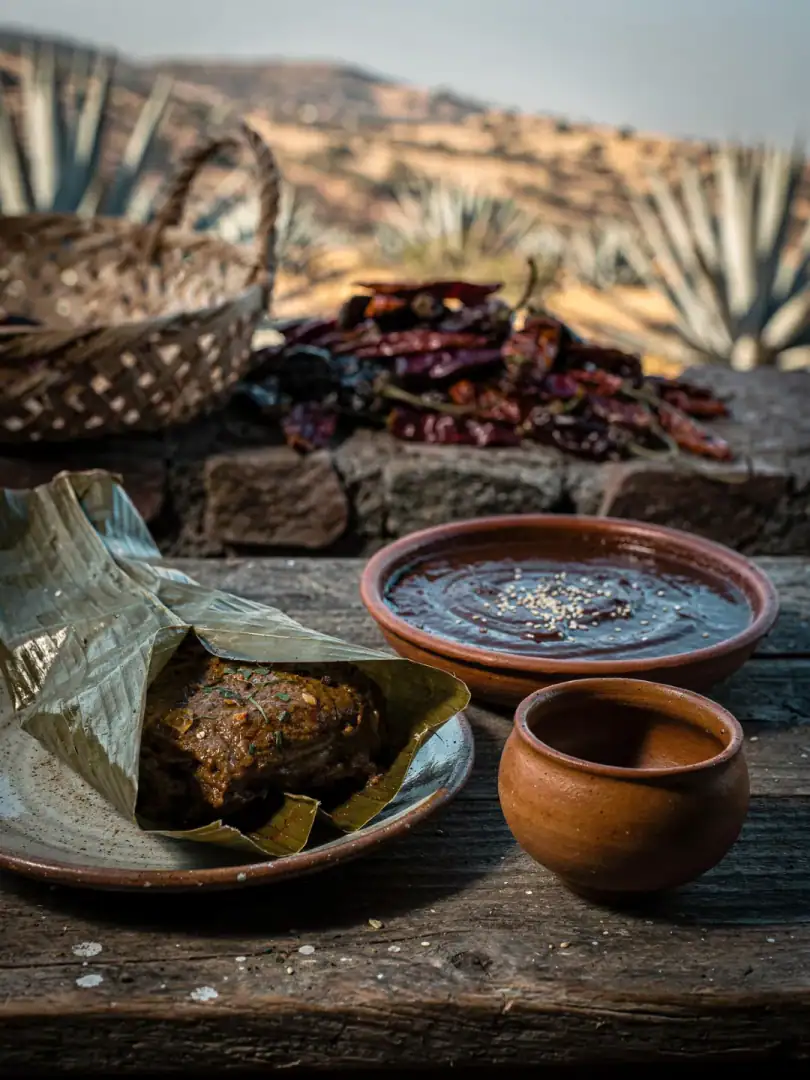
Mole, Nogada, Mixiote
Food & Drink
The cuisine of Puebla is world-famous for its Mole. This dark, complex sauce is made from mulato, pasilla, ancho, and chipotle chilies, along with almonds, sesame, peanuts, and chocolate. Legend has it that the nun Andrea de la Asunción invented it in the 17th century at the Convent of Santa Rosa, supposedly for the visit of a Spanish viceroy. The sauce's roots, however, reach far back into pre-Hispanic times, to a simpler chili sauce called mulli.
Just as quintessentially Poblano are Chiles en Nogada: green poblano chilies stuffed with meat and fruit, topped with a white walnut sauce and red pomegranate seeds. On the plate, this creates the colors of the Mexican flag. The dish only became possible once Franciscan monks planted Mexico's first Castilian walnut trees around 1539 in nearby Calpan.
In the center of the state, closer to Zapotitlán Salinas and Caltepec, people tend to eat Mixiote instead. This is seasoned beef or pork with guajillo chili, wrapped in an agave leaf and cooked just as the piña once was. Mixiote, Barbacoa, and Pulque belong together here: all three owe their existence to the same plant that also yields Mezcal.
In the Mixteca, people don't usually drink much Mezcal, but they drink it slowly. A small sip from the jícara is passed around the group, interspersed with a bite of fruit with chili salt or a piece of Mixiote. The mineral, smoky profile of the wild agaves pairs well with the rich, sweet-spicy sauces of Poblano cuisine — contrasts that meet in the mouth rather than drown each other out.