Copita, Smoke, Salt
Tasting
Anyone tasting a Mezcal from Zapotitlán Salinas or Caltepec for the first time notices the smoke of the earth pit first. Then comes something earthy, almost mineral. It's a memory of the limestone and salt of the valley from which the agave grows.
Papalometl often brings soft, slightly fruity and herbal notes. Pitzometl, by contrast, comes across as edgier and more intense: greener, more vegetal, sometimes with a sharpness that lingers long in the mouth. Every piña, every palenque, every season changes the result a little.
Two names stand for this signature style. Don Isauro comes from Zapotitlán Salinas and was founded by the Barragán family. Arreando Mulas comes from Caltepec; this Mezcal has been bottled by Melecio Meza Correa since the mid-2000s. Both are regarded in the region as reliable examples of Mezcal Artesanal made from wild agave — not as a buying recommendation, but as a taste sample of how the place itself tastes in the glass.
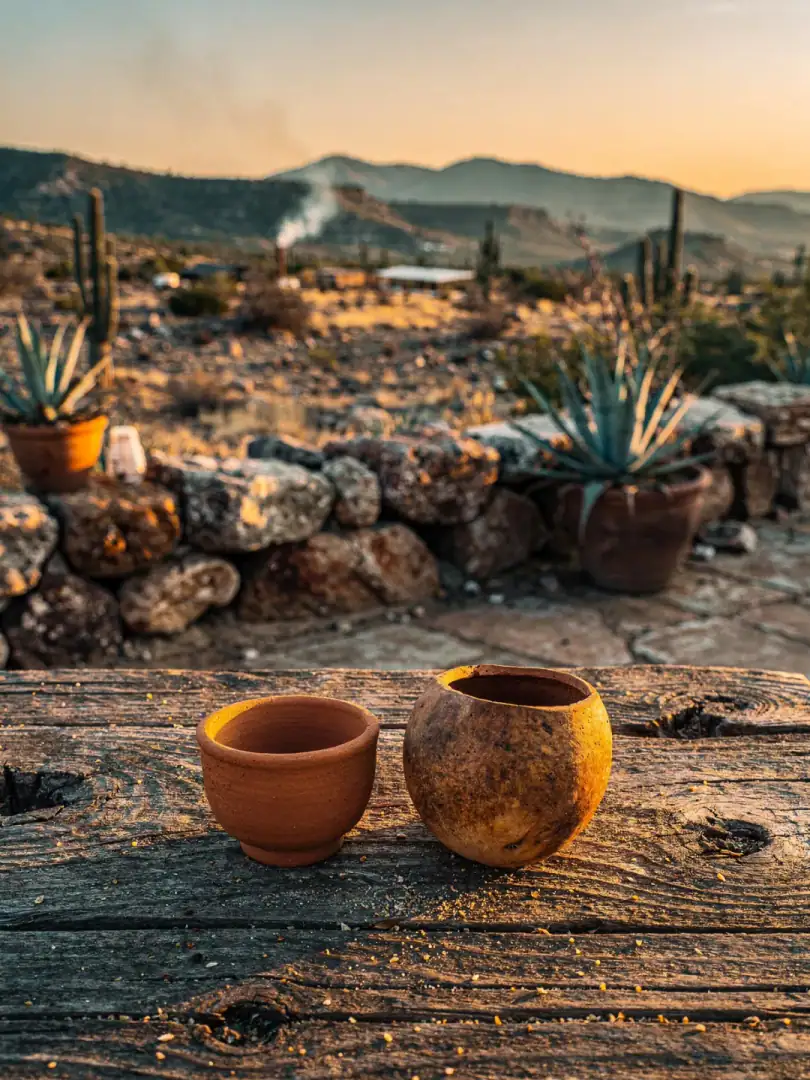
Traditionally, tasting takes place from a jícara, a small bowl made from the gourd plant Lagenaria. Just as common is a simple copita made of glass or clay. You smell it first, without swirling the glass. Then take a small sip and let it sit in your mouth before swallowing.
This way, smoke, earth, and the green notes of the agave unfold one after another, not all at once. It's exactly this slow sequence that sets tasting Mezcal apart from the quick shot many people wrongly associate it with.