Pulque or Yeast
Fermentation & Distillation
When it comes to fermentation, one of the most striking differences of the Altiplano Potosino becomes apparent. Many producers do not use purchased yeast. Instead, they stir Pulque into the mash, the same fermented drink made from the sweet sap of the Maguey that is also drunk on its own here.
The Pulque brings its own wild yeasts and lactic acid bacteria. It kicks off fermentation without any laboratory involved. Other houses take a different path. At Hacienda Laguna Seca in Charcas, they work with a cultivated yeast derived from a natural mother culture. It originated on the old hacienda itself, not from Pulque.
Both approaches are considered natural. Both forgo chemical aids. And yet their results taste different: Pulque starters often bring a slightly tangy note, while the in-house mother culture yields a smoother, cleaner tone.
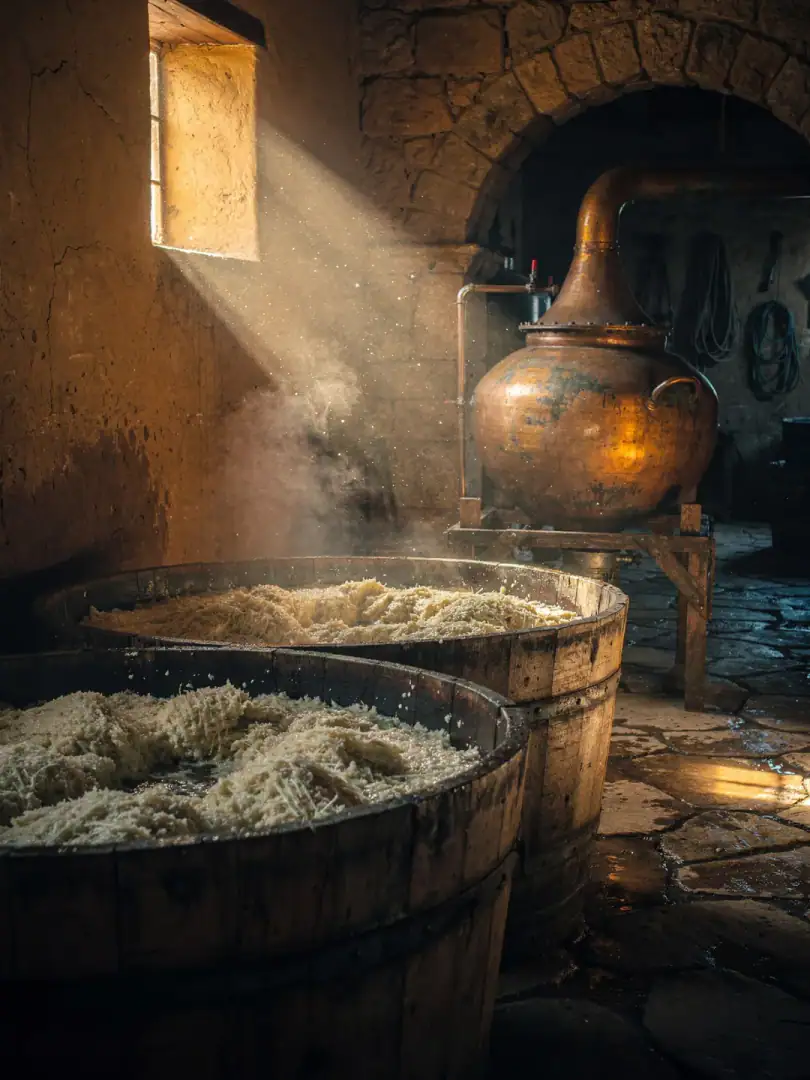
Fermentation usually takes place in open wood or stone vats, together with the agave fibers. These rise repeatedly during fermentation and must be stirred back under by hand, often several times a day. After several days, the sweet mash has become a sour, mildly alcoholic mosto, ready for the still.
Distillation is then usually carried out twice, as is customary for most Mexican agave spirits. The first pass yields a cloudy, weak raw distillate. The second separates heads, hearts, and tails, sharpening both aroma and alcohol content.
The finished mezcal from the Altiplano reaches at least forty-five percent ABV, often more. In the end, two distinct signatures stand side by side: Pulque starter here, cultivated yeast there. Both grow on the same agave, both without additives, yet each with a noticeably distinct character on the nose.