Blanco to Añejo
Aging
Most mezcals from the Altiplano Potosino leave the hacienda young, as Joven or Blanco. They go into the bottle shortly after distillation, without any barrel contact. It is precisely in this state that the character of Maguey Salmiana shows most clearly, raw, green, and unpolished.
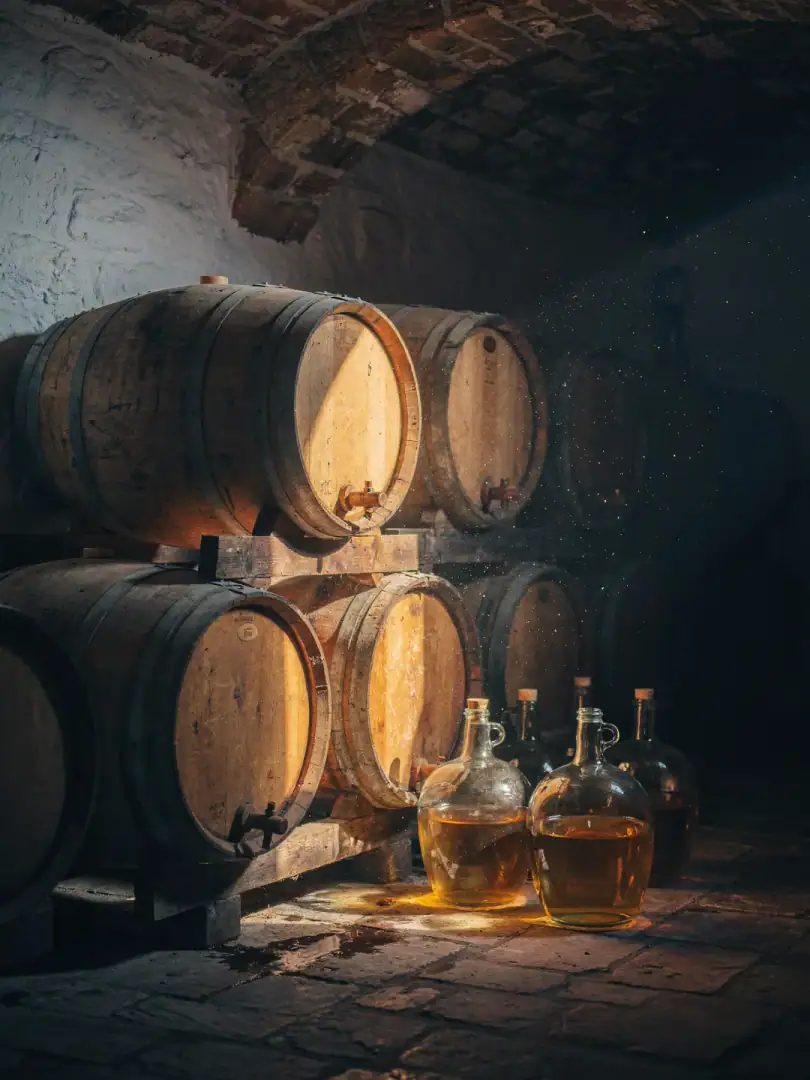
Those who do age it fill oak barrels. This is usually done for the Reposado category, with a few months of aging, or for Añejo, with at least one year. Mezcal Real de Magueyes from Charcas, for instance, includes an Añejo in its range. According to the producer, it was named best new spirit in the USA in 2004.
Beyond that, the mezcal standard recognizes two more unusual paths. Madurado en Vidrio lets the spirit age for years in large glass demijohns out in the open air, not in wood. Abocado con adds something after distillation, such as fruit, herbs, or honey.
Unlike Reposado or Añejo, glass aging barely changes the spirit's flavor. It merely gives it time to settle, without picking up any flavors from wood.
The label must state what is truly in the glass: the name Mezcal, the declaration '100% Agave', plus the category, meaning Joven, Reposado, Añejo, or one of the rarer forms. The state of origin must also appear, here San Luis Potosí. There is no such thing as a Mixto for mezcal, as there is for tequila. That's why it may never appear on the label here.
In the Altiplano, Joven nonetheless remains the rule rather than the exception. Most houses want to show how Maguey Salmiana tastes on its own, before a barrel changes it.