Mountain Meets Sea
Elevation & Climate
Between the Sierra and the coast, this region spans more than 1,700 meters of elevation. That kind of range is rare to find within a single Raicilla region. The Sierra municipalities, above all Mascota, San Sebastián del Oeste, and Talpa de Allende, sit well above a thousand meters, with a mild climate and cool nights. Bahía de Banderas on the coast, by contrast, lies practically at sea level, warm and humid year-round.
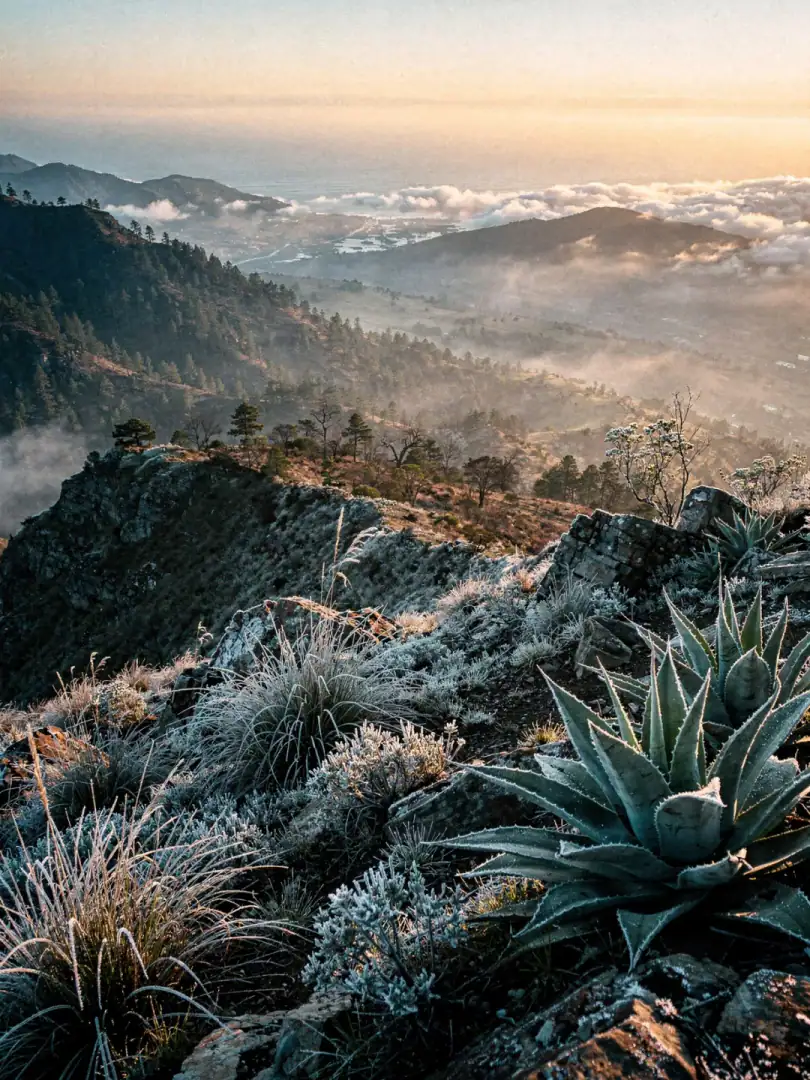
At altitude, agaves grow slowly. Cool nights slow photosynthesis and force the plant to store sugar in its leaves over years rather than burning through it quickly. The result is denser, more aromatic piñas, with the spicy, resinous notes for which Sierra Raicilla is known. This slow ripening is exactly what's credited for the more intense, spicier character of these agaves.
On the coast, the warm, humid climate year-round drives faster growth. Add to that the proximity to the sea and its own salty air. Rain falls mainly between June and October, followed by a long dry season. This dry spell puts additional stress on the agaves, pushing their sugar content even higher.
The coast practically never sees frost. In the higher reaches of the Sierra, though, cold winter nights can stress the agaves. This very difference ultimately shapes what ends up in the glass. What grows near the sea tastes mineral and fresh; what ripens at cool altitude turns out spicier and earthier.