Earth Pit or Oven
Cooking & Milling
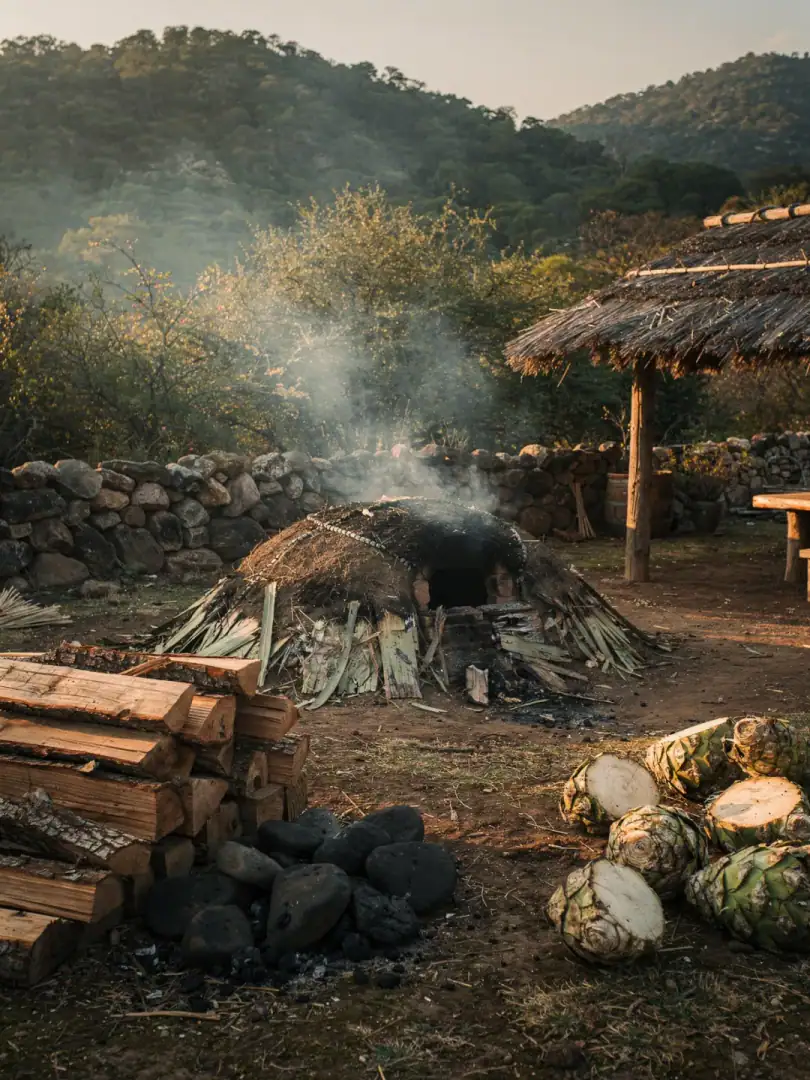
Anyone wanting to distill Raicilla the traditional way usually cooks the piñas in an earth pit, the horno de pozo. This is a hole in the ground lined with stones, filled with firewood and the cut-up agave hearts. Everything roasts beneath earth and agave leaves for several days. Other producers, especially larger ones, use brick ovens or, these days, stainless steel autoclaves. These cook faster but don't achieve the smoky depth of the earth pit.
The wood makes a noticeable difference. Around Mascota, encino, a local oak, is the usual fuel. On the coast near Cabo Corrientes, other hardwoods are used depending on availability. Depending on the size of the pit and the quantity of piñas, cooking takes between two and four days. That's how long it takes for the tough fibers to soften and the starchy core to convert into sugar.
For milling, some Sierra operations still use the tahona, a heavy stone wheel. A mule or horse pulls it in circles over the cooked piñas. Smaller palenques instead crush the piñas by hand, with a wooden mallet called the mazo. It's patient work that takes hours but needs no electricity.
The choice between earth pit and autoclave is more than a matter of taste. Small family operations in the Sierra and on the coast hold firmly to the traditional method. Part of their customer base expects exactly that: the smoke, the handwork, the days spent in the earth pit. When it comes to the actual distillation, it's mainly the material of the still that decides whether a Raicilla is later classified as "artesanal" or not.