Altitude & Dry Season
Altitude & Climate
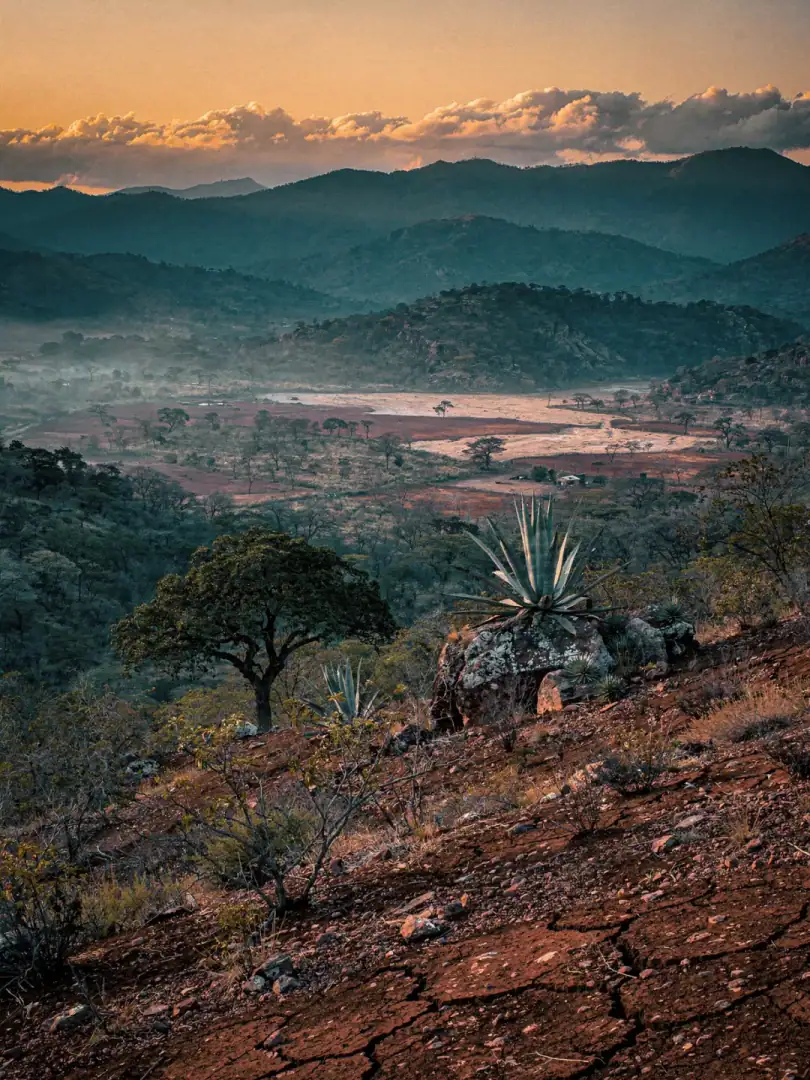
Just a few kilometers separate the dry valley basins of the Sierra Sur from the high forests above. Below, elevations sit under 1,000 meters; higher up, oaks and pines grow past 2,000 meters. It's exactly within this band, roughly between 1,760 and 2,300 meters, that wild Tobalá grows. Its rocky slopes bake in summer and cool sharply in winter.
Rain falls almost exclusively between May and October, often arriving as a short, hard downpour in the afternoon. From November to April it stays dry, and the soil cracks open. During this period, the agaves barely grow. In the higher reaches of the Sierra Sur, clear winter nights can turn bitterly cold. Frost then settles on the young leaves, even as oppressive heat still grips the base of the slopes during the day.
For the agave, this alternation isn't a drawback, it's the very reason its fructans, the plant's stored sugars, concentrate over the years. Waiting 25 years or more, as with Tepeztate, lets the plant weather numerous dry seasons. Each one presses more sugar and aroma into an ever-smaller piña.
Palenqueros in the region say you can taste the difference directly in the glass. An agave from a sunny, open slope tastes more mineral and smoky. One from the shaded oak forest tastes softer and more floral. The Sierra Sur offers both within the smallest of spaces.
Some producers therefore gather agaves from several different slopes at once before cooking them together in the pit oven. The result is a depth in the finished Mezcal, not a contradiction.