Prohibition and Return
Region & History
In the mountains east of Hermosillo, the smell of burning mesquite wood often hangs in the afternoon air. There, in the highlands of the Sierra Madre Occidental, families have been distilling Bacanora, the agave spirit of Sonora, for generations. Calling it Mezcal would be wrong, because Bacanora carries its own name. It may only be produced in 35 municipalities of this one state, nowhere else.
Before 1915, farmers in the Sierra cooked their wild agave openly in earthen pits and distilled the juice into homemade spirit. Then Governor Plutarco Elías Calles banned alcohol across the entire state. Officially it was about moral strictness, but in practice it hit the simple rural distillers hardest. For 77 years, Bacanora was officially illegal. Anyone caught lost their Vinata, the small distillery of earthen oven and copper pipe, and sometimes more.
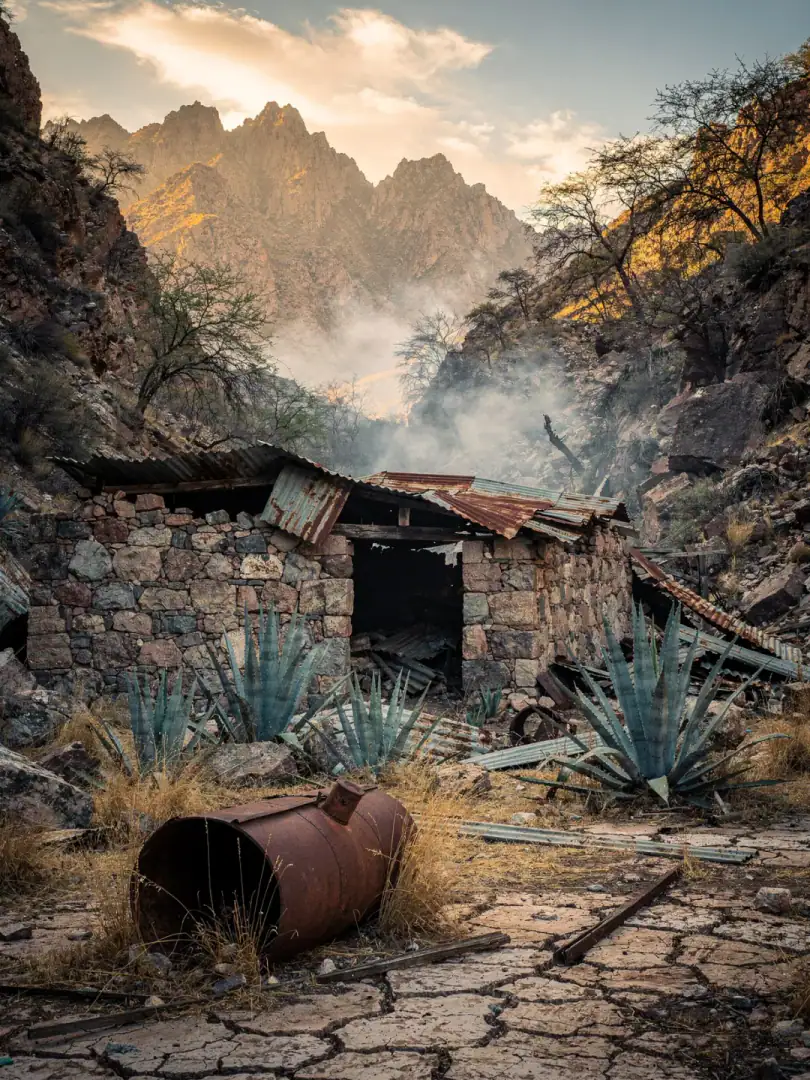
Yet the distilling never actually stopped. In remote ravines near Sahuaripa, Arivechi, and Bacanora itself, the Vinatas remained standing. Often it was nothing more than a hole in the ground, a few barrels, and a tin still head, well hidden among the mesquite trees. The knowledge passed from father to son, quietly and without paperwork. Only in 1992 did then-governor Manlio Fabio Beltrones lift the ban.
Since the year 2000, Bacanora has held its own designation of origin, valid for 35 municipalities in the highlands of Sonora. Above all, this protection means one thing: only spirit distilled here from wild or cultivated Agave Pacifica may bear the name. Mezcal from Oaxaca cannot. Tequila from Jalisco certainly cannot either, since it comes from a different agave in a different region.
Today the region counts around 38 registered Vinatas. Some are tiny family operations, others are brands like Don Mateo or Sunora, which now sell beyond Mexico's borders too. The old earthen pits still stand, and some remain in use. Others are now just a memory of the decades when the smoke rose in secret.