Copper or Steel
Fermentation & Distillation
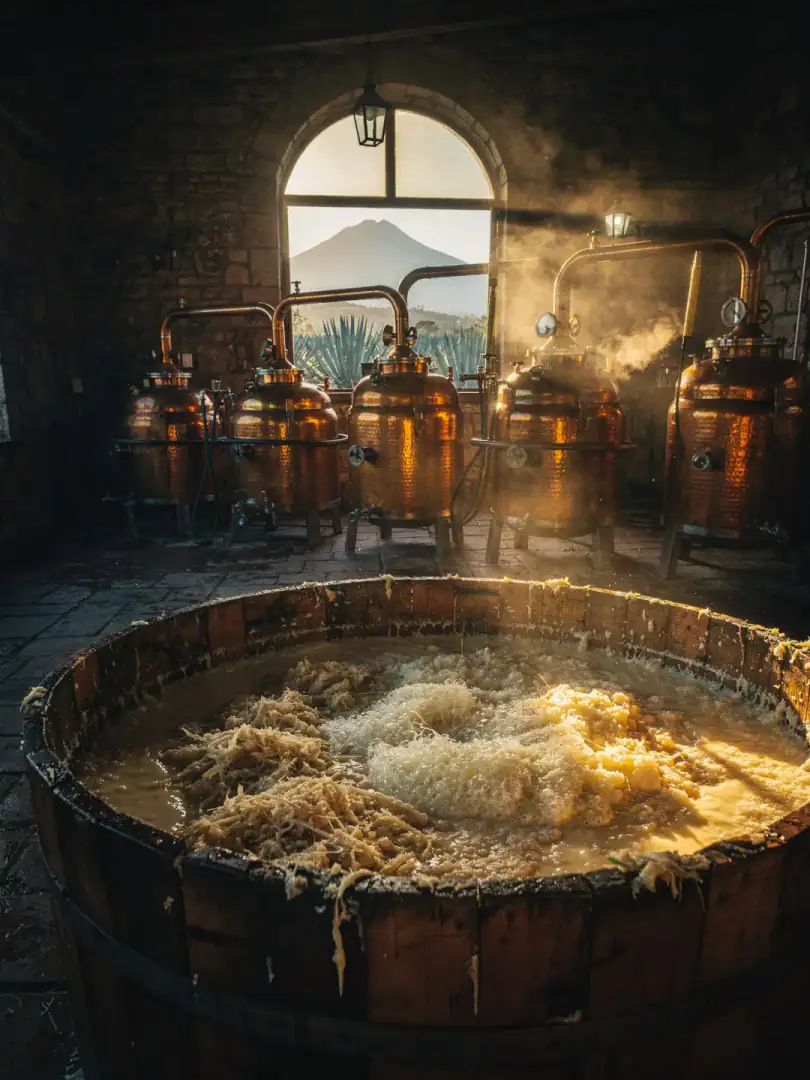
When it comes to fermentation, the valley's distilleries part ways once again. The large houses use cultivated yeasts in massive steel tanks, ensuring every batch tastes the same. At Fortaleza, by contrast, the mash ferments wild, with yeasts drawn from the air of the distillery itself. This happens in open wooden vats and takes days longer than in a steel tank.
A second difference lies in the fibers. Where mills separate the juice from the piña, some of the aroma is lost along with the pulp. In the tahona method, fibers remain in the mash and ferment along with it. These fibers don't rot; they lend the mash additional earthy aromas. This is exactly what gives Fortaleza its earthy, slightly smoky character, one rarely found in steel-tank Tequila.
Distillation in the valley is always done twice, as the Tequila standard requires. First comes the rough distillation, the destrozamiento, then the fine distillation, the rectificación. The law doesn't specify whether the still must be copper or stainless steel. Copper is considered more traditional and softens sulfurous notes, while stainless steel is easier to clean and preferred by the large houses. After the second distillation, the alcohol content sits at around 55 percent. For bottling, it's usually diluted down to 38 to 40 percent.
Neither copper nor steel determines the name on the label here—only the agave and the region do that. A Mezcal Ancestral, by contrast, may only be made in clay stills over an open flame. This distinction is often overlooked in Tequila country. So the true source of the name remains the origin in the Valle de Tequila.