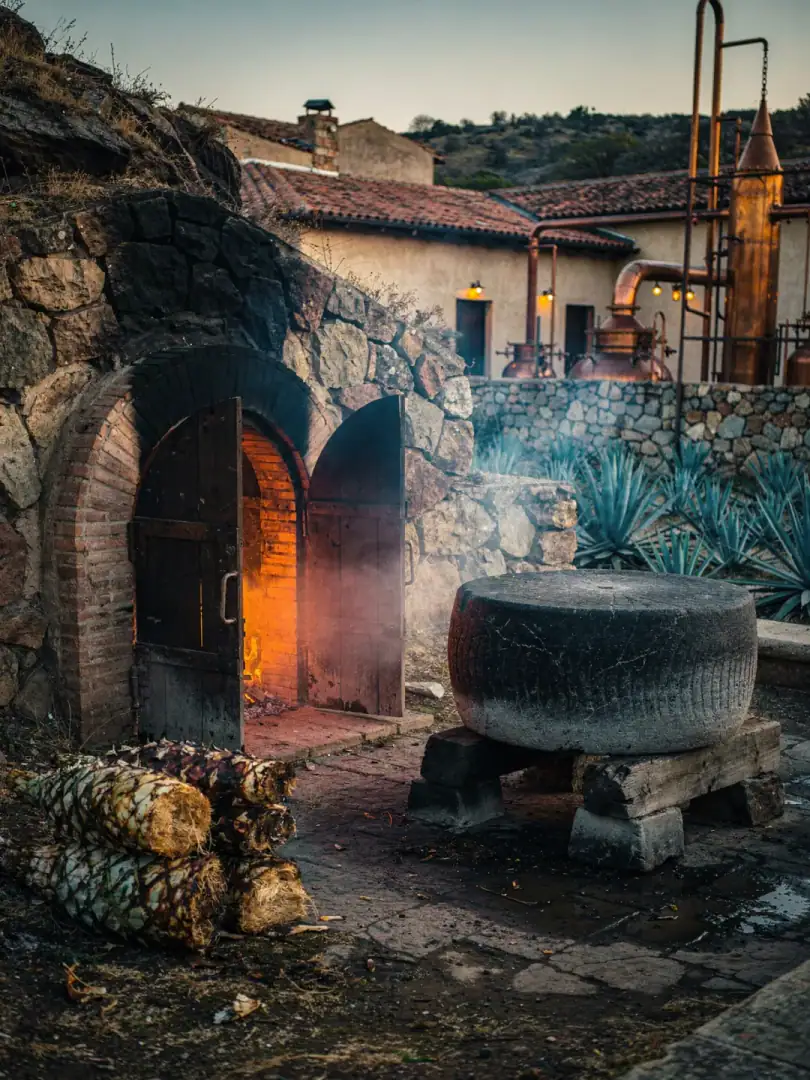
Oven, Kettle, Stone
Cooking & Milling
For Tequila, the standard allows three ways to cook the piña. There's the brick oven, or horno, and the autoclave, a pressurized steam kettle. And there's the diffuser, which breaks down starch chemically rather than through heat. All three are permitted for Tequila, but not for Mezcal Artesanal. Anyone cooking in an autoclave here may distill Tequila, but can never call the result Mezcal Artesanal. This freedom applies only to Tequila, not to any other agave spirit.
The valley's large houses, La Rojeña and Sauza's La Perseverancia, now cook most of their piñas in autoclaves. They have to process thousands of tons of agave each year. After cooking, the piña is usually crushed in mills, with the juice washed out using hot water. The process is fast and delivers consistent results year-round.
At the Fortaleza distillery on the edge of town, things run differently. Guillermo Sauza, a descendant of Cenobio, has been cooking his piñas in a brick oven since 1999 and then crushing them with the tahona. This is a multi-ton millstone made of volcanic rock that rolls in circles over the cooked pieces. This preserves the fibers, which brings more aroma into the fermentation. The process, however, is far slower than any mill.
Anyone standing beside a horno as it's opened smells it immediately. There's roasted sugar, almost like caramel, with a smoky note from the hot stone. This scent is exactly what sets the traditional oven method apart from the work of the autoclave. The autoclave releases almost no aroma into the air.