Low, Warm, Fast
Altitude & Climate
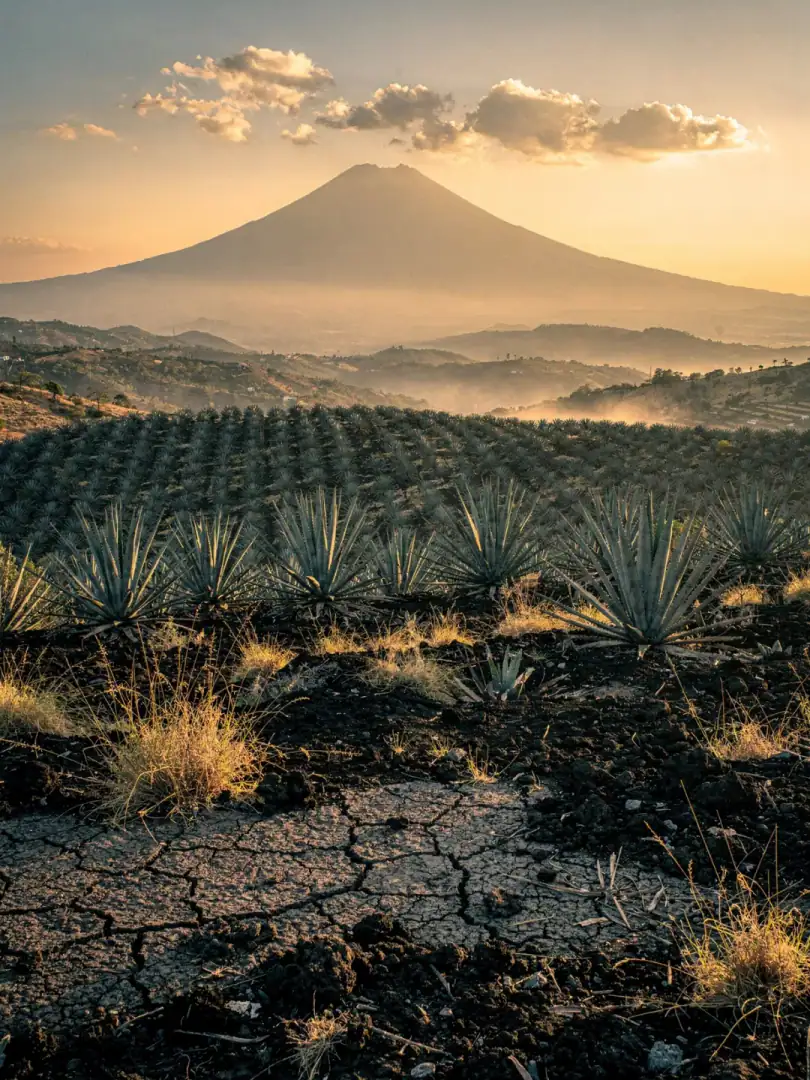
The town of Tequila sits at roughly 1,200 meters above sea level, on the lower slopes of the Volcán de Tequila. That's considerably lower than the highlands to the east of the state. This position gives the region its name: Valle, the valley, in contrast to Los Altos, the highlands. To the northwest, the valley opens toward the gorge of the Río Grande de Santiago. Anyone arriving from Guadalajara notices the difference on the drive alone—the air grows noticeably warmer as the road descends into the valley.
The climate here is warmer and drier than in the highlands. Average temperatures hover between roughly 22 and 26 degrees Celsius. Rain falls mainly in summer, when short, intense downpours follow long dry stretches. The valley almost never sees frost. Instead, the sun beats down on the fields around Amatitán and El Arenal for much of the year.
This warmth drives the agave to mature faster. Fast growth means less time for sugars and aromatic compounds to build up slowly. The result is an agave with a greener, more herbaceous character. Its relatives in the cooler highlands get to stand in the field for years longer before harvest. That's exactly what makes the difference between valley and highland noticeable in every sip.
Anyone who later tastes a Tequila from this valley picks up on exactly that: earth, pepper, freshly cut grass. Sweetness tends to fade into the background, compared to the softer, stewed-fruit notes found in some highland bottlings. Climate and soil work together here long before any master distiller ever steps in.