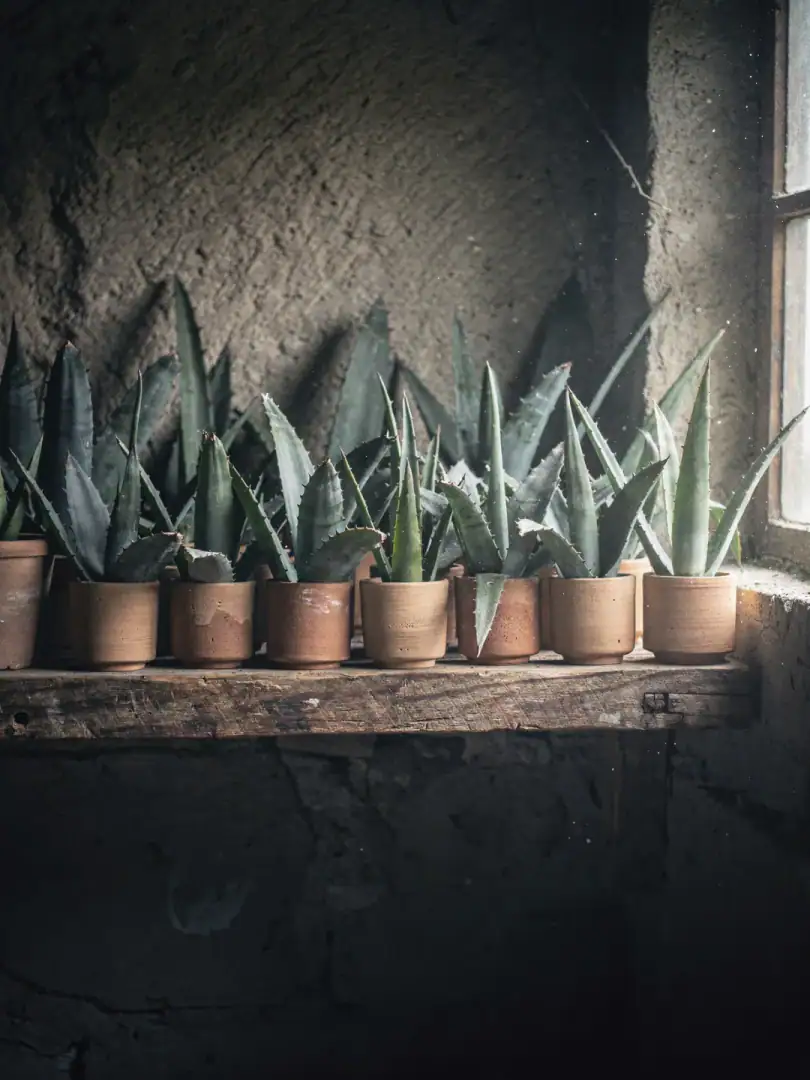
Many Agaves
Mezcal: Many Agaves, One Territory
Mezcal isn't a single spirit, but an entire family under one name. Over a dozen states, dozens of agave species, one strict law: always one hundred percent agave, never a mixto as with Tequila.
A Territory as Large as Half of Mexico
The Mezcal denomination of origin covers twelve states. Leading the way is Oaxaca, joined by Guerrero, Durango, San Luis Potosí, and Zacatecas since the founding declaration of 1994. More states followed later: Tamaulipas, Guanajuato, Michoacán, Puebla, Aguascalientes, Morelos, and the Estado de México, with four municipalities in Sinaloa added since 2021. Since 2021, four municipalities in Sinaloa have also been included. The industry's own regulatory body, the Consejo Regulador del Mezcal, has publicly criticized this expansion.
Together, that adds up to more than a thousand municipalities—well over five times the size of the Tequila territory. Oversight comes from NOM-070-SCFI-2016, enforced by the Consejo Regulador del Mezcal, or CRM for short. Until around 2018, this body was still known as COMERCAM.
Espadín and Its Many Relatives
The most common agave used for Mezcal is Espadín, botanically Agave angustifolia. The name comes from its narrow, sword-like leaves. It accounts for most of the bottles on the shelf, thanks to its fast growth and ease of cultivation. It's harvested by the jimador, the agave cutter, who separates the leaves from the heart using a sharp blade called a coa.
Alongside it stand many wild agaves. Often, only individual families in certain valleys know the exact variety. Agave potatorum, known as Tobalá, is one of them. Agave karwinskii is another: in some regions, it grows more like a gnarled small tree than a ground-level rosette. Some wild agaves take many more years to mature than cultivated Espadín, which is exactly why they're rarer and pricier.
Each species lends Mezcal its own character, ranging from floral to smoky-earthy. This diversity is precisely what sets Mezcal apart from Tequila most clearly. Tequila is tied to a single agave, while Mezcal thrives on the varietal richness of an entire landscape.
Always One Hundred Percent Agave
The most important difference from Tequila is written right into the law. Mezcal must always consist of one hundred percent fermentable agave sugar. A mixto, as exists for standard Tequila with a minimum of 51 percent agave, isn't provided for at all under the Mezcal standard. In Tequila, the remaining sugar may come from cane sugar or syrup; in Mezcal, never.
This rule applies equally across every level of Mezcal production, from industrial operations down to the smallest village distillery. How these levels otherwise differ is the subject of the next stop.
Six Classes for Aging and Additives
After distillation, the standard distinguishes six commercial classes. Joven or Blanco is the young, unaged Mezcal. Madurado en Vidrio ages in glass demijohns instead of wood. Reposado rests briefly in oak, while Añejo ages for at least one year.
Two special classes round things out. Destilado con describes a Mezcal that has something co-distilled during the second run, such as chicken breast in the famous Pechuga style. Abocado con refers to a Mezcal that's flavored or sweetened only after distillation. These classes say nothing about the production tier—only about aging and additives afterward. A Mezcal Ancestral can be just as much a Joven as an industrial one.
Why Mezcal Often Tastes Like Its Place of Origin
Mezcal from Oaxaca often tastes different from Mezcal from Durango, even when made from the same agave species. Soil, climate, and local customs shape each region differently. Some distillers roast the agave longer, others shorter, depending on inherited family tradition.
This gives Mezcal, unlike the more narrowly defined Tequila, a pronounced sense of terroir. Two bottles bearing the same word on the label can still taste completely different.
Why Espadín Takes Center Stage So Often
Espadín accounts for the bulk of worldwide Mezcal production. That's down to its reliability: it grows faster than most wild agaves and can be cultivated in rows like a field crop. Some cooperatives today deliberately grow several species side by side to keep the old diversity alive.
Wild agaves remain in demand nonetheless, precisely because they're rare. A Mezcal from a single wild harvest can taste different from year to year, while Espadín Mezcal tastes more consistent. For collectors, that very unpredictability is part of the appeal.