Two permitted paths
Horno and autoclave: how Tequila is cooked
Once the agave has been cut at peak ripeness, its complex starch must first be converted into sugar. Under NOM-006, Tequila allows several legal paths for this: the masonry stone oven, called a horno, and the autoclave, a pressurized steel vessel. Both are permitted, yet they produce noticeably different flavors in the end.
The stone oven: slow steaming with tradition
In a masonry oven, which producers call a horno de mampostería, the cut piñas cook under hot steam. The chambers used for this are often several meters tall. A single run takes between twenty-four and over seventy hours. The exact duration depends on the size of the load, the construction of the oven, and the tradition of the particular house.
This slowness comes at a clear cost: the oven consumes more time, more fuel and more labor than faster methods. In return, the even heat caramelizes the agave from the outside in. Many smaller distilleries therefore actively advertise the use of a stone oven, hoping for a rounder, sweeter flavor that customers are meant to appreciate. That remains a producer's claim, not an officially verified guarantee.
The autoclave: pressure instead of patience
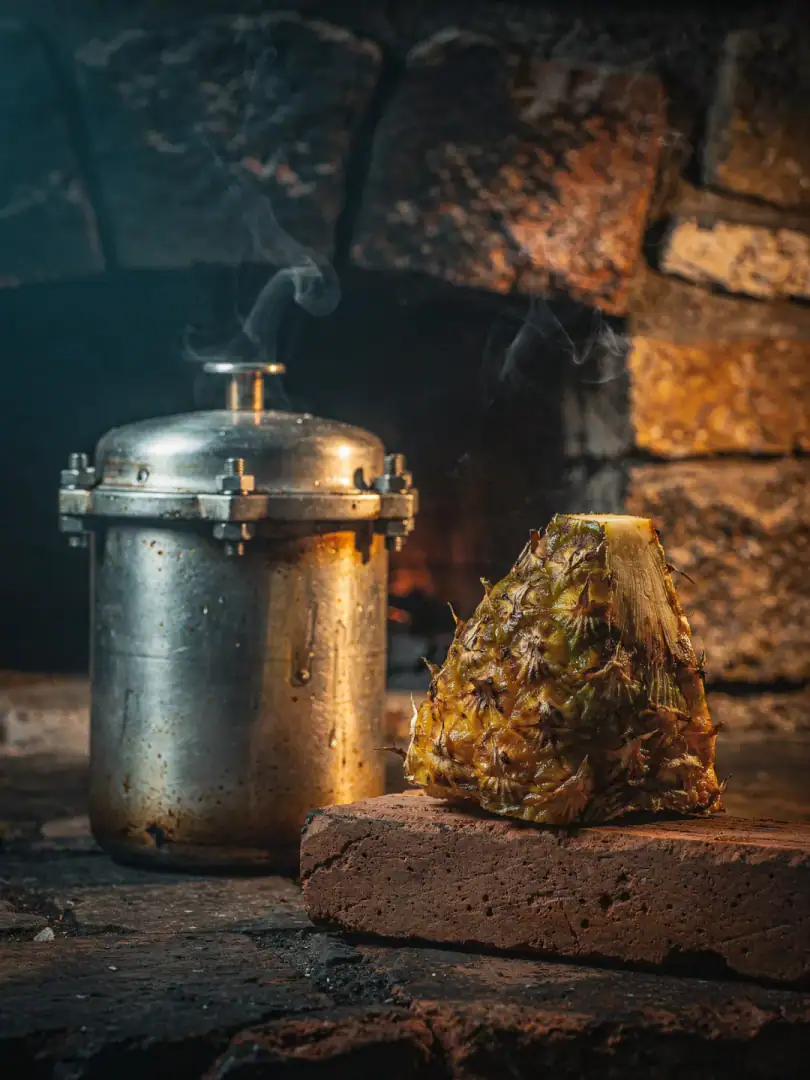
The autoclave works under pressure, essentially a giant steel pressure cooker with a tightly sealed lid. The temperature inside rises well above water's normal boiling point, so cooking takes only six to twelve hours instead of the one to three days a stone oven typically requires.
For large brands, this time savings is crucial: anyone needing to produce thousands of liters of Tequila daily can hardly afford multi-day cooking times without doubling the entire facility. The autoclave also delivers more consistent batches and makes the flavor more predictable from bottle to bottle, something that often matters more to industrial bottlers than individual nuance.
What happens technically during cooking
The raw piña contains almost no directly fermentable sugar, but mainly inulin, a long carbohydrate chain that yeasts cannot ferment as such. Only heat and moisture break this inulin down into simple sugars like fructose, which later actually turn into alcohol during fermentation, whether cooked in an oven or an autoclave.
Whether this chemical process unfolds over hours under high pressure or over days under gentle steam heat significantly changes the amount of byproducts such as furfural and other roasted notes. It's precisely these subtle traces that you later taste in the finished glass, even though the underlying chemical reaction remains fundamentally the same in both cooking methods.
Why some brands prefer the oven
Smaller and mid-sized distilleries often deliberately foreground the stone oven on their labels, tours and marketing copy. For them, it's a visible sign of craftsmanship meant to set them apart from mass-market products on the supermarket shelf, including on price.
What matters most for beginners, though, is this: both horno and autoclave are fully legal under NOM-006 and change nothing about the official category. A Tequila cooked in an autoclave is just as genuinely Tequila as one from a traditional stone oven, the difference lies solely in the flavor profile, never in the legal right to the protected name.
Why the oven's construction shapes the result
How an oven is built from stone or brick has a direct effect on the outcome. Thick walls store heat better and release it more evenly than thin ones. In old ovens made of unfired clay, heat often distributed unevenly: piñas at the edge cooked faster than those in the middle of the stack. That's why experienced workers deliberately reposition the pieces once a run is halfway done. Modern stone ovens with better insulation need this intermediate step less often, because the internal temperature stays more stable.
Some traditional houses now combine both methods. They first pre-cook the piñas briefly in the autoclave to save time, then let them rest for a few more hours in the stone oven. This is meant to combine fast production with the desired roasted character, at least according to the respective distillery. Under NOM-006, this combination is just as permissible as either method on its own, since the standard prescribes no particular cooking method, only the agave species and origin.