Quantity matters more
"Tequila gives you a worse hangover"
Tequila has a reputation for leaving behind the harshest hangover of any spirit. This stop explains, without any health claims, what's down to the drinking ritual, what's down to quality, and what's simply down to quantity.
Where does the reputation for a particularly brutal hangover come from?
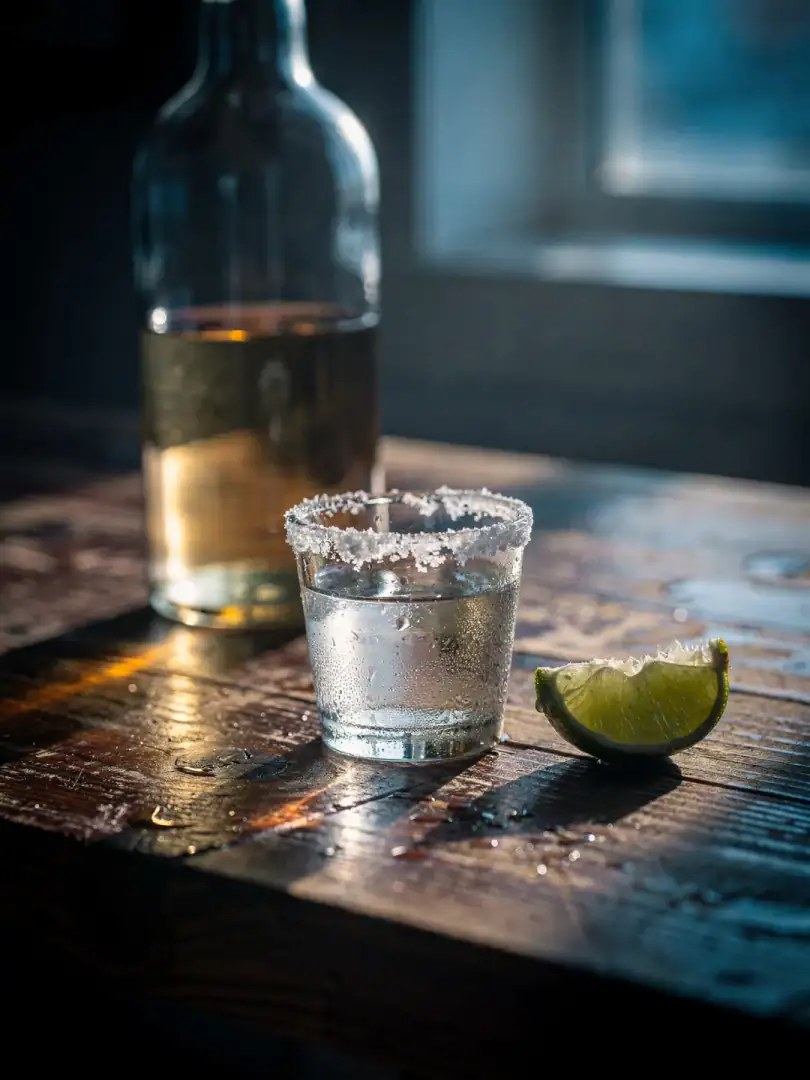
In many countries, tequila is drunk mainly as a shot, often in quick succession, with salt and lime as a fixed ritual. This drinking pattern leads to high blood alcohol levels faster than, say, a slowly savored glass of wine, because a lot of alcohol is consumed in a short time. The hangover the next day therefore often has less to do with the spirit itself than with the quantity and speed at which it was drunk.
The social setting also plays a role: people who drink tequila often do so deliberately in lively company, where refills come easily and it's hard to keep track of how much has actually been drunk. This social dynamic often increases the actual amount of alcohol consumed far more than would be the case with the leisurely enjoyment of other spirits.
How does mixto tequila factor in?
A basic tequila, under NOM-006, only needs to consist of at least 51 percent agave sugar; the rest may come from other sugars such as cane sugar or glucose syrup. This blend, called mixto, more often contains so-called congeners, chemical byproducts of fermentation and distillation such as fusel alcohols, which some studies link to stronger hangover symptoms. A 100 percent agave tequila, in which all the sugar comes from the Blue Weber agave, generally contains fewer of these.
The permitted sugar sources for the mixto portion also vary between producers. Some use refined cane sugar, others glucose or fructose syrup, each with a slightly different fermentation behavior. This inconsistent picture makes it additionally difficult to blame the mixto portion across the board for stronger hangover symptoms. What's certain is only this: drink less and more slowly, and you'll have less to complain about the next morning.
What does research show about alcohol in general?
Scientifically, it's hard to cleanly separate how strongly a particular spirit triggers a hangover compared to another, once the amount of alcohol consumed is held constant. Darker, more heavily aged or flavored drinks tend to contain more congeners than clear, young distillates, and that holds for tequila just as much as for whisky or rum. Anyone who wakes up feeling especially rough after a night of tequila has usually simply drunk more alcohol than planned, often combined with sugary mixers and too little water.
On top of that comes the individual factor: body weight, lack of sleep, fluid intake during the evening and fatty food in the stomach often influence a hangover more strongly than the choice of spirit. Two people drinking the same amount of the same tequila can react completely differently the next morning.
Why does the reputation still stick to tequila?
The drinking ritual itself, salt, shot, lime in rapid succession, shapes the memory of the hangover more strongly than drinks sipped leisurely from a glass. On top of that, many cheap tequilas sold abroad are mixto quality and are often consumed in large quantities at parties. The combination of drinking speed, quantity and cheap quality creates the impression that the drink itself is to blame, when really the manner of consumption is the cause.
The reputation is further cemented by stories passed along from trip to trip, often without anyone being able to accurately recall their own consumption that night. A bad experience with tequila tends to stick in the memory for a particularly long time, while a comparable night with wine or beer is less often remembered with the same intensity. The drink itself is rarely truly to blame; usually it's simply the amount consumed that decides the next morning.