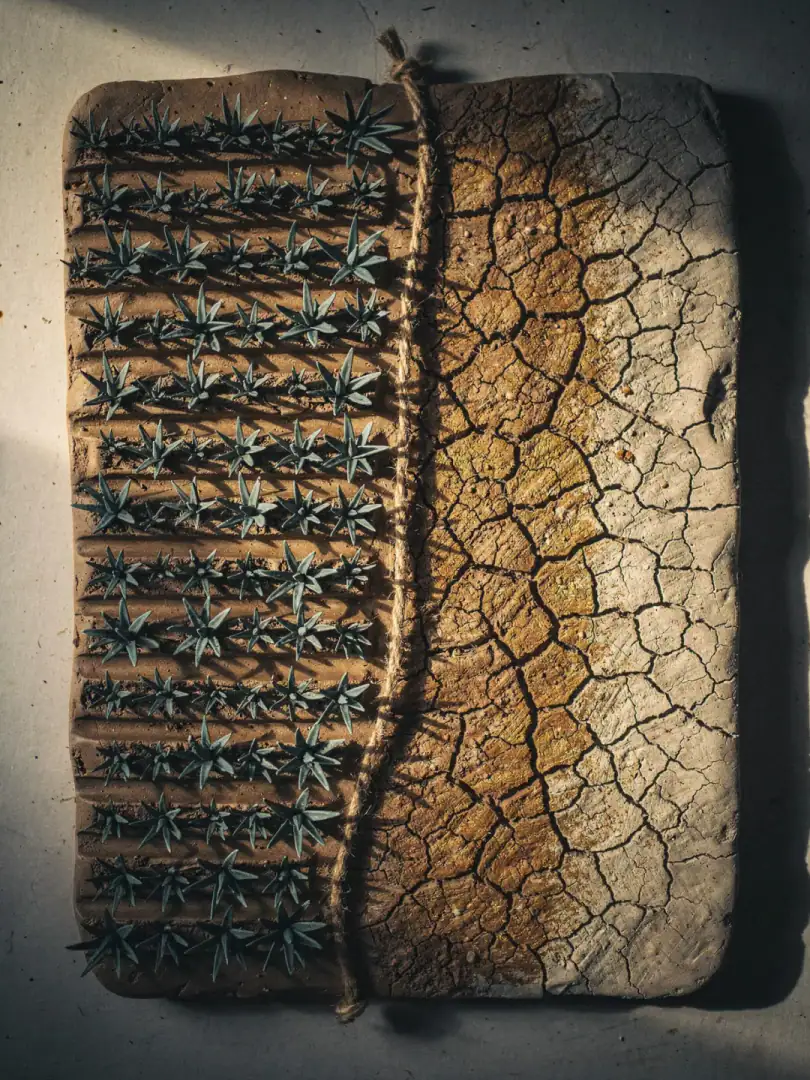
181 Municipalities
181 Municipalities, One Boundary
Tequila may only come from 181 municipalities across five Mexican states. Distillers just a few kilometers outside this boundary may grow the very same agave, but they can never call their spirit tequila.
Jalisco as Heartland
At the center of the tequila region lies the state of Jalisco, its true heartland. All 125 municipalities of Jalisco belong to the protected zone, including the town of Tequila itself and the entire Valle de Tequila with its endless rows of agave. Most of the growing area and most distilleries are found here. Anyone driving through the Valle de Tequila today sees this concentration at first glance: agave as far as the eye can see.
But Jalisco alone isn't enough to define the boundary under the law. Instead, the Denominación de Origen draws its line along municipal borders in four additional states, regardless of what the map otherwise looks like. The result is a region that, at first glance, looks like a patchwork.
Four More States, 181 Municipalities
Alongside Jalisco, parts of Guanajuato (7 municipalities), Michoacán (30), Nayarit (8), and Tamaulipas (11) belong to the tequila region. Together, that adds up to 181 municipalities, spread across an area larger than one might expect from a single town's name. Tamaulipas even lies several hundred kilometers from the town of Tequila, near the Texas border.
This spread has historical reasons: in all five regions, Agave tequilana was demonstrably grown and processed into tequila even before the official 1974 declaration. Anywhere outside this line, no matter how similar the landscape looks, simply doesn't belong to the protected region.
The Zacatecas Example
The neighboring state of Zacatecas shows just how sharply this boundary is drawn. The same Blue Weber Agave grown in Jalisco also grows there, and some producers distill it using very similar methods. Yet Zacatecas doesn't belong to the tequila region – since 1994, it has belonged to the mezcal region instead.
An agave spirit from Zacatecas, even one made from pure Blue Weber Agave, can therefore never be called "Tequila." Some producers instead sell it openly as "Agave Spirit," outside any Denominación de Origen. This shows that it's not the plant alone that determines the name, but above all the place where it's grown and distilled. For buyers paying close attention, this difference is usually clearly stated on the label, even when the bottle and its contents are barely distinguishable.
Why the Boundary Is Drawn So Strictly
To outsiders, a municipal boundary on a map often looks arbitrary. But from the standpoint of protecting origin, it's the only practical way to keep the name enforceable at all. A boundary based on soil type or climate would be far harder to verify than a list of municipalities. Authorities can clearly mark a municipal boundary on a map and defend it legally if challenged.
The downside is that producers right at the border may be disadvantaged even though their soil and climate barely differ from those just across it. This tension between an exact legal boundary and a gradually shifting natural landscape runs through the entire history of the tequila region, as the final stop of this journey revisits.
How the Municipal Boundaries Came About
The selection of these 181 municipalities wasn't random – it was the result of years of negotiation between agave farmers, distilleries, and authorities. Anyone who could prove that Agave tequilana had already been grown and processed in meaningful quantities in their municipality before the 1974 declaration had a good chance of being included in the protected zone. Historical records of growing areas, tax lists, and old distilleries often served as evidence.
Even today, this boundary can hardly be meaningfully changed after the fact, because any expansion immediately stirs interest from neighboring regions with similar soil and climate. This same tension repeats decades later with mezcal, whose region, as the final stop of this journey shows, has in fact expanded several times.