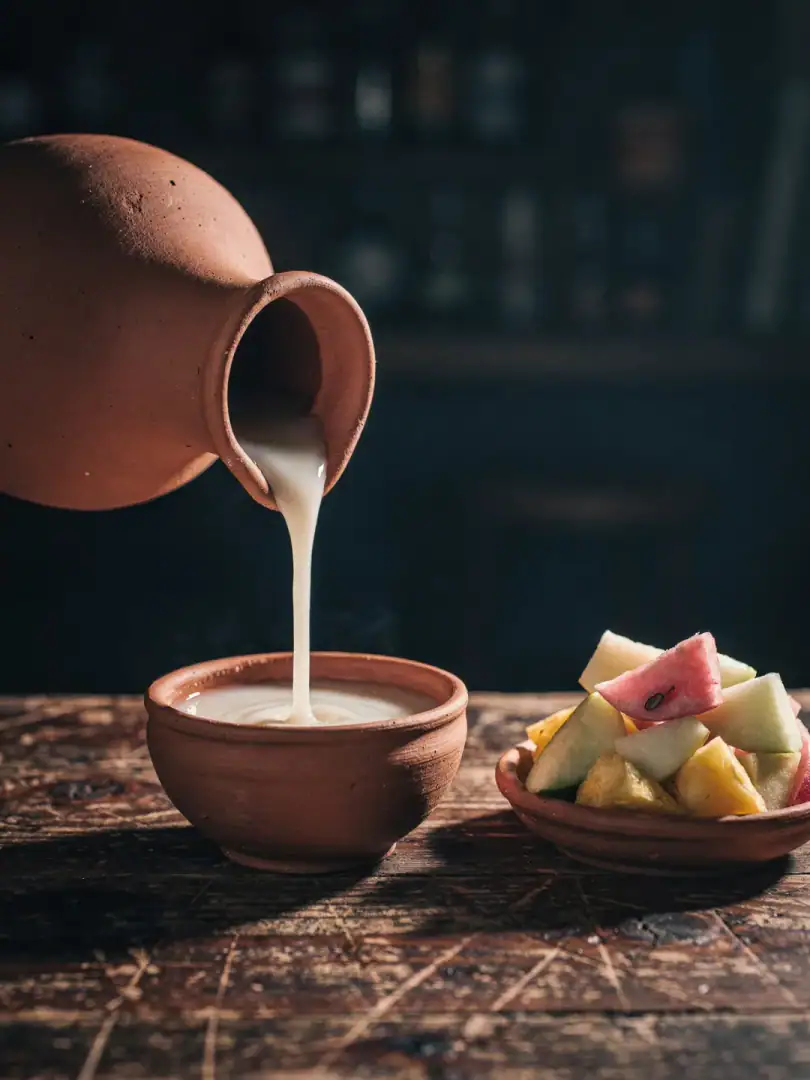
The Ancient Drink
Pulque and Pulquerías
Pulque isn't distilled but fermented – a milky-white, gently alcoholic drink with pre-Hispanic roots. After decades in the shadow of beer and Tequila, Pulquerías, its traditional taverns, are currently experiencing a rediscovery.
What Sets Pulque Apart from the Spirits
Unlike Tequila or Mezcal, Pulque isn't distilled but fermented – from Aguamiel, the sweet sap harvested from the heart of certain agaves before they flower.
The result is milky-white, viscous, and at around four to six percent alcohol by volume, considerably weaker than any agave spirit. The plant is the same, but the drink is an entirely different one.
Pulquerías: Rise, Decline, Rediscovery
Pulque's history reaches back to pre-Hispanic times, when it was part of religious ceremonies in the Aztec empire.
Pulquerías, the traditional Pulque taverns, still shaped the streetscape of many Mexican cities in the early 20th century, but later fell into disrepute as a drinking spot for the poor and were shut down in many places as beer grew more popular.
Curados: Pulque with Flavor
On its own, Pulque tastes slightly sour and yeasty, a flavor not everyone takes to right away.
Curados counter this: Pulque is mixed with fruit pulp, such as guava or strawberry, with oats, or even with celery, which softens the acidity and makes the drink more approachable.
Why Pulque Is Back in Demand Today
In Mexico City, Pulquerías have been experiencing a rediscovery for several years now among a younger, urban crowd who see Pulque as a cultural heritage rather than the poor man's drink of the past.
For those who mix their own cocktails today rather than fermenting, modern cocktails offer another, related way to recombine agave flavors.
Pulque is sometimes marketed as a "probiotic" drink, since live lactic acid bacteria and yeasts continue working in unfiltered aguamiel. Solid medical studies on this are rare, and most claims remain marketing promises from individual brands. As a traditional drink with a long history, pulque stands on its own merits, no health claims needed.
Mayahuel: the goddess behind the agave
Behind pulque, and ultimately behind every agave spirit, stands Mayahuel in Aztec mythology, the goddess of the agave. According to legend, she was transformed into an agave plant, from whose sap people obtained the first aguamiel—the origin of all pulque in this story.
Around her stood the Centzon Totochtin, the "four hundred rabbits," a group of deities representing different stages and forms of drunkenness, from joyful to aggressive. In Aztec counting, the number four hundred was a symbol for "countless," not an exact figure.
The myth of Mayahuel and the four hundred rabbits shows how present alcohol already was in religious thought before the colonial era. Contrary to how it's often portrayed today, drunkenness in everyday Aztec life was strictly regulated and mostly reserved for the elderly or those with ritual standing. Anyone who got drunk in public without cause risked harsh punishment—a stark contrast to the image of a carefree drinking god.
Tlachiquero: the profession of the aguamiel collector
The person who harvests aguamiel is called a tlachiquero. Using an acocote, a hollowed-out gourd that serves as a suction tube, he draws the sweet sap several times a day from the hollowed-out core of mature agave plants, often from the same plant for months, until it's exhausted.
The profession is considered demanding and physically hard, and at the same time dying out: as demand for pulque declined in the 20th century, the number of tlachiqueros fell too. Still, some families in Hidalgo and the State of Mexico keep the trade alive, often as a sideline alongside farming.
Not all the aguamiel that's harvested gets fermented. Fresh from the agave, it's a sweet, slightly nutty juice that's often drunk on its own in many rural regions, especially by children and the elderly, for whom pulque would be too strong. Only once wild yeasts and bacteria from the air and from an old fermentation vessel join in does fermentation into pulque begin, usually within a few hours in warm weather.