Drinking in Jalisco
Caballito, cantina, botanas
In Jalisco, tequila is rarely knocked back. Sipped from the narrow caballito glass, surrounded by botanas, in the cantina — the traditional tavern — an afternoon with tequila often stretches on for hours, a very different pace from the image of the quick shot.
The caballito: the right glass
Order tequila in Jalisco and it often arrives in a narrow, tall little glass: the caballito, named after the Spanish word for "little horse." It holds only a few centiliters, just enough for small sips rather than a single knock-back.
Unlike the shot-glass culture common in bars outside Mexico, the caballito isn't built for speed. Its shape keeps the tequila concentrated, without diluting it the way a highball glass would.
The cantina: more than just a tavern
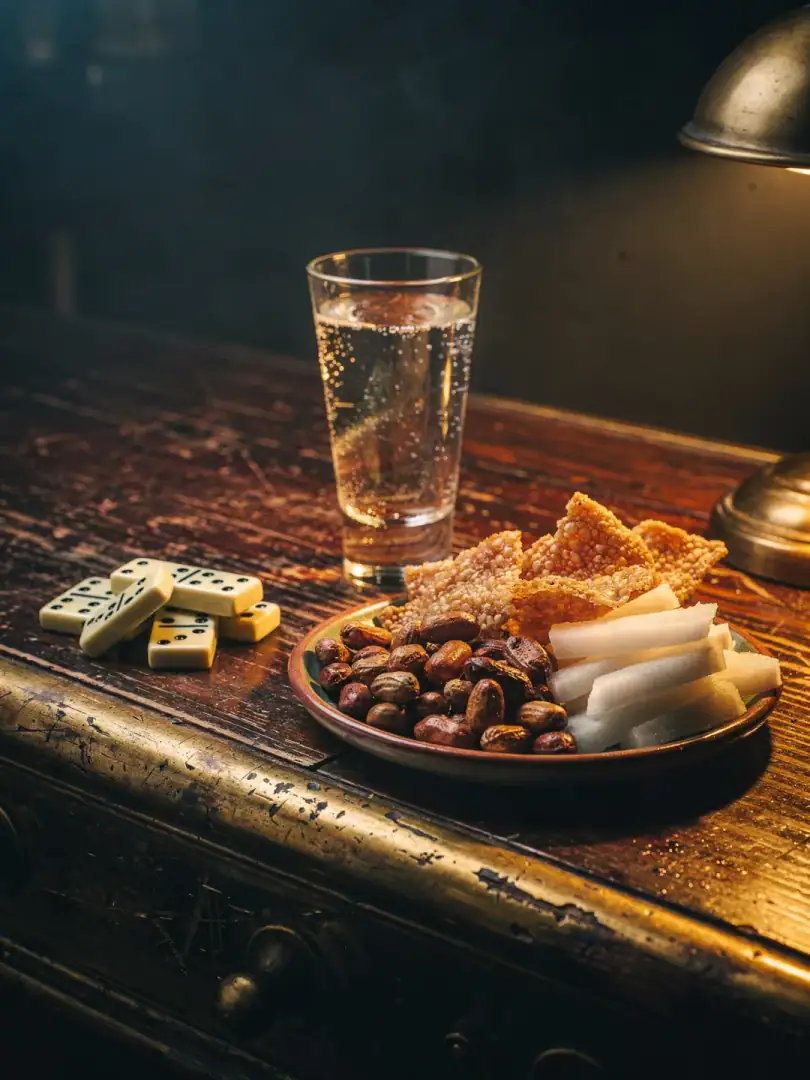
Dark wood, dominoes on worn tables, a décor that looks as if it hasn't changed in decades: that's how many cantinas, Jalisco's traditional taverns, look. Some in Guadalajara have been around for over a hundred years.
They were long considered a male domain before the clientele opened up. Even today, cantinas function less as a place to drop in for a quick drink than as a fixed meeting point where regulars see each other again year after year.
Botanas: the snacks that come with it
Often arriving unbidden with the very first glass: botanas, small bites like jícama with chili and lime, roasted peanuts, chicharrón (fried pork rind), or little quesadillas.
Botanas aren't an afterthought on the side — they're part of the drinking itself. Fat and salt keep the stomach settled and the conversation going as the group lingers for hours.
The pace: drinking without hurry
The difference from the image of the quick shot lies in the pace. In a cantina, drinking stretches over hours, woven between conversation, games of dominoes and botanas — the tequila accompanies the afternoon rather than speeding it along.
This slow style of drinking shapes Jalisco's culture far more than the lick-shot-suck ritual, which became known mainly outside Mexico and has little to do with the actual cantina tradition.
What used to be off-limits in a cantina
Signs with strict rules once hung at the doors of many cantinas: uniformed personnel, minors, and for a long time women as well, were denied entry. Over some entrances, signs essentially stated that the cantina was reserved for men above a certain age — a holdover from times when the cantina was seen as a place for grown men.
Only from the second half of the 20th century onward did more and more cantinas open up to a mixed clientele, and many of the old bans gradually disappeared from state regulations. Some historic establishments in Guadalajara or Mexico City still preserve the old signs today, though now only as a keepsake, not as an enforced rule.
Alongside the entry restrictions, many cantinas also had the tradition of fiado, an informal tab for regulars. Anyone who didn't pay right away could have their bill noted in a ledger and settle up days or weeks later. This bond of trust between owner and guest was part of what set a cantina apart from an anonymous bar, where every round is paid for on the spot. Some of Guadalajara's oldest cantinas still keep guest ledgers with fiado entries to this day, even though the practice overall has become rarer.
Cantina, Bar, or Pulquería: what makes the difference
Traditionally, what sets a cantina apart from an ordinary bar is that food always accompanies the alcohol – the botanas aren't an add-on, but part of the concept itself. In Mexico, places that serve drinks without a kitchen are usually called bar or cervecería rather than cantina.
The cantina differs from the pulquería in the drink at its center: beer, tequila, and other distilled spirits instead of fermented pulque. Both types of establishment, however, share the same idea of a local regulars' spot, where the same faces reappear year after year.
Anyone wandering through Guadalajara today will often find all three types side by side: the classic cantina with dominoes and botanas, modern bars with cocktail menus and craft tequila, and the occasional pulquería that has survived among the new developments.