Celebration and Offering
Offering and Celebration
Agave spirits in Mexico often carry more than just flavor: a glass placed on the ofrenda altar for Día de Muertos, small bottles given as wedding gifts, a gesture of hospitality when receiving guests. Celebration and remembrance are woven into the drinking itself.
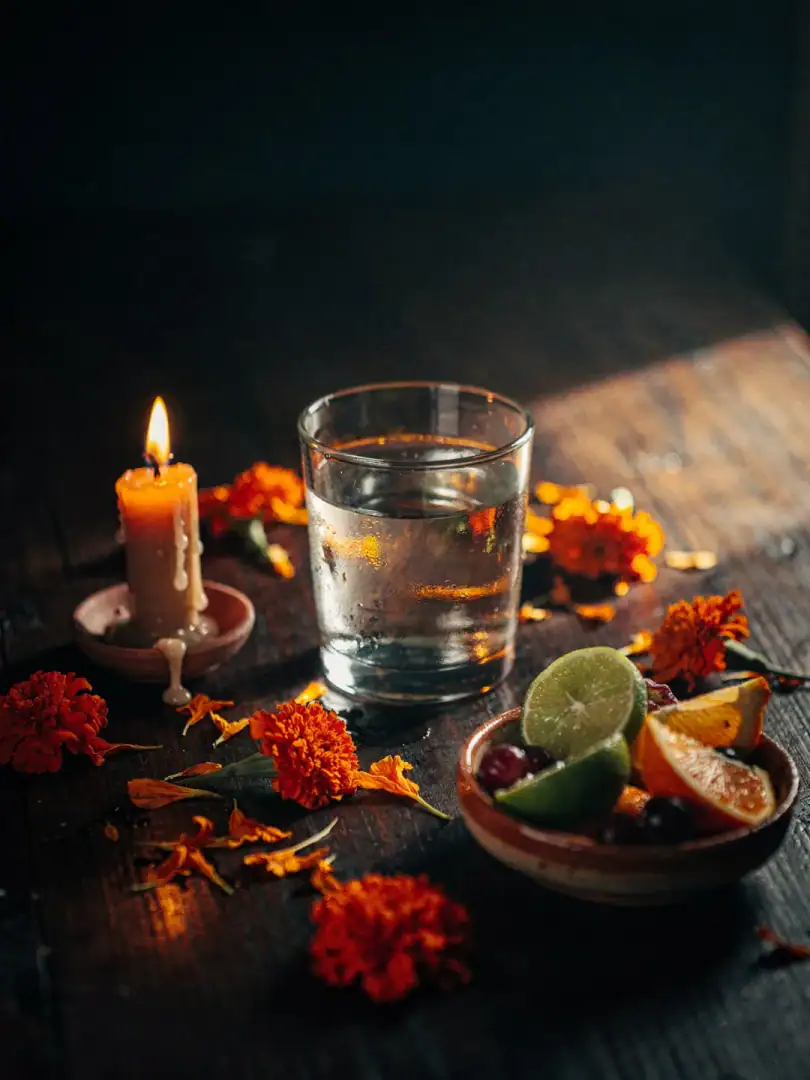
On the Ofrenda: a Sip for the Dead
For Día de Muertos, the Day of the Dead on November 1st and 2nd, families build an Ofrenda, an altar with photos, marigolds, and the deceased's favorite dishes.
If someone enjoyed Tequila or Mezcal during their lifetime, a glass of it is placed on the altar too – an invitation to return for one night and join the celebration.
Agave Spirit as a Wedding Gift
At weddings, small bottles of Mezcal or Tequila are a common gift for guests, often labeled with the couple's names and the wedding date.
Guests take them home as a keepsake rather than emptying them on the spot – a memento that lasts longer than the celebration itself.
Hospitality: Offering a Glass
Offering a guest a glass upon entering the home is considered a gesture of warmth throughout much of Mexico.
How binding this custom is depends heavily on family and region. There's no blanket rule that one "must" accept, but there is an expectation that an offer will be made at all.
Regional Differences: Oaxaca and Jalisco
In Oaxaca, Mezcal is usually involved on such occasions, while in Jalisco it's more often Tequila – both regions link their respective spirit to celebration, family, and memory.
Those celebrating without alcohol increasingly find non-alcoholic alternatives at such gatherings too, a trend still young compared to the long tradition of the spirits themselves.
El Grito: Tequila for Independence Day
On the evening of September 15th, the eve of Mexican Independence Day, the "Grito de Independencia" calls crowds together nationwide – from small village squares to the National Palace in Mexico City. After the cries of "¡Viva México!", a shared toast often follows, in many families with Tequila.
The custom varies in strength by region: in Jalisco, the birthplace of Tequila, raising a glass is almost a given part of the celebration, while elsewhere beer or no alcohol at all is just as common.
The dates are often confused: the actual proclamation, the "Grito," takes place during the night of September 15th into the 16th, and celebrations happen on both days. September 16th is the official public holiday, commemorating the start of the War of Independence in 1810 – but the grand ceremony with the proclamation and subsequent toast takes place the evening before.
Quinceañera and Other Family Celebrations
At the Quinceañera, the celebration marking many Mexican girls' fifteenth birthday, adult guests often raise a brief Brindis, a toast, usually with Tequila. The young woman herself remains the center of the celebration, not the drink.
Similar short toasts are also part of weddings, baptisms, and milestone birthdays – a shared glass raised to those celebrating, not as an invitation to keep drinking, but as a gesture.
Charreada: Tequila at the Mexican Rodeo
At the Charreada, the traditional Mexican riding and rodeo competition, a glass of Tequila for spectators and riders is often part of the afternoon, especially in Jalisco, considered the birthplace of the Charreada. Mariachi music, horses, and a Tequila in hand form an image that stands internationally for Mexican festive culture, even if it captures only one slice of it.
As with the Grito or the Quinceañera, the drink remains a companion to an occasion that also works without alcohol. Those who don't drink miss out on neither the music nor the competition.
In other regions of Mexico, different festivals serve a similar function: harvest festivals, patron saint celebrations, or local rodeos bring together music, food, and a glass of agave spirit in comparable ways. What usually differs is just the name of the occasion and the drink served with it – Tequila in Jalisco, Mezcal in Oaxaca, and elsewhere also Bacanora or Sotol.