Sweet, peppery, herbal
Tasting cooked agave
Before oak, smoke, or additives come into play, every agave spirit carries a base note: the cooked agave itself. Once you've learned to recognize this base note, you'll stop calling every tequila or mezcal just "harsh."
Sweetness reminiscent of cooked fruit
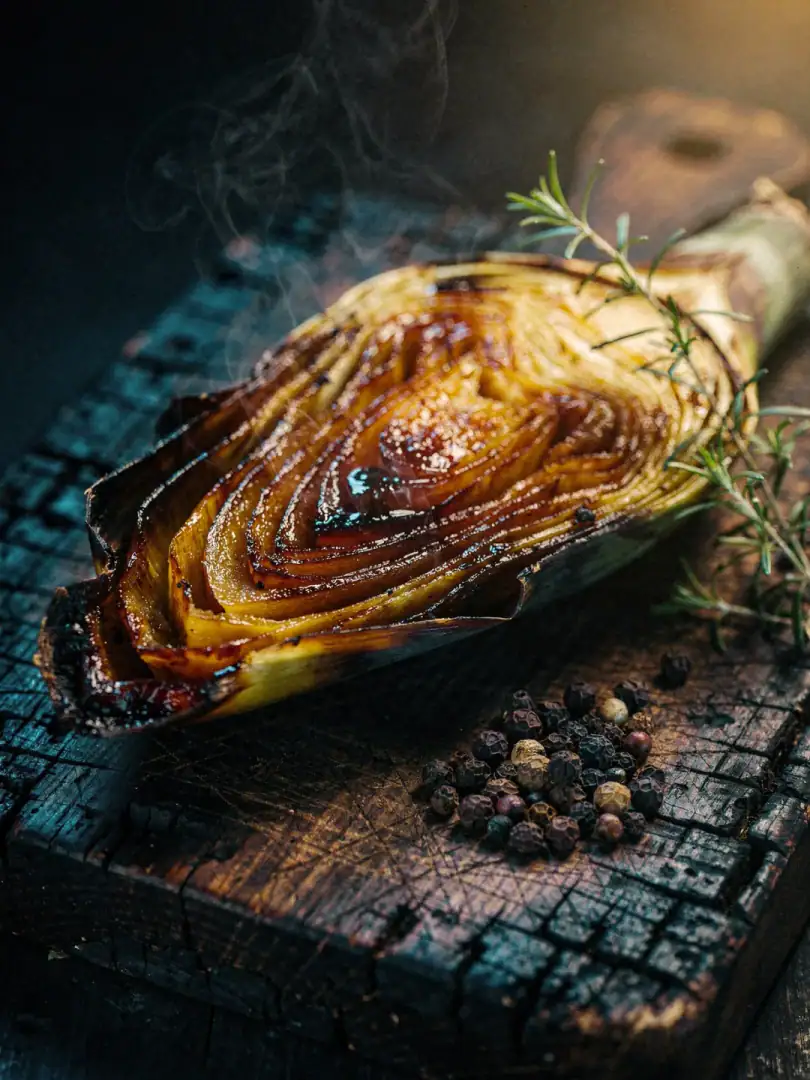
Raw agave hardly tastes sweet at all, because its carbohydrates exist as long fructan chains that the body can't absorb directly. Only cooking, whether in an oven, an earthen pit, or an autoclave, breaks these chains down into fermentable sugar. This produces roasted aromas strongly reminiscent of baked pumpkin, caramelized pineapple, or steamed sweet potato.
This base note survives fermentation and distillation and forms the sweet foundation of almost every agave spirit. It shows most clearly in a fresh blanco, since no wood and no long aging cover it up yet.
Peppery heat without chili
Alongside the sweetness, many agave spirits show a peppery note. It has nothing to do with heat in the sense of chili, but rather recalls black pepper or freshly ground spice. This note comes partly from the agave itself and partly from fermentation byproducts. How pronounced it is depends on yeast and temperature.
Anyone wanting to learn to distinguish this peppery quality from pure alcohol burn should pay attention to one difference. Right up front in the nose, it's the ethanol that stings. Only in the mouth, on the palate, does the actual spicy note appear.
Herbal and green: the vegetal side
Many agave spirits also show a green, herbal side that can recall cilantro, freshly cut grass, or olive brine. This note comes from compounds already present in the fresh plant. Cooking doesn't destroy them completely. It tends to show up more strongly in young, undiluted spirits than in long-aged ones.
With some production methods, such as the diffuser process, the agave doesn't cook through completely. Then this green note stands out especially strongly and comes across as unripe rather than spicy. That's a sign that part of the actual cooking process is missing here.
Citrus freshness as a fourth layer
A fourth, brighter layer recalls citrus peel, sometimes grapefruit or green lime, even though the agave spirit contains no fruit whatsoever. This freshness comes from volatile aromatic compounds. They're newly formed during fermentation and distillation, not supplied by the agave itself.
Anyone who can name the four base notes, sweet, peppery, herbal, and citrus, individually has the most important tool in hand for every further stop on this journey. Smoke, wood, or a particular agave variety only ever change how pronounced these four layers are. Whether they exist at all doesn't change because of that.
Why water helps when nosing
A few drops of still water in the glass noticeably change the four base notes. The alcohol recedes somewhat as a result. The sweetness of the cooked agave often becomes clearer to perceive at the same time. Many experienced tasters use this trick deliberately with very high-proof spirits.
Anyone who smells the same glass once neat and once with a little water learns to recognize the four base notes individually faster. Too much water, however, also dilutes the flavor itself. A small splash is usually enough to make the difference clear.
How fermentation shifts the four base notes
During fermentation, either wild yeasts from the air and from the agave itself do the work, or a lab-cultivated commercial yeast. Open vats made of wood or stone with wild yeasts often take several days. Alongside the yeasts, lactic acid bacteria and other microbes lend a hand too. The result is a broader spectrum of aromas, often with more of the peppery and herbal notes from this stage.
Commercial yeast, by contrast, works faster and more evenly, often in closed steel tanks at a controlled temperature. Fermentation then takes only one to two days. The result usually tastes cleaner and more predictable, but often also a bit flatter in the peppery and herbal notes. Many major tequila brands rely on commercial yeast for the sake of consistency, while small, traditional distilleries frequently stick with open, wild fermentation.