Ground in the glass
Highlands versus Lowlands
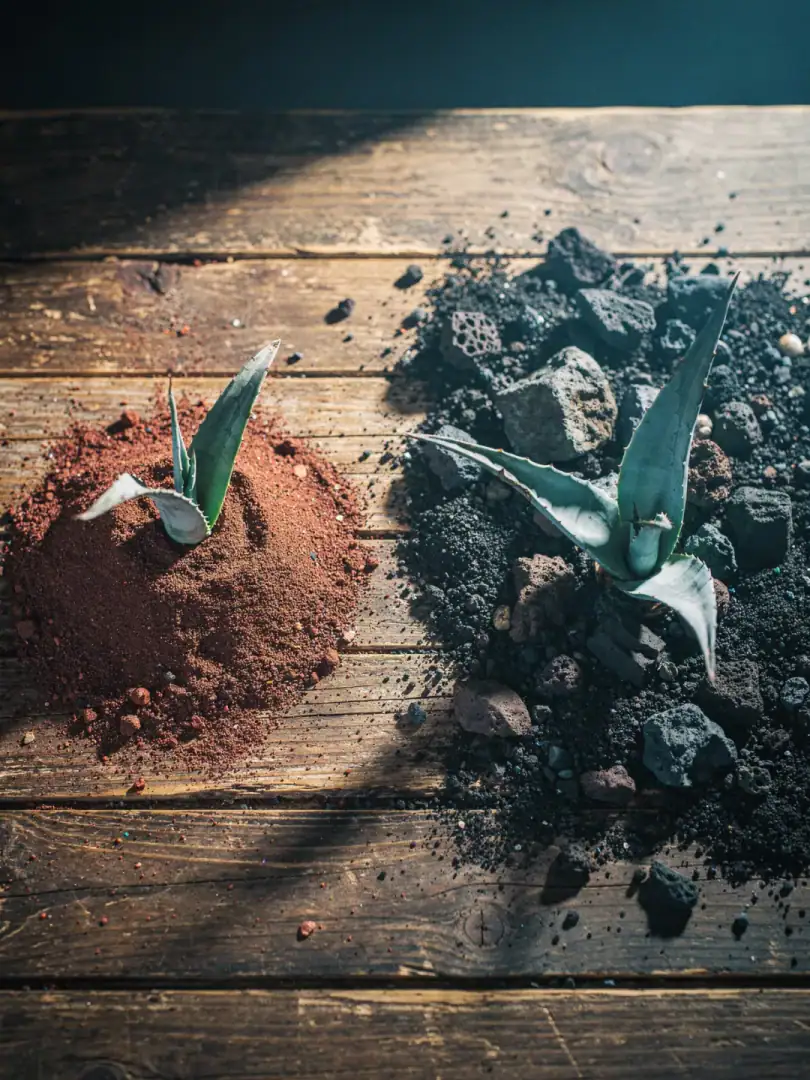
Two landscapes shape tequila more than any marketing story ever could: the red highlands of Los Altos and the volcanic valley around the town of Tequila. Both lie within the same protected region, and yet you can often taste the difference from the very first sip.
Los Altos: higher, cooler, red soil
Los Altos, the highland plateau east of Guadalajara, sits significantly higher than the actual Tequila valley. The soil there is iron-rich and reddish, and the nights are cooler. Agaves grow more slowly here. Based on the experience of many distillers, this makes them larger and richer in sugar before harvest.
Tequila from this region is often considered by connoisseurs to be fruitier and more floral, with notes of cooked apple, citrus blossom, or even caramel, even before any barrel comes into play. This attribution rests on years of tasting experience, not on any official classification. The NOM-006 standard doesn't officially recognize "Highland" or "Lowland" at all.
Valle de Tequila: hotter, volcanic soil
Around the town of Tequila that gives the spirit its name lies the lower-lying valley with dark, volcanic soil and a noticeably warmer climate. Agaves ripen here under different conditions than in the highlands. Distillers and experienced tasters have for decades associated this with a more earthy, mineral, and vegetal character in the finished tequila.
Where Los Altos is often described in terms of fruit and blossom, the word "green" or "earthy" comes up more often for Valle de Tequila. Many well-known brands from this area still cultivate this association today. No standard, however, sets this distinction down as binding anywhere.
Why the soil doesn't explain everything
As common as the Highland–Lowland distinction is in tasting notes, it can't be traced back to a single cause. Altitude, soil type, rainfall, the agave's ripening time, and the distiller's skill all act together at once. Two tequilas from the same region can still differ noticeably.
Anyone wanting to trace this distinction in the glass should therefore treat it as a rough compass rather than a fixed law. It helps form an initial expectation. But it doesn't replace your own nose when it comes to a particular bottle.
Both styles in direct comparison
The difference becomes clearest when two blanco tequilas stand side by side, one explicitly from Los Altos, one from Valle de Tequila, both of comparable quality and without extended barrel aging. This direct comparison shows, faster than any description could, just how strongly origin can shape the character of a single agave variety.
The same logic applies on a smaller scale to mezcal. Depending on the state, region and soil also shape its character, just across a much larger area and many more agave species. How strongly this plays out becomes clear at the next stops on this journey.
What else matters: sun, wind, and the age of the still
Altitude and soil only explain part of the story. Sun exposure, the wind direction across a field, and the age of the distilling equipment also influence the result. Two neighboring agave fields in Los Altos can therefore already ripen differently.
Some distillers deliberately blend agaves from both landscapes to achieve a particular flavor profile. Others rely consciously on a single origin. This choice rarely appears on the label, yet it still shows in the glass.
Numbers on altitude: how big is the difference really
According to common figures, Los Altos sits at roughly 1,500 to over 2,000 meters above sea level, with some villages even higher. The Valle de Tequila around the town of Tequila and neighboring Amatitán, by contrast, sits at around 1,200 meters. A difference of several hundred meters is enough to make nights in Los Altos noticeably cooler than in the valley.
These numbers explain why agaves in Los Altos take longer to ripen, and why distillers attribute different characters to the two landscapes. Such boundaries aren't officially surveyed, since the NOM-006 standard doesn't draw an altitude line. Anyone buying a bottle labeled "Highland" or "Lowland" is therefore buying the producer's stated origin, not a legally verified category.