The plant shapes the aroma
The signature of the agave varieties
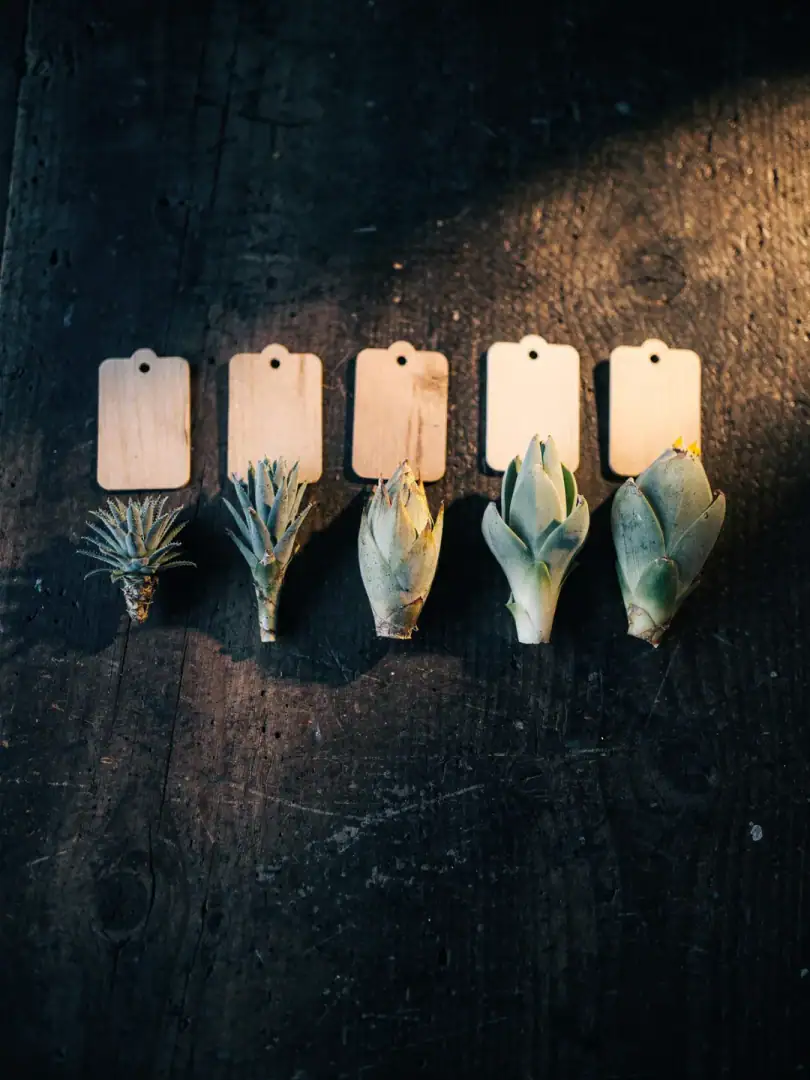
Espadín, Tobalá, Tepeztate, Cenizo, Salmiana, or Cupreata – each of these agaves gives a mezcal its own character, long before the oven, the wood, or the distiller ever come into play.
Espadín: the reliable base
Espadín, botanically Agave angustifolia, supplies the bulk of the mezcal sold today. It reaches maturity after just six to eight years and can be cultivated rather than only foraged. Its flavor profile is considered comparatively balanced: sweet-earthy, lightly herbal, without extreme swings in any particular direction.
This very reliability makes Espadín a good starting point for anyone learning to tell agave varieties apart. It shows the base notes from the third stop on this journey especially clearly. An unusual plant trait barely shifts these base notes in its case.
Tobalá and Tepeztate: wild and slow
Tobalá, botanically Agave potatorum, grows wild, usually in the shade of trees. It yields much smaller piñas than Espadín. Mezcal made from Tobalá is often considered floral and fruity among connoisseurs, sometimes with a delicate sweetness that recalls blossoms more than cooked vegetable.
Tepeztate takes even longer. Some specimens grow for fifteen to twenty-five years before they're ripe, often on steep slopes. The mezcal distilled from it often tastes intensely herbal and mineral, with a texture many describe as oily or dense. This is a result of the plant's long maturation time.
Cenizo and Salmiana: robust and green
Cenizo, named for the ashy gray color of its leaves, grows mainly in northern Mexico, for instance in Durango. According to widespread tasting experience, it yields a rather earthy, slightly mineral mezcal. Salmiana, on the other hand, botanically Agave salmiana, is one of the largest agave species of all and is traditionally also used to make pulque.
As mezcal, Salmiana often shows a pronouncedly green, vegetal side, sometimes with an almost peppery bite. Both varieties represent the more robust, earth-bound side of the mezcal family. This sets them apart from Tobalá's more fruit-driven line.
Cupreata: Michoacán's own signature
Cupreata, named for the copper-colored underside of its leaves, grows mainly in Guerrero and Michoacán. It produces a mezcal often described as fruity-sweet with a subtle tropical note. Michoacán has only officially belonged to the mezcal region since 2012, even though traditional methods have long been used there.
Six agaves, six clearly different starting points. The actual variety of wild agaves used for mezcal is even greater still. Anyone who has tasted these signatures side by side stops talking about "the" mezcal flavor, just as talking about "the" tequila flavor doesn't work either.
Why blends blur the signature
Some mezcals are deliberately made from several agave species at once, often called an Ensamble. An Ensamble of Espadín and Tobalá tastes neither purely like one nor the other. It sits somewhere in between and also shifts from batch to batch.
Anyone who really wants to learn the individual signatures should therefore start with single-varietal mezcals featuring just one agave on the label. Only afterward is it worth comparing with an Ensamble. That way you can hear how two voices sound together, rather than only picking out a single one.
Why wild agaves aren't unlimited
Varieties such as Tobalá or Tepeztate grow wild and take many years to reach harvest. Because they aren't planted in rows like Espadín, jimadores collect them individually from forests and slopes. If demand for a rare mezcal rises faster than the plants can regrow, that particular wild agave becomes scarce in its region. Part of the problem is also tied to bats, which pollinate flowering agaves at night and in doing so provide genetic diversity. If an agave is harvested before flowering, the bat gets no food, and the plant can't reproduce naturally.
Programs such as "Bat Friendly" therefore encourage letting a portion of every wild agave flower before it's harvested. Some mezcal producers also raise seedlings of rare species in their own nurseries and later replant them in the wild. This changes neither the taste nor the signature of the respective agave variety. But it does help ensure that Tobalá or Tepeztate keep ending up in the glass in the future, tasting the way they do today.