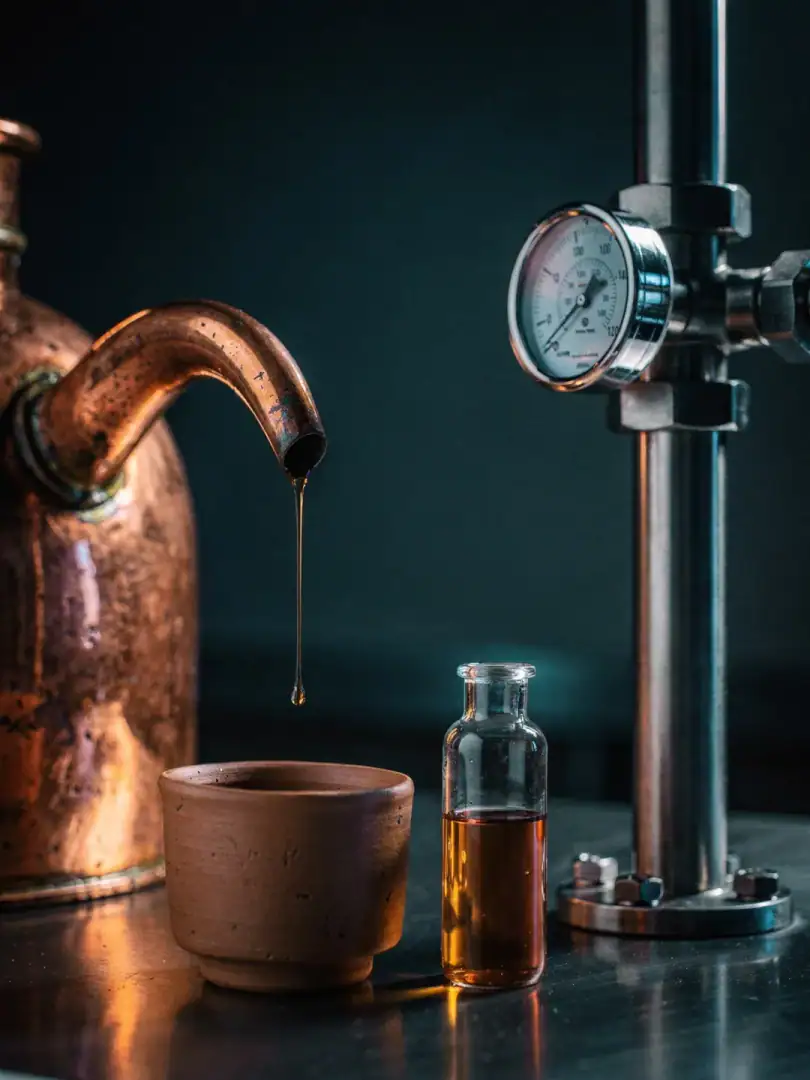
Diffuser versus oven
Industrial or artisanal
Two bottles with the same word on the label can come from completely different worlds: from a hand-operated oven in a village, or from a factory plant with a diffuser and added caramel.
What a diffuser does to the agave
A diffuser mechanically shreds raw, uncooked agave. It then extracts the sugars using hot water and acid, rather than roasting the whole piña in an oven. This method saves time and energy. But in doing so, it skips exactly the roasting step that creates the sweet, cooked aromas from the third stop on this journey.
In the glass, this often shows up as a strikingly neutral, sometimes almost watery taste. Occasionally a faintly green or plasticky note joins in, since some of the raw, uncooked plant comes through. Many simple, low-priced tequilas go through this process because it's cheaper and faster than the traditional oven.
What the oven and the barrel add
Traditional ovens or autoclaves roast the whole piña over hours to days. This is exactly what creates the caramelized, sweet roasted aromas that distinguish a carefully distilled agave spirit from a diffuser product. This extra step costs more time, but it clearly pays off in flavor.
After distillation, the tequila standard also permits what's called abocamiento. Caramel, oak extract, glycerin, and sugar syrup together may make up around one percent of the weight without needing to appear on the label. Only Blanco is subject to stricter rules on such additions. The exact limits for this are debated within the industry itself.
Spotting additives in the glass
Caramel coloring is rarely detectable by taste, but sometimes by a color that looks more intense than the stated age would suggest. A young Reposado with a strikingly dark amber hue doesn't necessarily get that color from the barrel alone. Glycerin, on the other hand, doesn't change the flavor but the texture. It makes the agave spirit rounder and thicker in the mouth, with visible "legs" that slowly run down the side of the glass.
Sugar syrup adds a smooth, almost neutral sweetness that feels different from the natural, slightly earthy sweetness of cooked agave. Independent verifications like the so-called "additive-free" seal came about for exactly this reason. Such additives carry no labeling requirement in Mexico and are otherwise hard to detect.
Craftsmanship shows through several signs
No single trait alone proves whether an agave spirit was made by hand or by industrial process. Only several clues together give a reasonably reliable picture: a pronounced roasted sweetness rather than green sharpness, a texture without exaggerated thickness, a color that matches the stated age.
The same logic applies to mezcal. The standard itself already clarifies which method is permitted through its three tiers: Ancestral, Artesanal, and industrial mezcal. Using both the label and your own nose together gets you closer to the truth than relying on either alone.
Why price alone proves nothing
A high price doesn't automatically guarantee craftsmanship without additives. Some brands mainly pay for marketing, bottle, and packaging, not for the contents. Conversely, there are affordable, artisanally distilled tequilas from small producers that are barely known.
Anyone who really wants certainty looks for independent certification seals or for producer statements about the cooking method. A label that openly states the oven type and agave content says more than a high price alone. Your own nose, though, remains the final judge.
What "100% Agave" on the label actually means
If a bottle simply says "Tequila" without the addition "100% Agave," it may contain up to 49 percent other sugars, usually from sugar cane. This blend is called Mixto and is explicitly permitted under NOM-006. Mixto tequila is often bottled abroad, which makes it cheaper but also further removed from pure agave.
A genuine 100% agave tequila, by contrast, must come entirely from Blue Weber Agave and be bottled in Mexico at the respective distillery's own facilities. In the glass, this often shows as a more pronounced roasted note and less pure sweetness, since sugar cane syrup tastes more neutral than cooked agave. Anyone wanting to reliably find the base notes from the third stop should therefore reach for a bottle carrying this label statement.