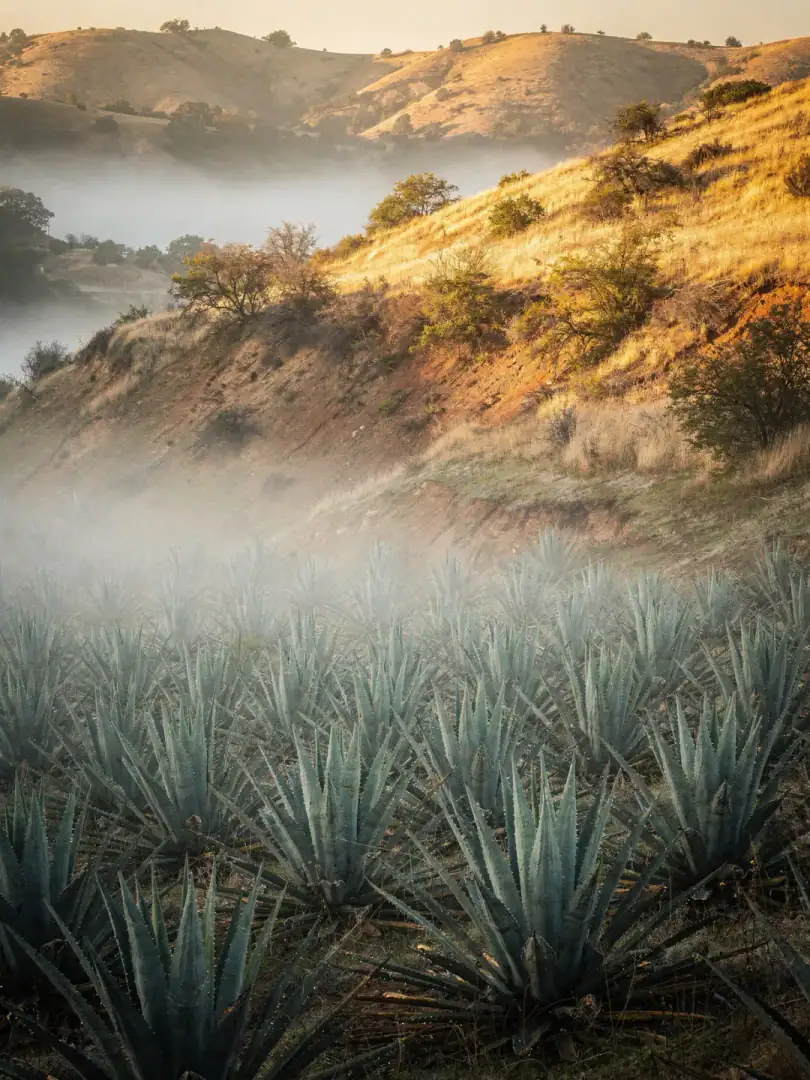
Fog Instead of Desert
Elevation & Climate
The three Californian growing regions sit worlds apart climatically. The Sacramento Valley around Yolo County lies just a few dozen meters above sea level, flat and often blanketed in fog locals call "Tule Fog." On the Central Coast, in canyons like Glen Annie Canyon near Goleta or around Santa Cruz, the Pacific keeps summers cool. Southern California, around Murrieta, lies further inland and noticeably drier.
The same basic pattern holds everywhere: wet, mild winters and dry summers with almost no rain from May to October. This Mediterranean pattern is exactly what made California interesting for agave in the first place, as years of drought called into question the high water demands of wine and almonds. Agave needs almost no irrigation once established.
What's barely an issue in Mexico becomes a real risk in California: frost. In the Sacramento Valley, temperatures occasionally drop below freezing on clear winter nights, a serious threat to the frost-sensitive Blue Agave. Along the milder coast and in the warmer south, that risk shrinks, but summer heat like Jalisco's is often missing too.
Less heat means less time for the piña, the agave's heart, to build sugar during ripening. Distillers in California often describe their raw material as greener and more herbaceous in tone than Mexican agave, with less of the roasted sweetness that hot soils produce. That cooler climate carries through later in the glass.
Three climate zones, one plant: what the fog slows down in Yolo County, the heat speeds up near Murrieta.