Copper, No Rulebook
Fermenting & Distilling
When it comes to distilling, California has no prescribed sequence either, only US law as a framework. An Agave Spirit must be distilled to below 95% ABV. It's bottled at a minimum of 40% ABV, precisely set out in 27 CFR 5.148. How many times it's distilled and what material the still is made from is left entirely up to each distillery. Some distill twice, as is customary in Jalisco, others just once in a larger column still.
Fermentation mostly takes place in stainless steel tanks with cultured yeast, standard practice in the US craft distillery scene. Wood, stone, or leather vats, still used by many Mezcal palenques today, have found no place yet in California's new distilleries. Stainless steel is easier to clean and, in a young industry, cheaper than custom wood or stone vessels.
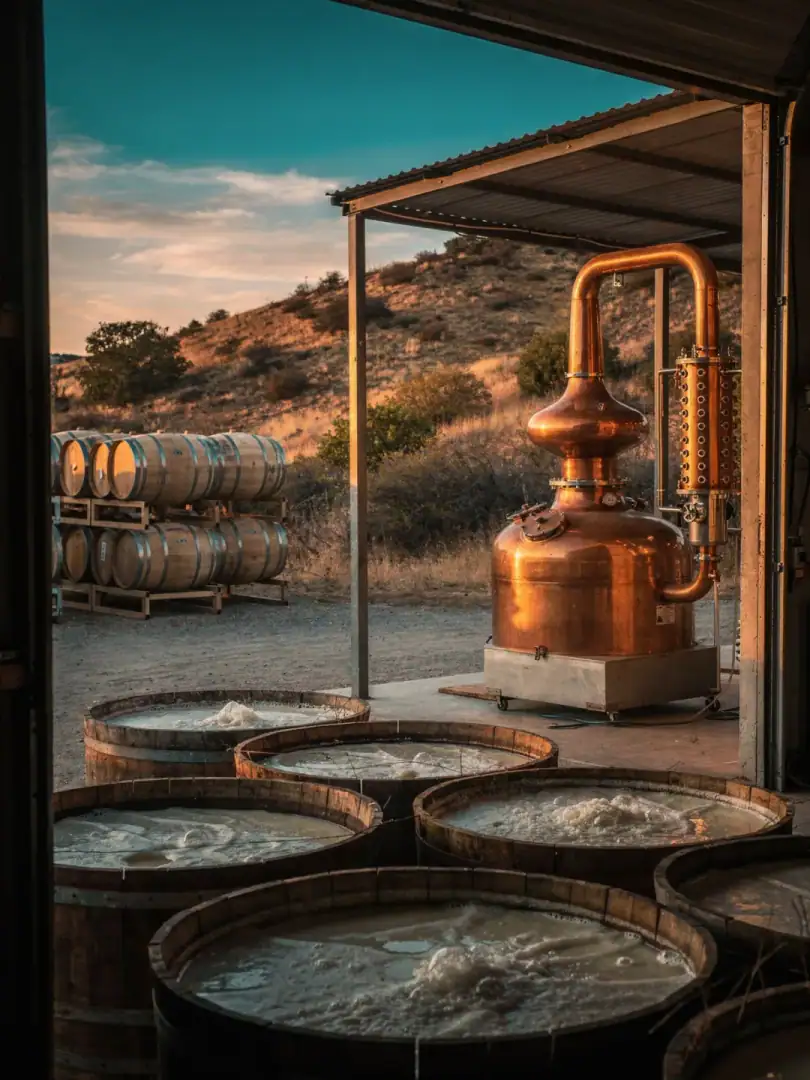
Ventura Spirits ferments its steamed agave mash and distills it twice in a pot still, the same way most Tequila distilleries in Jalisco operate. Venus Spirits of Santa Cruz also relies on double distillation for its "El Ladrón," run through a traditional copper alembic still, the kind Mezcal distillers in Oaxaca also use.
St. George Spirits pressed the mash from its roasted agave through a cane mill. The resulting juice then fermented and was distilled in the distillery's own copper pot stills in Alameda, the same ones otherwise used for whiskey and brandy.
Copper and stainless steel both appear in California; clay does not, at least not yet. Whatever ends up in the bottle may, under US law, call itself Agave Spirit. It may not be called Tequila or Mezcal, even when the process and craft resemble both down to the finest detail.