No Consejo Regulador
Cooking & Milling
Anyone distilling in Jalisco or Oaxaca must follow a prescribed process. It determines the category: autoclave or horno for Tequila, earthen pit for traditional Mezcal. In California, no Consejo Regulador dictates anything. Every distillery chooses its own method, often blending both Mexican traditions.
Ventura Spirits steams its agave hearts for the "Tecolote" bottling from Glen Annie Canyon near Goleta. For the "Yolo" bottling from Craig Reynolds's fields, the piñas are instead steam-roasted. Both methods sit closer to the industrial Tequila approach than to the smoky earthen pit. Either way, both end up simply labeled "Agave Spirit."
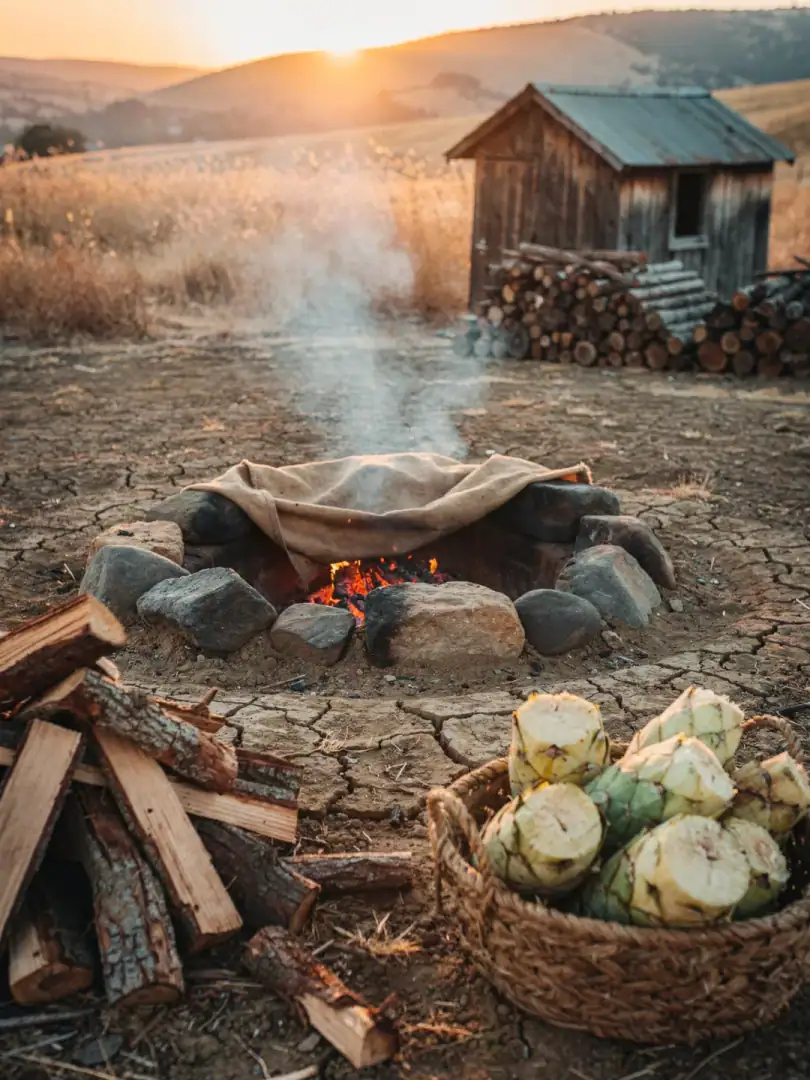
Venus Spirits of Santa Cruz took a different path for "El Ladrón Yolo." The distillery used an earthen pit, the kind common in Oaxaca for Mezcal, with hot stones and a covering of earth. By their own account, it was the first Californian Agave Spirit made using this traditional roasting method.
St. George Spirits in Alameda went a step further back in 2015 and 2019. The piñas cooked for four days in a pit under oak and eucalyptus wood, and in the second trial under almond wood. The roasted flesh then passed through a hammer mill and was soaked in hot water. A cane mill then pressed out the juice, a method borrowing techniques from both Tequila and Mezcal alike.
This is how California ends up with methods side by side that would never land in the same category in Mexico, neither Tequila nor Mezcal. Yet in the end, everything carries the same label: Agave Spirit.