Blanco Without a Law
Maturation
Tequila has legally defined aging tiers. Blanco doesn't age at all, Reposado ages at least two months, Añejo at least a year. There's no such regulation for the US category "Agave Spirits." Blanco, Reposado, or Añejo are just words here. A distillery puts them on the label voluntarily, with no law requiring a minimum aging period behind them. In California, the word "maturation" means less of a guarantee and more of a description.
Venus Spirits of Santa Cruz makes good use of exactly this freedom. Alongside the unaged "El Ladrón Blanco" there's an "El Ladrón Reposada," aged in oak. The name echoes the Spanish sound of the Tequila world, but it commits the distillery to no fixed barrel time, unlike what a Consejo Regulador would require.
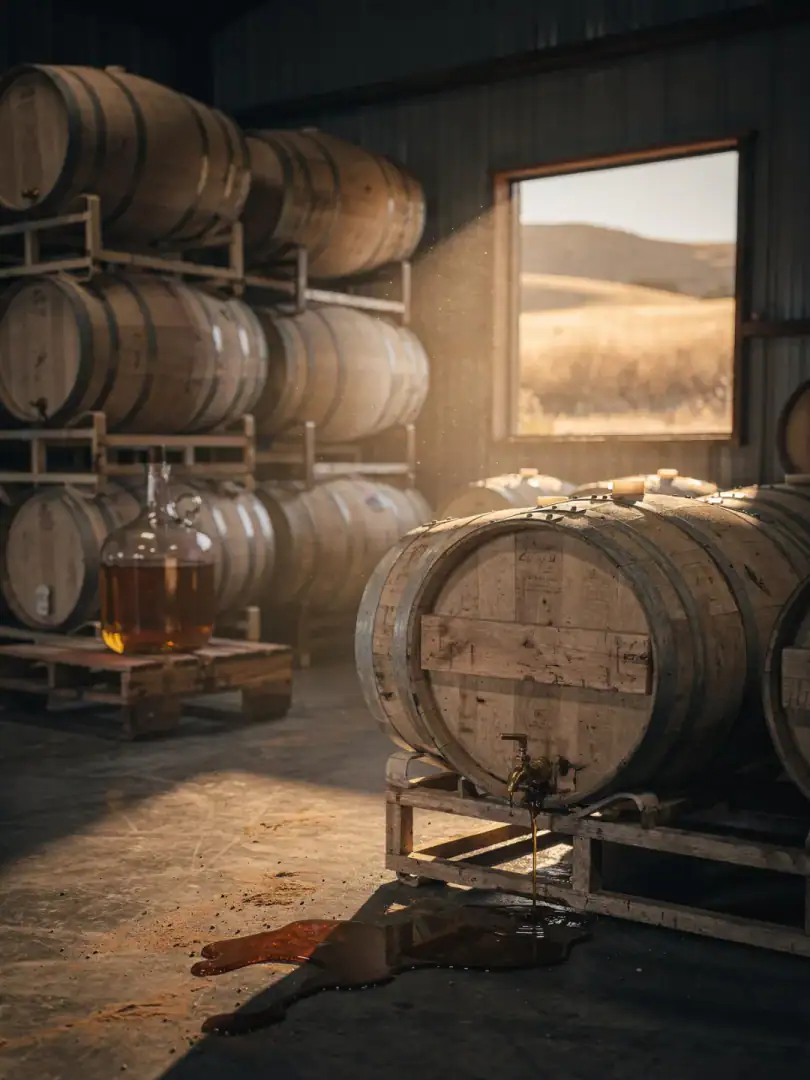
Which barrel gets used is also up to each distillery. In the US craft scene, used American white oak bourbon barrels are common. They're cheap and readily available, and they quickly lend agave spirit notes of vanilla and caramel. Additives permitted under Mexico's abocado practice aren't used here.
What must appear on the label is still governed by federal law: origin, alcohol content by volume, and the designation "Agave Spirits" or an equivalent term. "Tequila" or "Mezcal" may never appear, not even in parentheses or as a comparison, no matter how long the spirit aged or in what type of barrel. Unlike in Mexico, where Añejo and Extra Añejo carry a 600-liter barrel limit, barrel size here remains unregulated too.
The result is aging by feel rather than by rule. The names recall Mexico, but carry none of its regulations.