Agave of the Dry Hills
Agave & Soil
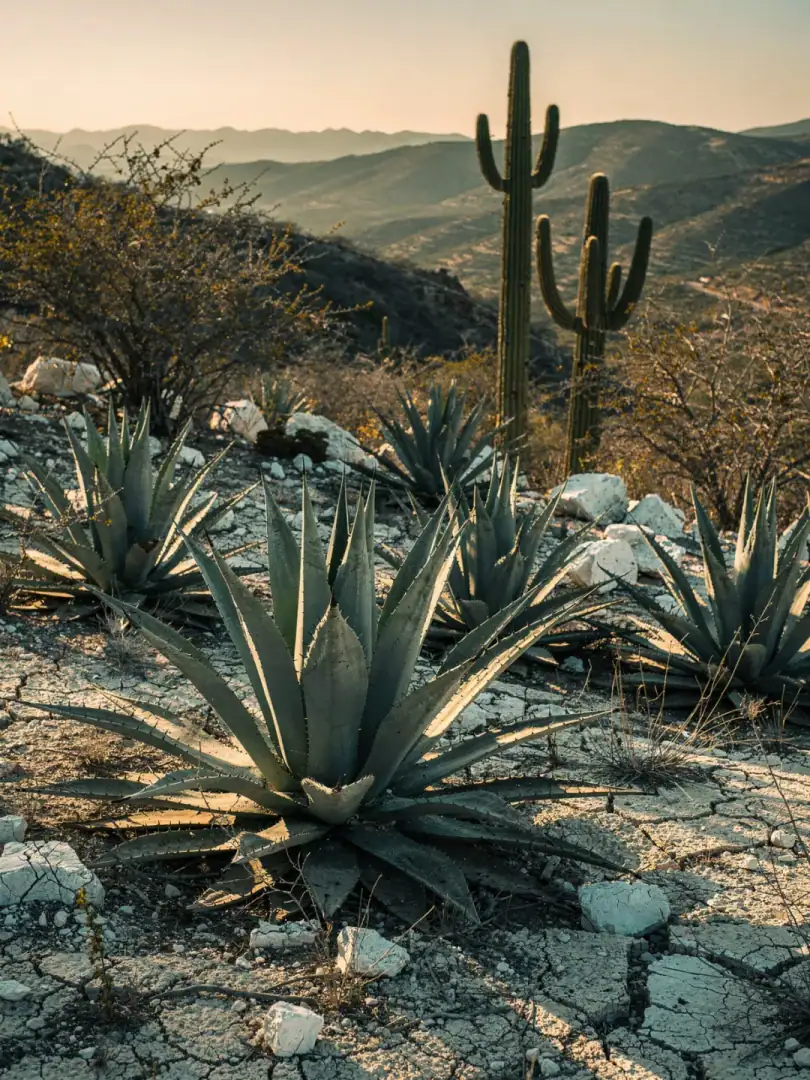
The agave from which Cocuy is made is known botanically as Agave cocui Trelease, named after botanist William Trelease, who described it in 1913. The people of Falcón and Lara simply call it Cocuy or Maguey. It grows wild nowhere else in the world, as the plant is endemic to precisely these two Venezuelan states.
Unlike the blue agave of tequila's fields, Agave cocui is rarely cultivated in rows. It grows wild or in loose family plots among thorn bushes and cacti, often scattered widely across the dry hills. Only occasionally do families plant their own small stands. It takes seven to ten years before a plant is mature enough to harvest. This slow growth stores the years of drought within its stalk.
At harvest, farmers dig up the entire plant, roots and all. Unlike the jimador in Mexico, they don't simply cut off the head. Using a machete, they slice away the thorny leaves, the pencas. What remains is only the starchy stalk, the piña, the raw material for everything that follows.
The soil beneath the agaves is alkaline and stony, rich in calcium carbonate. This barren land supports little besides thorn scrub and cacti such as the cardón. This very mineral, austere ground is considered one of the reasons for the high sugar content. Even before the agave is harvested, it has already accumulated a wealth of aroma in its stalk.
A thin, reddish-brown layer of humus that barely holds rainwater.
The root: The shallow roots soak up every brief rainfall immediately.