Day and Night
Altitude & Climate
Pecaya lies in the low, dry foothills of the Sierra de San Luis. The humid ridges of the Sierra sit considerably higher than the town itself. No reliable elevation figure for Pecaya appears in the sources. Just a few kilometers higher, on the slopes of the Sierra, 1,000 to 1,400 millimeters of rain fall annually, with temperatures between 15 and 25 degrees Celsius. In Pecaya itself, the air is noticeably drier and warmer.
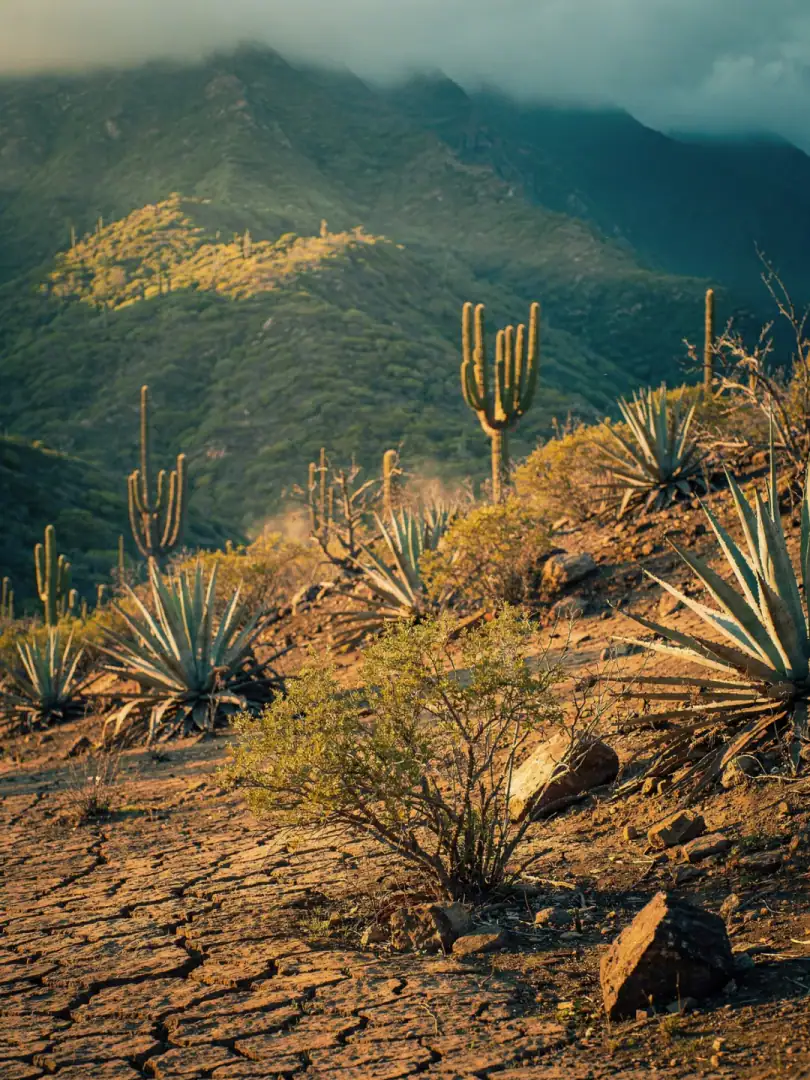
The climate around Pecaya is classified as tropical dry. Days are hot, nights strikingly cool. This swing is typical of Falcón's semi-arid zones and slows the agave's growth. Over the years, the plant stores sugar in its stalk as a result.
Rain falls mainly in short, irregular bursts, followed by long dry spells. During these periods, the agave lives off stored water. Frost is practically unheard of at this elevation, but the sun beats down relentlessly on the bare hills by day.
For the people of Pecaya, this connection isn't theory — it's the lived experience of every dry year. Little rain and sharp temperature swings produce a slower-growing piña. By the end of its ten years, though, it is sweeter and more aromatic for it.
A comparison with the great agave-growing regions of Mexico shows the contrast. The highlands of Jalisco lie considerably higher and cooler than the hills around Pecaya. The mountainous regions of Oaxaca, where much mezcal is produced, are also more humid than dry Falcón. Agave cocui thus grows under harsher, drier conditions than its Mexican relatives.