Chardonnay, Pinot, Meunier
Grape varieties
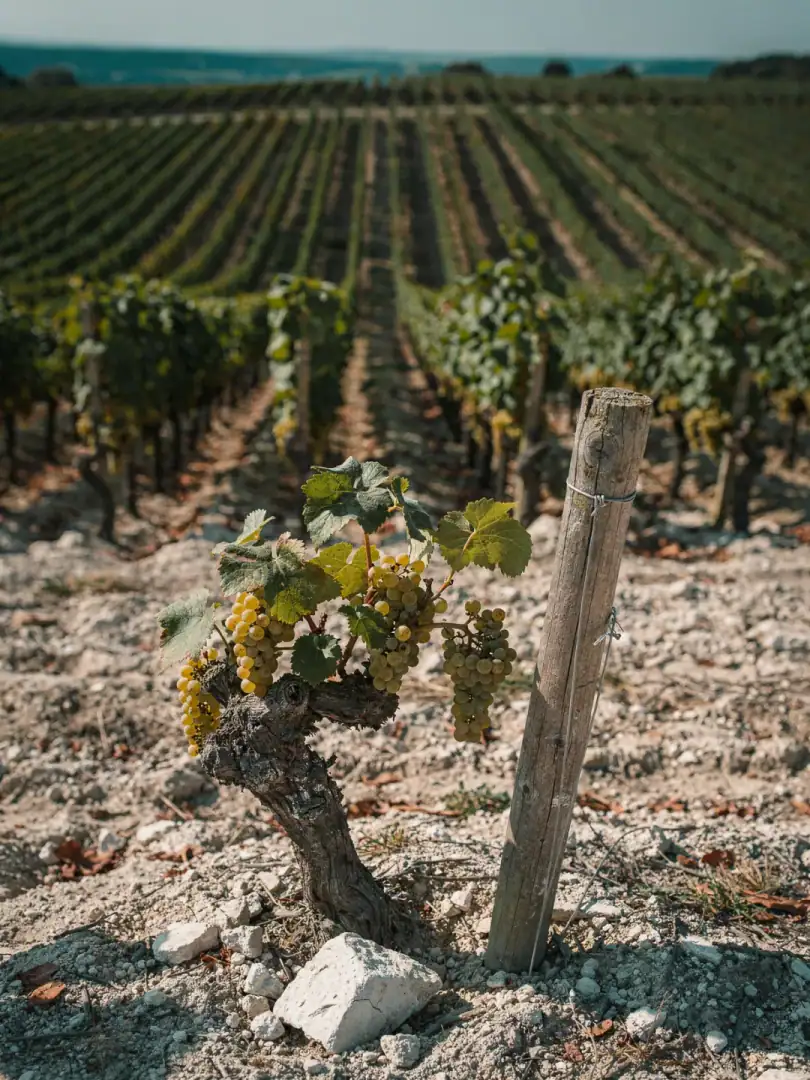
Three grape varieties account for practically the entire Champagne vineyard. None of them produces the finished wine on its own. It's always a blend. Pinot Noir covers a good third of the area and contributes power and structure, along with dark berry fruit, even though it's almost always pressed into white juice. Chardonnay, the only white variety among the three, accounts for just under a third. It supplies the acidity that can carry a Champagne for decades. The rest is Meunier: unassuming, but indispensable.
Meunier buds later in spring than its two siblings. That protects it from the dreaded late frost. It also copes better with the clay-sandy soil of the Vallée de la Marne than any other variety here. Its name, Meunier, meaning 'miller,' comes from the floury down on the underside of its leaves, which growers noticed centuries ago without knowing the botany behind it. In the wine, it brings fruit and roundness, along with approachability while young. Many small growers therefore prefer to plant Meunier, while the big houses tend to favor Chardonnay and Pinot Noir.
Where each variety performs best is almost self-evident from the map. On the Côte des Blancs, south of Épernay, almost exclusively Chardonnay is grown, because that's where the purest chalk in the entire region lies. On the Montagne de Reims, the wooded ridge to the north, Pinot Noir dominates. In the Vallée de la Marne, the river valley in between, it's Meunier. A Champagne from just one of these three zones tastes correspondingly different from one made in another, even if both are single-varietal from the same grape and harvested in the same year.
Four further varieties are permitted but have practically vanished. Hardly anyone grows them today. Pinot Blanc, Pinot Gris, Arbane, and Petit Meslier together cover less than three-tenths of a percent of the vineyard area. Arbane ripens so late and so unreliably that it nearly died out. A few growers still cultivate it anyway, because its wine has a finesse none of the three main varieties can deliver. At the end of 2022, an eighth variety was even added: Voltis, bred for fungus resistance and approved as the first disease-resistant grape variety ever in a French appellation. A small but very modern break with a rulebook that otherwise allows almost nothing new.