Pressing, Not Maceration
Winemaking
A Provence rosé is made differently than most people assume: not from white grapes, but from red ones given barely any time to release their color. Pressed immediately, the juice stays almost clear. This is called pressurage direct, direct pressing, and it's the region's most common method.
Some estates instead let the skins sit in tank for a few hours, chilled to around fifteen degrees Celsius, before pressing — this brief skin contact gives the wine more color and more scent of red fruit. Time determines the color. How long these hours last ultimately decides whether a rosé stays nearly transparent or tips toward salmon.
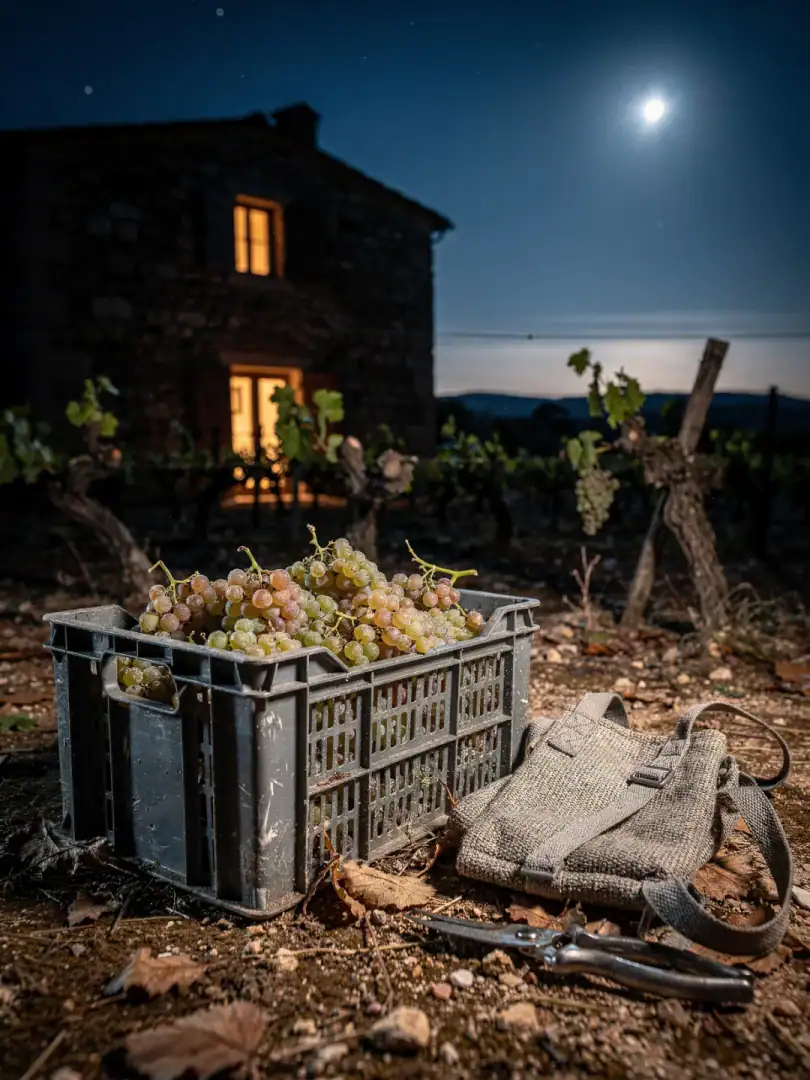
Much begins before the press, namely at harvest itself. Provence sees daytime temperatures above thirty degrees Celsius in August. Many estates therefore bring in their grapes at night or in the early hours, often as early as three a.m. with headlamps. The berries then arrive in the cellar at around fifteen degrees instead of over thirty. This preserves acidity and aromas that a hot journey would otherwise destroy.
A cool, slow fermentation at around eighteen degrees follows, preserving the delicate fruit aromas instead of cooking them away. Coolness protects the aroma. The rosé is aged almost always in stainless steel, without oak, since vanilla and toasted notes would have no place in this pale, fresh style. Bottling usually happens in spring after harvest, sometimes as early as winter.
A red Bandol works entirely differently. The appellation rules require a minimum aging of eighteen months in wood, traditionally large, old foudres, in which the Mourvèdre receives only slow, gentle contact with air. Anyone who harvested in 2024 may sell their Bandol no earlier than mid-2026. By that point, a rosé from the same vintage is already the next harvest in the glass.