Lava, Ash, Pumice
Soils
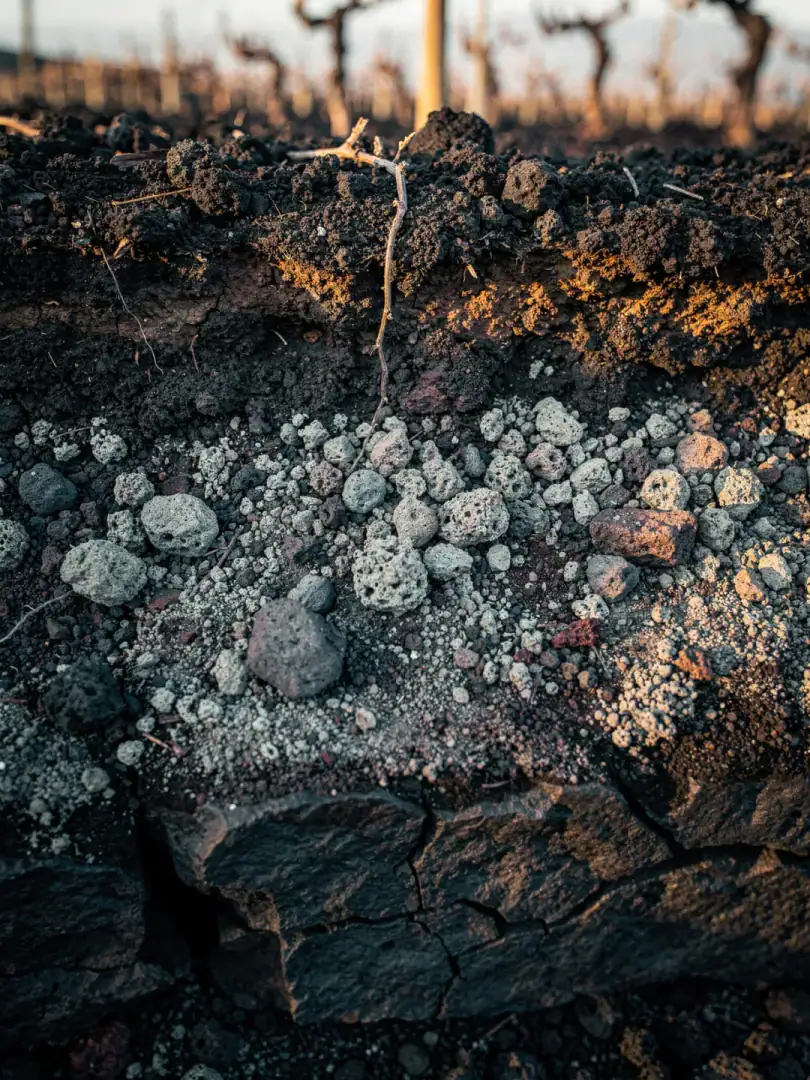
Dig a hole in a vineyard on Etna, and the first thing you hit is ash. It's dark, fine, almost like pepper, and comes from one of the many eruptions that have reshaped the mountain again and again over the centuries. Limestone or chalk, familiar from many other wine regions, you won't find here. Etna knows almost no limestone at all.
Every layer beneath tells the story of a different eruption. Lava that flowed a hundred years ago differs in structure and mineral content from lava that solidified a thousand years ago. In between lie bands of lapilli—small, porous rock fragments known locally as ripiddu. This mix of age and material often turns neighboring vineyards, the so-called contrade, into completely different wines.
Water runs through this soil as if it met no resistance at all. The structure of sand, ash, and pumice lets rain seep away almost instantly, forcing the vine to send its roots deep into the rock just to find any moisture at all—some reach down several meters, passing through three or four different lava layers. This work costs the plant energy. In return, it rewards the vine with a concentration you can later taste in the glass.
What the soil does offer in abundance is iron, potassium, and magnesium—minerals released as the rock weathers. This same sand also has a curious side effect: it kept phylloxera away in places. That's the root-eating pest that nearly wiped out Europe's vineyards at the end of the nineteenth century. Old vines still stand here as a result. They grow on Etna on their own roots, planted without the usual American rootstock.
Even so, one rule still holds: a root doesn't drink rock. What connoisseurs describe as "volcanic minerality"—that smoky, saline streak carried by many Etna wines—doesn't come from dissolved stone particles in the glass. The soil works indirectly, through heat retention, water balance, and the depth it forces the roots to reach. On Etna, this indirect effect is so striking simply because hardly any vineyard in Europe stands on rock this young and restless. The Nerello Mascalese grown here carries this origin into the glass with unmistakable clarity.
A thin, dark layer of volcanic ash and decomposed leaf litter. Heavy rain washes it away easily.
The root: Only the fine roots sit here—during drought, they're the first to give up.