Pale and Dark
Glassware
Two almost opposite red wines grow on the same island, and neither fits the other's glass. An Etna Rosso from Etna, made from Nerello Mascalese, is pale, fragrant, and carried by fine acidity; a Nero d'Avola from the coast is dark, powerful, and dense with tannin.
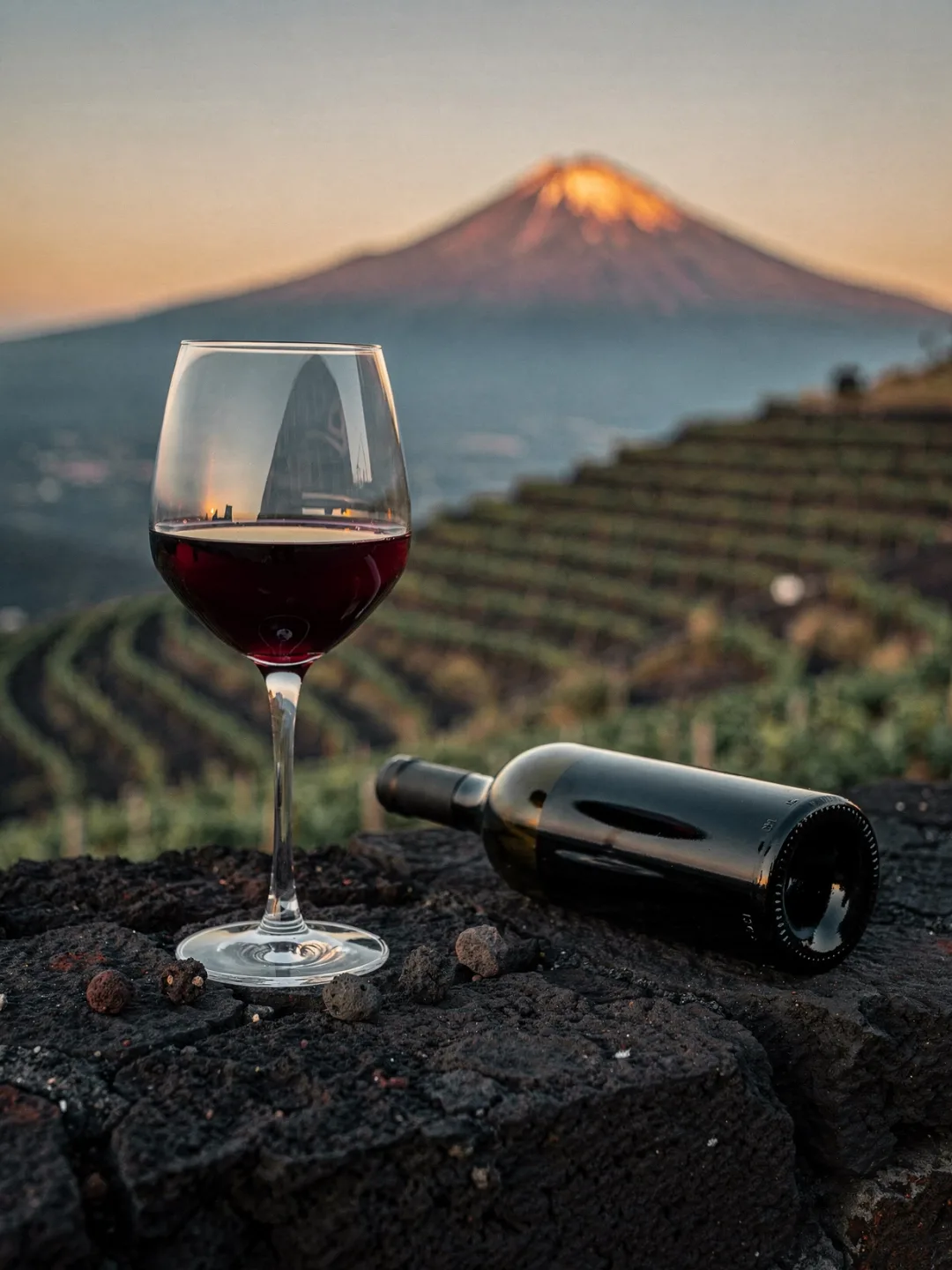
For Etna Rosso, a wide, generously bowled glass pays off, the kind normally used for Pinot Noir. The large surface area lets the delicate aromas—red cherry, herbs, a whisper of smoke from the volcanic rock—rise in the first place, and the narrowing opening then gathers them before they're lost to the surrounding air. Too small a glass smothers this wine before you've even had a chance to smell it properly.
A Nero d'Avola demands the opposite. It wants a slightly slimmer, taller glass with a smaller opening, similar to a Bordeaux glass. This gives the wine enough air contact to soften its tannins. The narrower opening directs it precisely to the center of the tongue rather than the sides, where acidity and bitterness are felt most strongly. Served at sixteen to eighteen degrees Celsius, it shows fruit rather than alcohol. Any warmer, and it quickly loses definition.
Marsala is drunk from a small glass, barely bigger than a double espresso cup. A fortified-wine glass, or a small Sherry glass in a pinch, works perfectly well. With a wine at fifteen to twenty percent alcohol by volume, a large glass would only intensify the heat in the mouth. Instead of carrying raisin, honey, and nut notes, it would mostly emphasize the alcohol.
Almost the same goes for Passito di Pantelleria, only colder. Well-chilled to ten to twelve degrees Celsius, in a small glass, taken in small sips. The concentrated sweetness of the dried Zibibbo can't handle warmth—otherwise it turns cloying rather than fresh. That very freshness is what separates a good Passito from mere syrup.