On an Amarone
Tasting
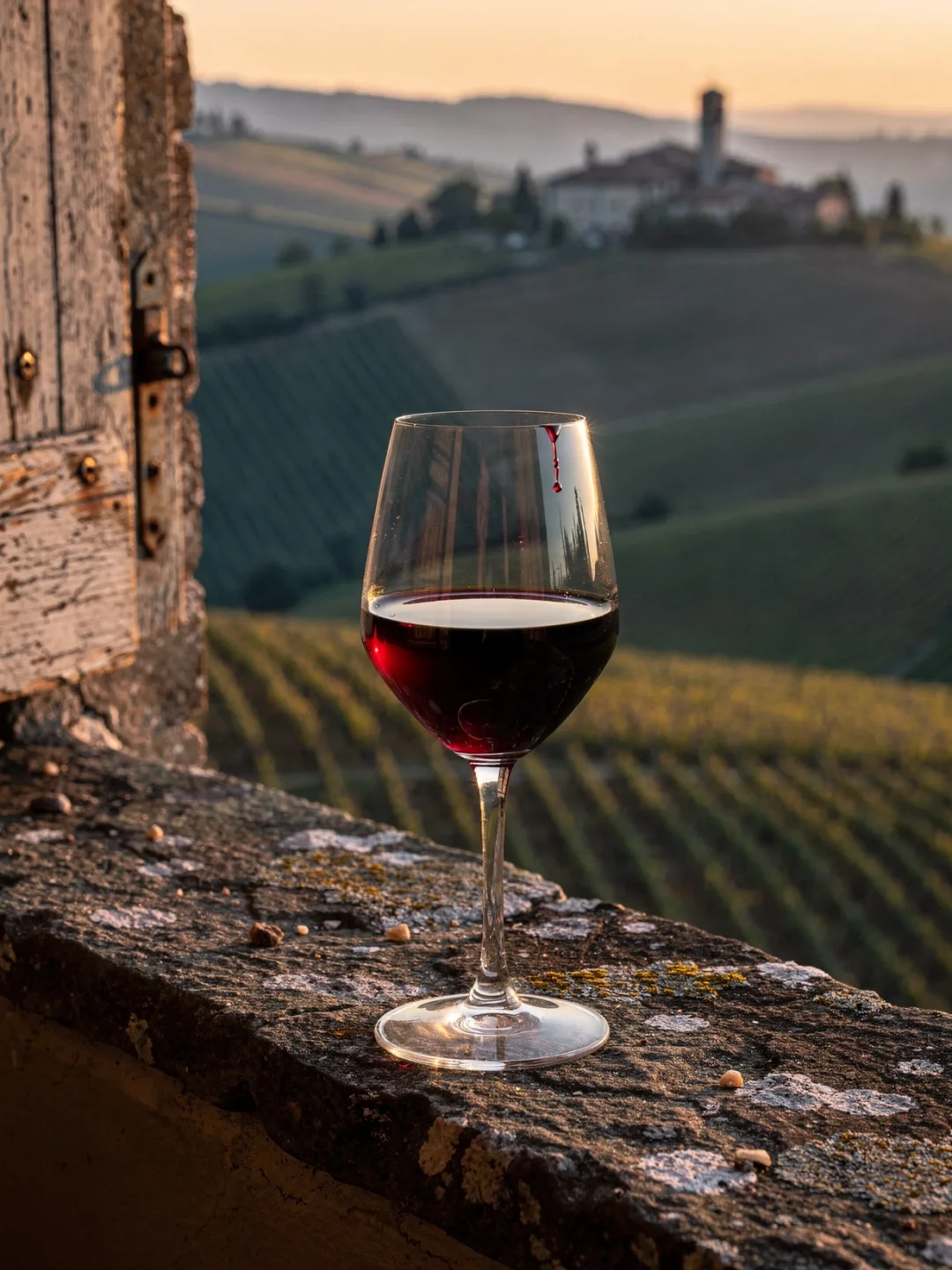
Hold a glass of Amarone up to the light. The color is dark, almost opaque at the center, shifting to garnet at the rim — a sign of the high alcohol and the maturity brought on by months of drying the grapes. A young Valpolicella beside it looks as pale as grape juice by comparison.
On the nose, raisin comes first, followed by sour cherry that smells more like cherry compote than fresh fruit. Then come tobacco, leather, and often a touch of bitter almond. These aromas only emerge through the drying process, and no freshly pressed wine could ever develop them, no matter how ripe the grapes were.
On the palate, warmth is the first thing you notice. At fifteen to seventeen percent alcohol by volume, Amarone sits heavy on the tongue, almost like syrup. Only afterward do acidity and tannin restore the balance. The tannin — that rough, furry coating on the gums — is never harsh in a good Amarone, because the long drying process already softens it before fermentation even begins.
Tasting Prosecco is a completely different experience. Instead of color and tannin, attention here goes to the perlage — the fine, even bubbles that rise in a thin chain up the narrow glass. Coarse, large bubbles that vanish quickly usually reveal a wine served too warm or left open too long.
In the end, what matters for every wine from the Veneto is the same thing: the finish. With Amarone, the flavor can linger in the mouth for a minute or longer, warm and dense. With a bone-dry Soave, by contrast, the length is shorter but fades into a fine, almost saline bitterness — both are correct, they're simply two entirely different ideas of wine.