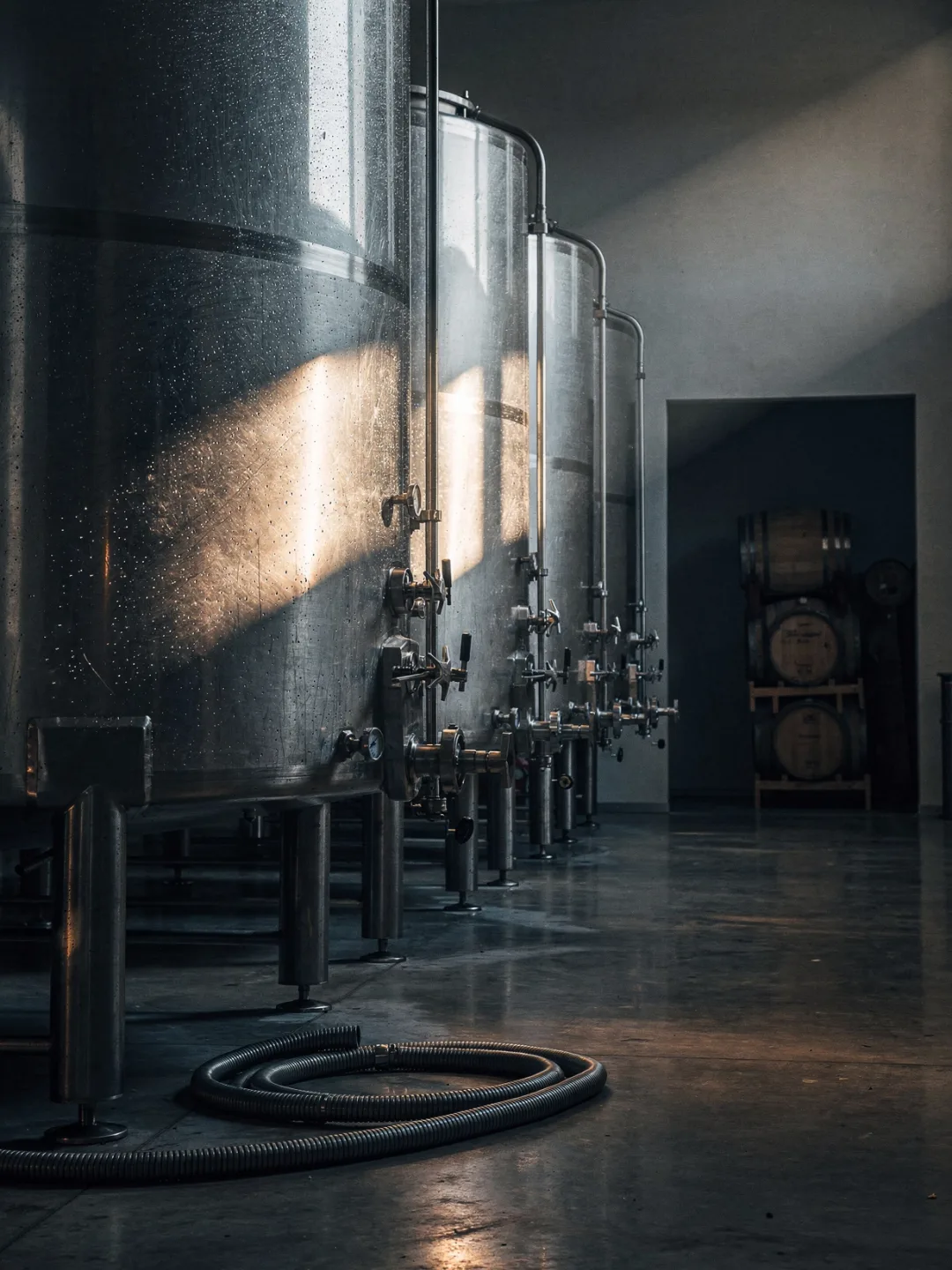
Tank, time, pyramid
Production
In the cellar, almost every Kremstal wine begins the same way: gently pressed, fermented cool, usually in stainless steel tanks rather than oak barrels. This preserves the fruit and lets through exactly the aromas that made this region famous — above all, the pepper in Grüner Veltliner.
The DAC rules actually mandate this. Gebietswein and Ortswein may show no perceptible oak character, nor any toasty notes from new barriques. Only the Reserve category, starting at thirteen percent alcohol, is allowed a subtle oak note and can tolerate a touch of botrytis. So a winemaker who wants to age wine in large barrels has to work deliberately toward the Reserve category, not just out of habit.
Since 2016, an origin pyramid has been layered over the aging rules. At the base sits Gebietswein, simply labeled Kremstal, with a minimum of eleven and a half percent alcohol. Above that comes Ortswein, often carrying the name Stein on the label, starting at twelve percent. At the top is Riedenwein, named after a single vineyard site such as Wachtberg or Pfaffenberg, starting at twelve and a half percent. The more specific the origin, the higher the bar.
Harvesting happens in stages. Early batches destined for Gebietswein often arrive at the cellar as early as the beginning of September, while the best Riedenwein grapes sometimes hang until October, since their character only develops with late ripening. Between an estate's first and last picking, three or four weeks can pass.
What ends up in the glass, then, is less the result of cellar tricks than of three decisions made earlier: which grapes, from which site, picked how late. The cellar's job is simply to make sure as little of that is lost as possible.