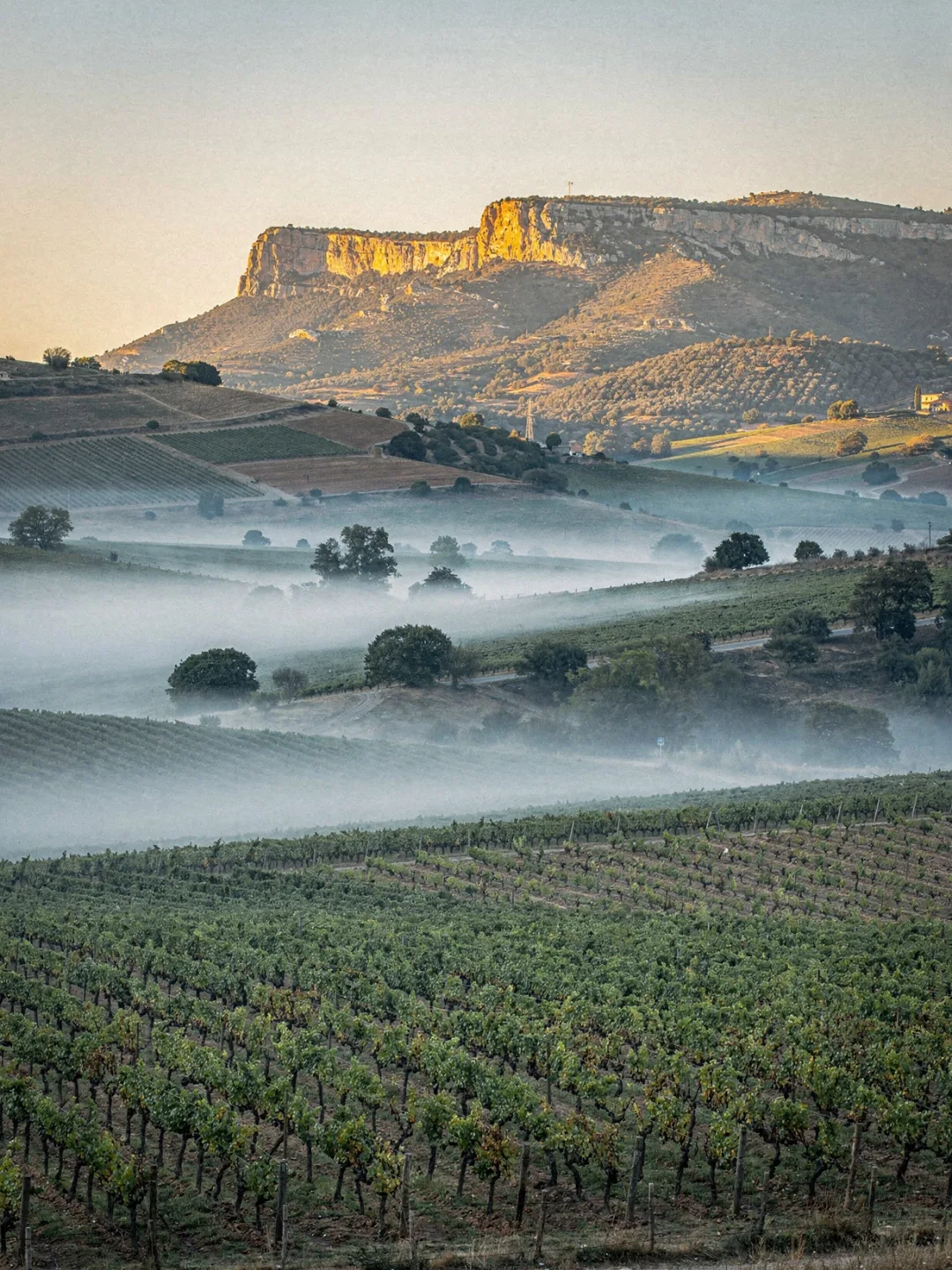
Sea Meets Highland
Climate
Penedès doesn't have one climate, but three, and all of them lie within a short hour's drive of each other. Right by the sea, in the Penedès Marítim, the water's proximity softens every extreme. Hardly any frost in winter, no extreme heat in summer. Drive inland from there, and you feel the difference within just a few kilometers.
In the middle lies the Penedès Central, a blend of both worlds. This is also where most of the classic Cava grapes grow, around Sant Sadurní d'Anoia. Further up, in the Penedès Superior, the vineyards climb to as high as 800 meters. There, the coastal range lets in wind from the interior. Rain falls more often there, and the gap between daytime highs and nighttime lows is significantly wider than down by the sea.
This elevation saves the acidity. In summer, Vilafranca del Penedès easily reaches thirty degrees Celsius during the day, but up in the Superior, nights cool noticeably more than down on the coast. It's exactly this difference that preserves the acidity in Xarel·lo and Parellada that a good Cava needs. Without it, the base wine feels tired before the second fermentation has even begun.
The annual average temperature in Vilafranca sits around fifteen degrees Celsius, with rainfall between six hundred and six hundred fifty millimeters. In the higher elevations of the Superior, rainfall can be notably higher. That's enough for the vines, but just barely, and in dry years, irrigation along the coast determines who brings in a full harvest at all.
Harvesting therefore doesn't happen everywhere at the same time. By the sea, picking often begins as early as late August, since the grapes ripen earlier there; in the Superior, it can stretch into October. For a winery with plots in several zones, that means several weeks of harvest time for the same variety, depending on how close it grows to the water.