Xarel·lo, Macabeu, Parellada
Grape Varieties
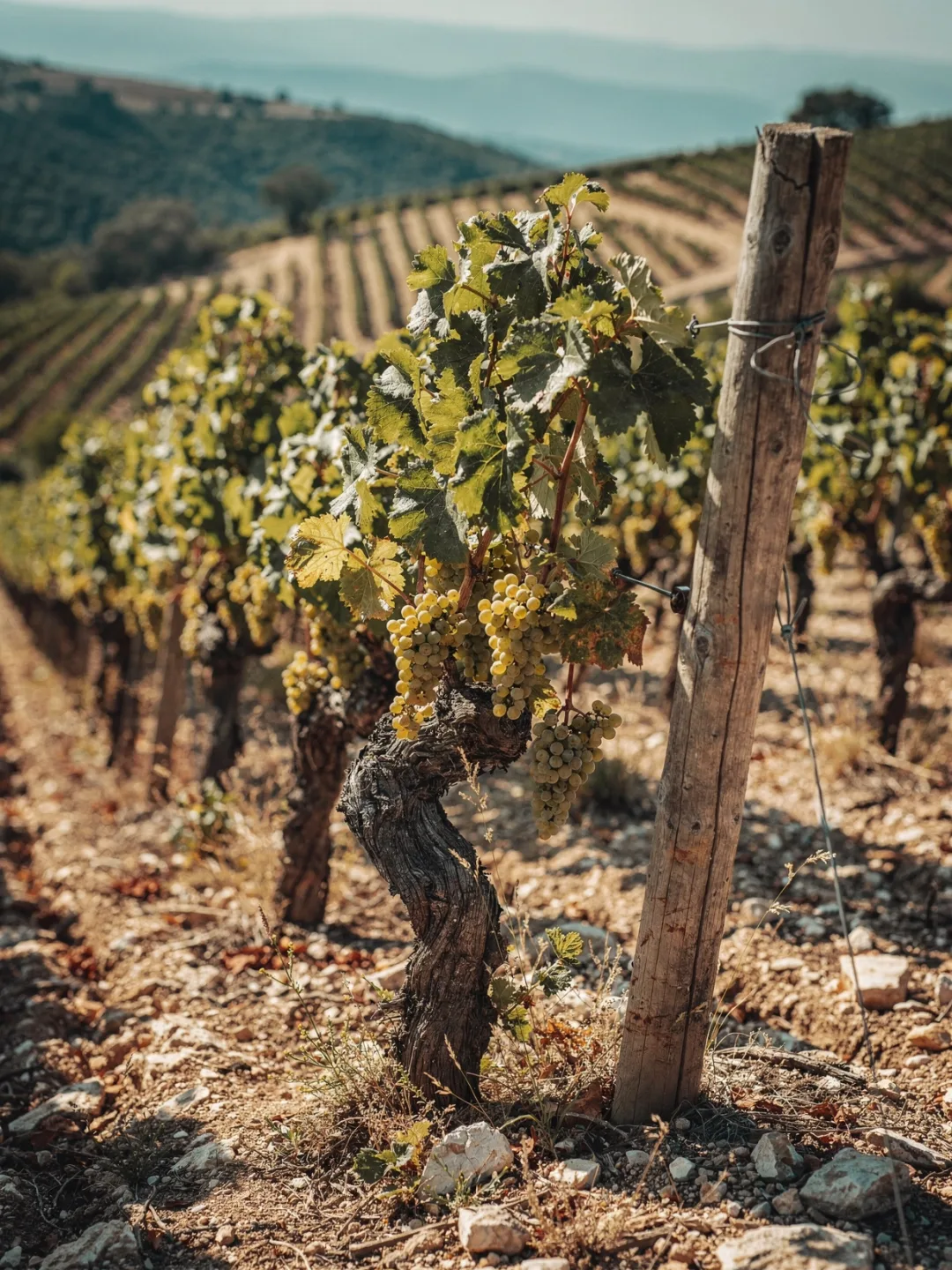
A single wine here needs three grapes, not one. Xarel·lo gives Cava its backbone: firm acidity, a hint of fennel and anise on the nose, and on the palate a slightly salty, bitter finish that lingers long. Without it, any base wine feels flat.
Parellada prefers to grow high up, in the cooler sites of the Penedès Superior, where the grapes retain their acidity even as midsummer heat blankets everything around them. It brings freshness and a scent of apple and hawthorn, but little alcohol — which is why it almost never stands alone in the glass. Macabeu, on the other hand, loves warmth and carries the base: more sugar, more volume, less character. Only the blend of all three creates the balanced base wine that later becomes Cava through the second fermentation in the bottle.
With the red varieties, the story looks different, almost tragic. Sumoll was once the region's most important red grape, resilient against drought. But its high acidity and pale color no longer suited mass taste in the 1970s and 1980s. Winegrowers tore out the old vines by the row, making way for the new white vines the Cava boom demanded. It wasn't until 2000 that the MontRubí winery launched a project to save old Sumoll plots, and in 2001 the world's first varietal Sumoll appeared in the glass.
A third group of grapes arrived only in the 1970s, and from far away. Cabernet Sauvignon, Chardonnay, and Sauvignon Blanc had never grown in the Penedès before. Bodegas Torres planted them in the higher, cooler sites, where the native varieties otherwise barely ripened. A varietal Cabernet from Mas La Plana showed that the region could do more than just sparkling wine.
Among the still red wines today, Ull de Llebre — the Catalan name for Tempranillo — and Garnatxa dominate. Often a bit of Monastrell is blended in for more tannin. These carry the region's robust red wines, while Xarel·lo, Parellada, and Macabeu remain responsible for the bottle with the bubbles. Two worlds of grapes, one soil.