Limestone, Iron Clay, Ebro Gravel
Soils
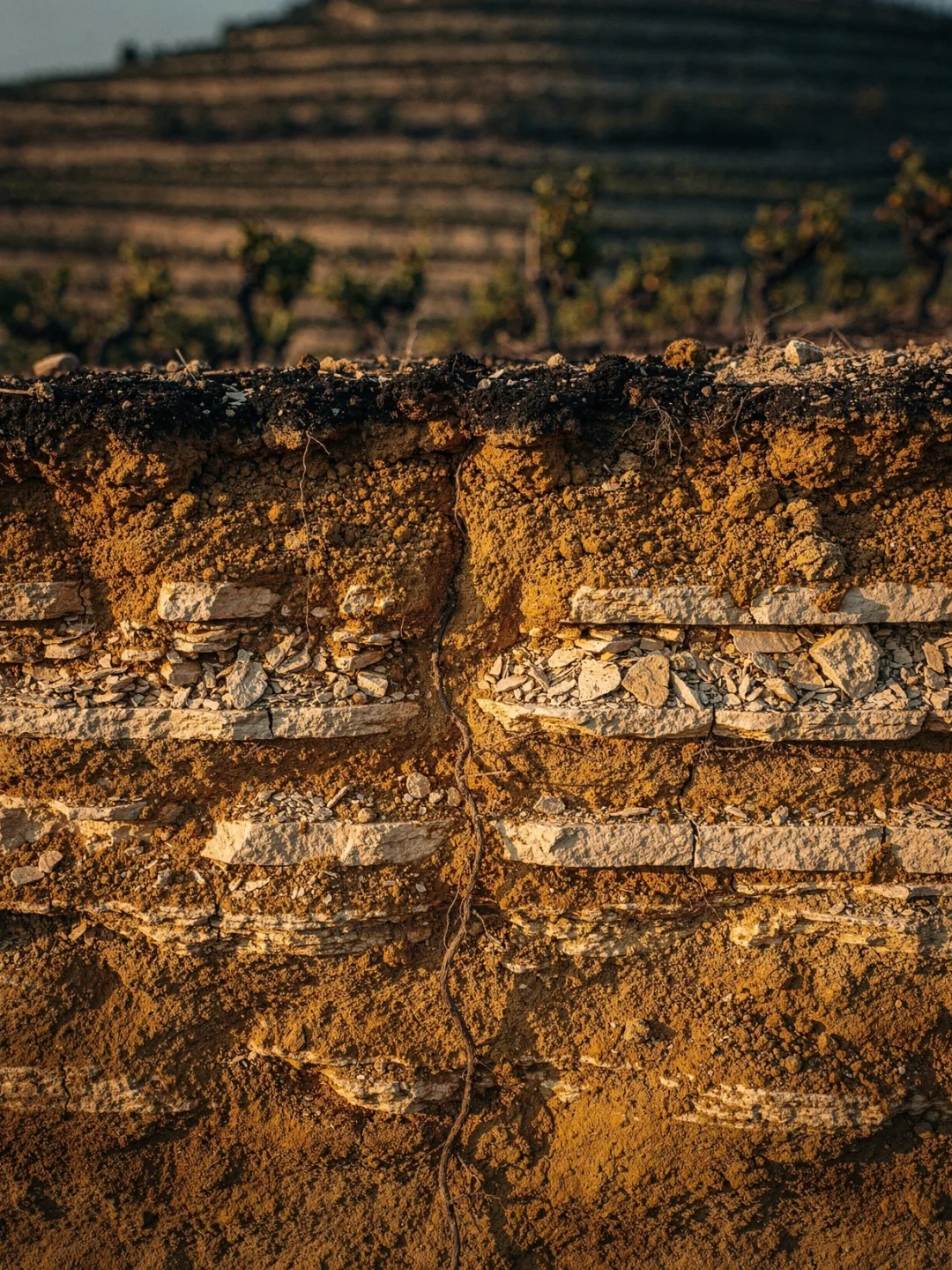
Dig a hole in a vineyard in Rioja Alta. First you'll hit ochre-colored earth, then something hard. A horizontal shelf of limestone-sandstone lies beneath it, thin as a floor tile. Below that comes more earth, then more stone again. This alternation of soft earth and hard bands often continues for meters down. It's exactly this pattern that makes calcáreo-arcilloso, the clay-limestone soil, the best known of the three soils along the Ebro.
Roots find little in the way of nutrients here. The soil is poor but rich in calcium, and together these force the vine into low yields and small berries. A small berry carries proportionally more skin than juice, and the skin is where color, tannin, and most of the aromatic compounds reside — so working this soil means a smaller harvest, but a more concentrated one.
The second soil type appears mainly in Rioja Alta and Rioja Oriental. It looks completely different: garnet-red, almost free of stones, called arcillo-ferroso after the iron that gives it its color. It's more densely packed, holds more water than the limestone soil, and produces fresher, more balanced wines — less concentrated, but with dependable acidity.
Along the Ebro itself and its tributaries lies a third, younger soil: sandy, gravelly, flat, deposited by the river over thousands of years. Water drains through it so easily that the vines' roots rarely sit in standing moisture. That's a blessing during rain, but a risk without irrigation in dry summers.
One misconception refuses to die: that a wine tastes “mineral” because the vine absorbs minerals from the rock and passes them along into the glass. That's not how it works. What the roots actually take up are dissolved ions, present in quantities far too small for any palate on earth to taste individually. The soil's real influence works indirectly — through water, warmth, and how deep it forces the roots to dig.
Three soils packed into a small space mean three different wines from the same grape, often just a few kilometers apart. That's why many bodegas have long blended grapes from multiple sites. It isn't a lack of character driving this — it's a deliberate effort to capture exactly that diversity in a single bottle.
A thin ochre layer, low in organic matter. In a Rioja Alta vineyard, rarely more than a hand's width deep.
The root: This is where the fine roots sit. They soak up whatever rain has just fallen — and dry out first.