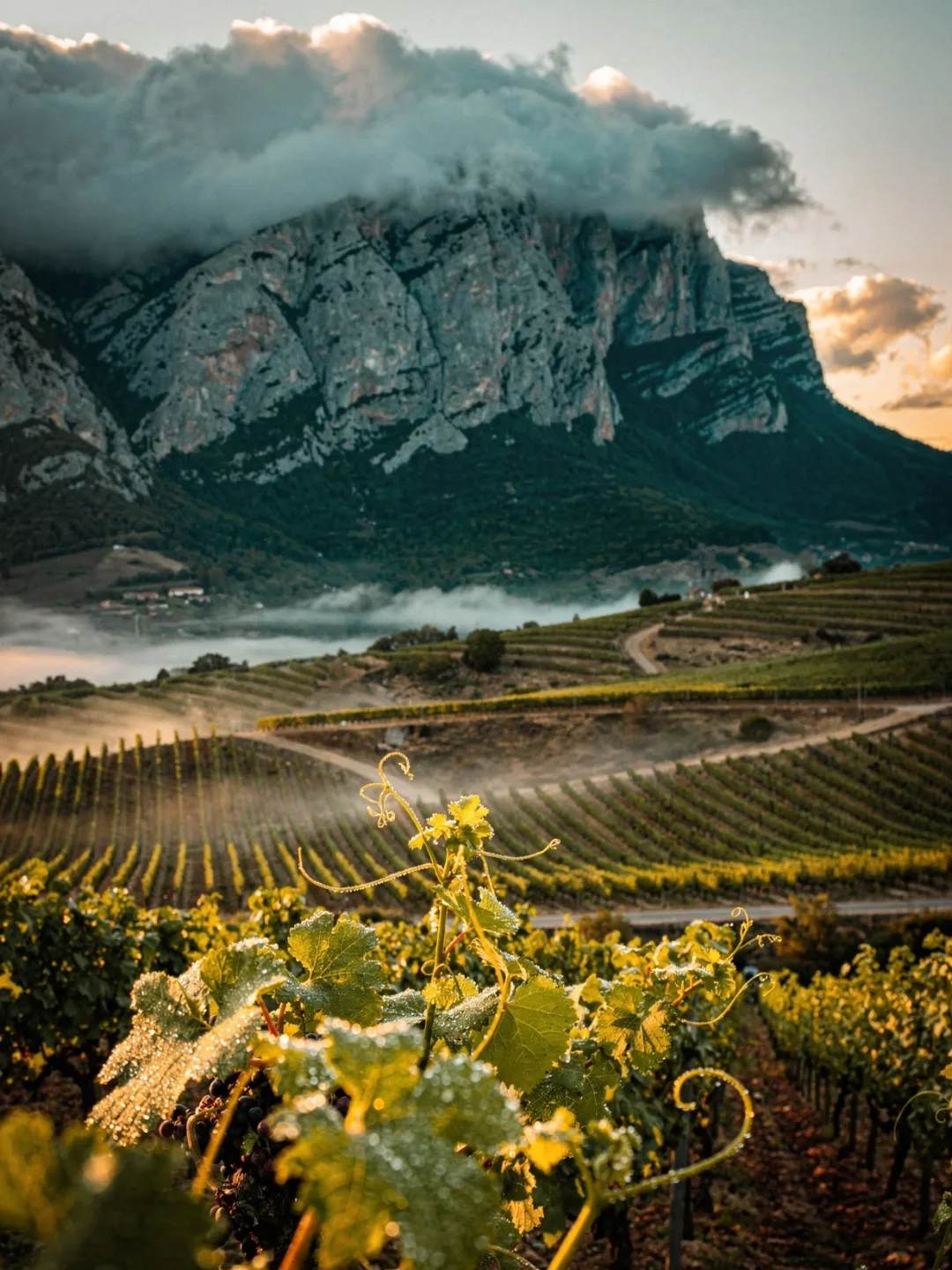
Where Three Climate Zones Meet
Climate
Stand with your back to the Sierra de Cantabria, and you're standing in a rain shadow. The rugged mountains to the north intercept cold, damp air from the Atlantic before it can reach the Ebro valley. To the south, the Sierra de la Demanda and Los Cameros do the same job against the dry heat of the Meseta. In between lies a narrow valley where three climates shake hands at once: Atlantic, Mediterranean, and continental.
How strongly each one shows depends on where you stand. Between Haro in the west and Alfaro in the east lie roughly a hundred kilometers, and along that stretch rainfall drops noticeably. The upper part of Rioja Alta and Rioja Alavesa receive around five hundred millimeters a year, while Rioja Oriental gets only about three hundred fifty. Starting in Haro, you're essentially driving from a damp north into a drier south.
The cierzo, a cold northwesterly wind, regularly sweeps through the valley and keeps the vineyards dry — crucial for warding off fungal disease. It also brings cool nights in the middle of summer. That's no accident. Warm days build up sugar, while cold nights preserve the acidity that would otherwise burn off in relentless heat.
Add to the altitude the sheer number of sunshine hours: around two thousand a year. That's remarkable for a region that still rarely gets truly hot. Average annual temperatures hover between about twelve and fourteen degrees Celsius, though on individual summer days the thermometer can climb well past thirty. The vineyards themselves rise in terraces up to around nine hundred meters, and with every meter of elevation, the average temperature drops a little further.
This overlap of three climate zones explains why Rioja has never produced just one style of wine. A Tempranillo from the cool Rioja Alavesa tastes tighter and less fruit-forward than one from the warm Rioja Oriental, even though both come from the same grape, are sold under the same regional name, and are often harvested the same autumn.