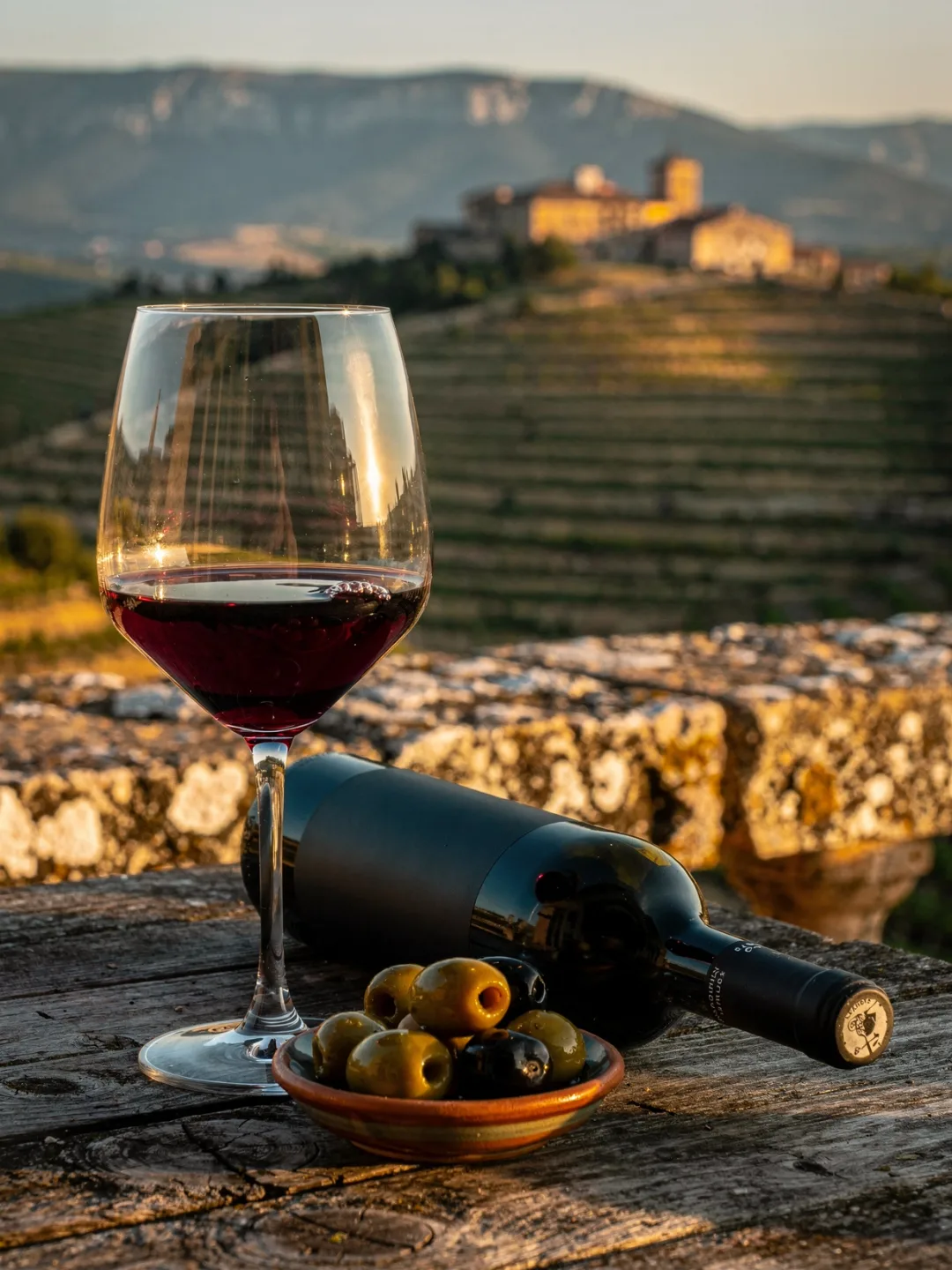
Bordeaux Shape for Tempranillo
Glassware
Fittingly, a glass from Bordeaux turns out to be the best match for the wine a Bordeaux winemaker helped shape in Rioja Alavesa back in 1858. A tall glass with a straight, relatively narrow bowl directs the wine toward the middle of the tongue and away from the sensitive tip, where acidity and tannin hit hardest. For a mature Tempranillo with significant barrel age, that's no accident — it's by design.
A wide, rounded glass, the kind used for delicate Pinot Noir, would do the wrong thing here. It spreads the wine broadly across the tongue and highlights exactly the acidity that a Rioja Reserva or Gran Reserva has already softened through years in barrel and bottle. The narrower Bordeaux bowl, by contrast, gathers the aromas of cherry, leather, and vanilla as they rise and channels them straight to the nose.
When it comes to temperature, the most common mistake happens not in the vineyard but in the living room. Sixteen to eighteen degrees Celsius (about 61–64°F) is right for a Rioja Crianza or Reserva. That's noticeably cooler than the twenty-two degrees (72°F) a modern room often reaches in winter. At room temperature, alcohol pushes forward and tannin feels drier than it should. Twenty minutes in the fridge is enough to fix that.
A young Crianza doesn't need a decanter. A Gran Reserva with five or more years of age, however, does — for two reasons. It often carries sediment that nobody wants in their glass, and after so long shut up in the bottle, it's as closed as a shuttered window. Half an hour of air opens it up more than any amount of swirling in the glass ever could.
Never pour past the widest point of the bowl. In a standard red wine glass, that's around one hundred fifty milliliters. What's left above that is the space where aromas built up over years in barrel finally gather before reaching the nose. Fill the glass to the brim, and you take away exactly that space.