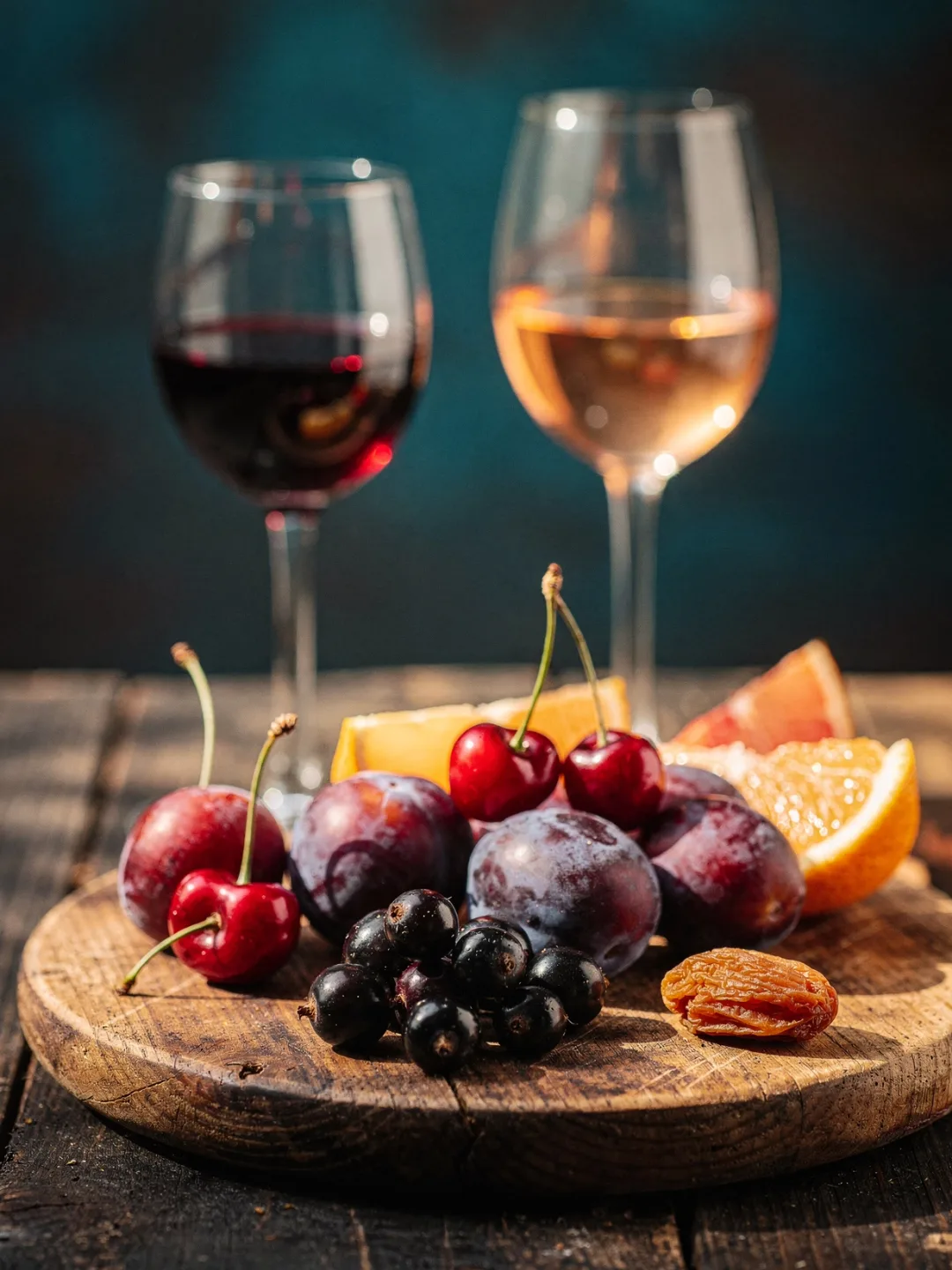
Where Fruit Notes Come From
Fruit Aromas
A wine never actually contains cherry or grapefruit, and yet it smells of them. Fruit aromas arise from esters and terpenes, some already present in the grape and some formed only during fermentation.
Two Different Fruit Sources
Fruit aromas in wine come from two rather different sources. One part, especially in aromatic varieties like Muscat or Gewürztraminer, is already present, fully formed, in the ripe grape: terpenes such as linalool or geraniol naturally smell of rose, lychee, or citrus peel, and are simply released during pressing.
The second, usually much larger part is only created during fermentation. Yeasts convert sugar into alcohol and, in the process, also form esters – chemical compounds made from alcohol and acid that smell surprisingly fruity. Isoamyl acetate smells of banana, ethyl hexanoate of green apple or aniseed. These aromas don't occur in the grape itself at all, and yet they account for most of the fruitiness in a young wine.
Warm and Cool Climates
How fruity a wine ultimately tastes depends heavily on the climate in which the grapes ripened. Cooler sites usually produce grapes with less sugar and more acidity at harvest, and these tend to yield fresh, bright fruit notes: citrus, green apple, redcurrant. A Riesling from the Mosel therefore rarely tastes of jam.
In warmer regions, grapes hang longer at higher temperatures, losing acidity and building up more sugar. This noticeably shifts the fruit profile toward stone and dried fruit: ripe plum, apricot, sometimes even raisin with very late harvests. The same grape variety can therefore smell completely different depending on the region, even if the winemaker hasn't changed anything in the cellar.
Green Bell Pepper and Blackcurrant
A special case among fruit aromas isn't actually a fruit at all, but a vegetable. Methoxypyrazines, chief among them a compound with the unwieldy name IBMP, smell like green bell pepper and are found mainly in Cabernet Sauvignon, Cabernet Franc, and Sauvignon Blanc. The nose is extremely sensitive to these compounds—concentrations of just a few nanograms per liter are enough to produce a clear impression.
In small doses, this reads as a pleasant note of blackcurrant leaf, a recognized hallmark of good Cabernet wines. In larger amounts, usually from grapes picked too early and underripe, the same aroma tips into unripe, grassy vegetal notes and is then considered a flaw. There's often only a fine line between strength and weakness here.
How Ripeness Transforms the Fruit
Ripening on the vine continually transforms a wine's fruit profile. The longer a grape hangs on the vine, the more those green pyrazines break down, while sugar and other fruit precursors simultaneously increase. This is exactly why the same vineyard often tastes different in September than it does three weeks later.
Winemakers deliberately use this shift to determine harvest timing: those who pick early preserve freshness and floral citrus notes, while those who pick late risk overripeness but gain fuller body and dark, stewed-fruit character. Neither decision is inherently right or wrong—it simply determines early on the direction the finished wine will take, and already supplies part of the aromas that yeast will later add during fermentation.
Red versus Black Fruit
Wine critics often distinguish between red and black fruit in red wine. Red fruit refers to cherry, raspberry, or redcurrant, usually a brighter, zestier profile. Black fruit stands for blackberry, cassis, or dark plum, denser and heavier in tone. This distinction isn't arbitrary—it follows a real pattern across many grape varieties. Once you consciously distinguish between these two families, you can place an unfamiliar red wine much more quickly.
Grape varieties with lighter berry color, like Pinot Noir or Grenache, tend to show the red-fruit side more often. Thick-skinned, dark varieties such as Cabernet Sauvignon or Syrah lean more toward black fruit. Climate also nudges the picture slightly in the same direction. Warmth pushes almost every grape variety a bit closer to dark, ripe tones. The same vineyard can therefore lean red in one vintage and black in another. There are no hard rules here, only tendencies that quickly become second nature when tasting.
On the palate, this initial impression usually confirms itself. Red-fruited wines often feel lighter and more acid-driven. Black-fruited wines bring more fullness and darker tannin. Together, these two impressions already give you a solid first read on a wine, long before body or tannin get discussed in detail.