The Compound Rotundone
Spice & Pepper
A single molecule is enough to give a Syrah its characteristic peppery note. This compound is called rotundone, discovered only in 2008—and the human nose is more sensitive to it than to almost any other aroma compound in wine.
The Late Discovery of an Old Impression
Winemakers and tasters have been describing peppery Syrah wines with exactly this word for decades, long before anyone knew which compound was behind it. It wasn't until 2008 that a team led by chemist Claudia Wood at the Australian Wine Research Institute identified the responsible compound in an Australian Shiraz. They named it rotundone.
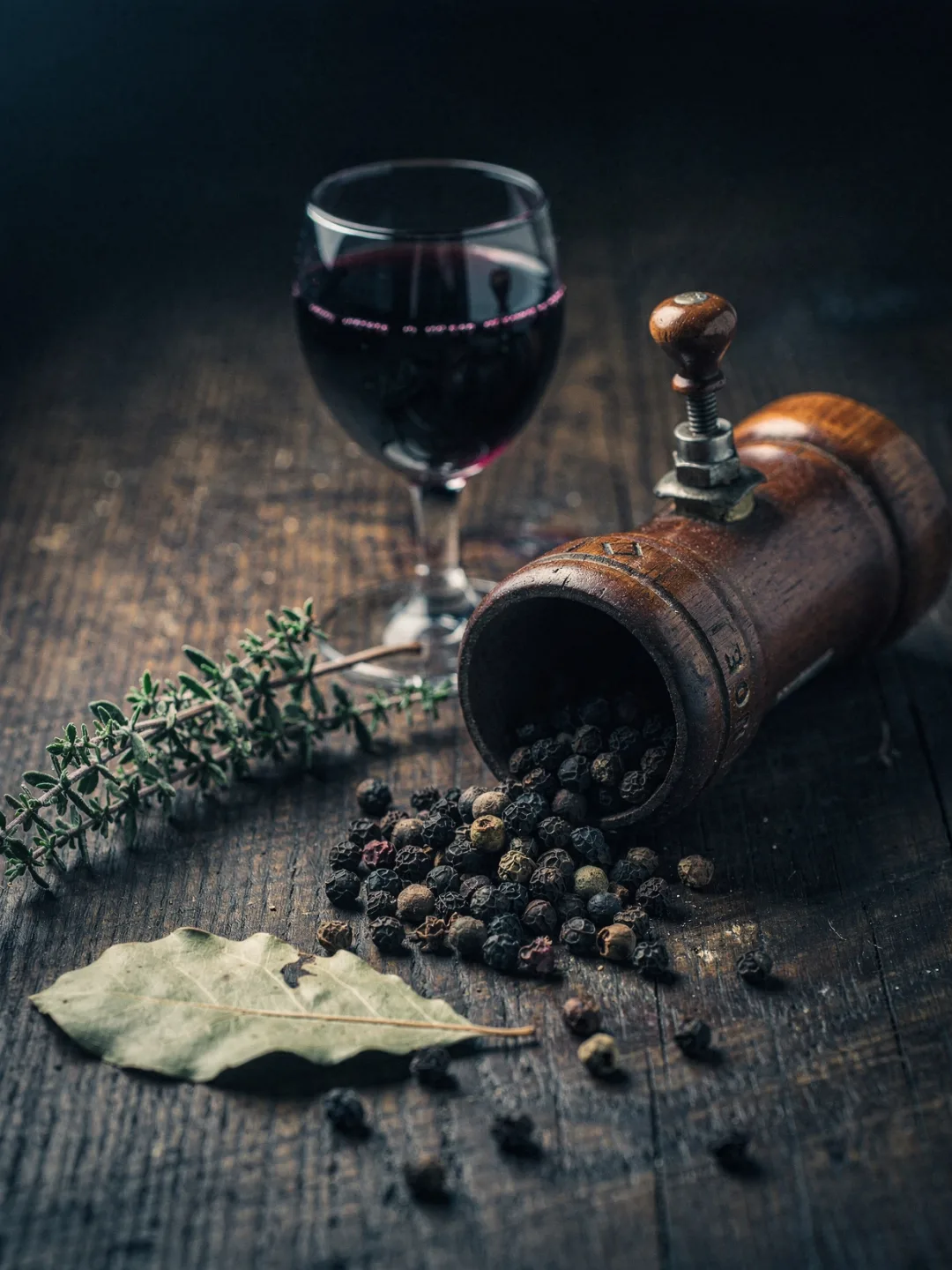
The discovery was remarkable for another reason. The same compound had long been known, but only from black and white pepper, where it occurs at roughly ten thousand times higher concentration than in even a very peppery wine. Rotundone is therefore the first proven compound to give real peppercorns their unmistakable scent, extending far beyond wine.
Why So Little Is Already Enough
What makes rotundone remarkable is its extreme potency in the tiniest amounts. Its detection threshold lies at only about sixteen nanograms per liter of red wine. That's an order of magnitude at which just a few grams of the pure compound would theoretically be enough to noticeably scent several Olympic-sized swimming pools.
Equally striking is how differently people respond to the same compound. Around eighty percent of test subjects reliably detect rotundone even at very low concentrations. A portion of the rest, however, fail to perceive it at all even at a thousand times higher concentration. The difference likely lies in small variations in exactly the same olfactory receptors that came up in the second stop of this journey.
Where Rotundone Occurs
Rotundone shows up most strongly in Syrah, or Shiraz, its most famous grape variety. It's also found in smaller amounts in Grüner Veltliner, Mourvèdre, and the Austrian Schilcher. Notably, the compound tends to appear more often in cooler growing regions or with late harvests in shadier sites, while very warm, sun-drenched vineyards less often produce strongly peppery wines.
Still, no direct, guaranteed link between climate and pepper content can be drawn from this, since rotundone formation varies too much even within a single vineyard. What is certain is this: if you detect a distinct black pepper note in the glass, you're very likely smelling this one specific compound, not some general spiciness.
Other Spice Notes in Wine
Not every spice note in wine has as clear an origin as the pepper in Syrah. A hint of cardamom in Gewürztraminer stems from the same terpene family as its floral aromas. Warm notes of cinnamon or clove in aged red wines, on the other hand, almost always come from the oak barrel, not the grape itself.
This distinction is worth remembering when tasting: pepper, cardamom, and similar grape-derived aromas belong to the so-called primary aromas, which are already present before fermentation. Cinnamon, clove, and vanilla, by contrast, count among the aromas that only develop later in the cellar—the starting point for the next two stops on this journey.
Spotting Pepper in the Glass
Rotundone rarely reveals itself on the first sniff of a still glass. The peppery note usually emerges only in the mouth, or right after, via the retronasal route from the first stop of this journey. Some tasters only notice it when exhaling through the nose with the mouth slightly open. Anyone who just briefly sniffs the glass and swallows the wine quickly can easily miss the note entirely.
A simple trick helps when hunting for it deliberately: take a small sip, hold it briefly in your mouth, then consciously exhale through your nose. That's exactly the moment when the concentration of volatile compounds in the throat is highest. Once you've consciously noticed rotundone this way, you'll recognize the note in future Syrah wines much more quickly. Practice makes the crucial difference here, not a particularly sensitive nose.
A cooler growing site usually amplifies this effect further. Northern Rhône Syrah or cooler Australian vineyards often show the peppery note more clearly than very warm, sun-soaked sites. Warmth alone doesn't fully explain this, but it helps as a rough rule of thumb when assessing an unfamiliar glass. It's also worth looking beyond Syrah: Grüner Veltliner from cool Austrian sites occasionally shows a very similar note, white rather than black pepper.