The Green Trap
Vegetables and Vegetarian Dishes
Vegetables are wrongly seen as an easy case, yet they hide some of the trickiest pairings in the entire wine world. A handful of vegetables contain compounds that can throw any wine off balance, with no meat, fish, or spices even involved.
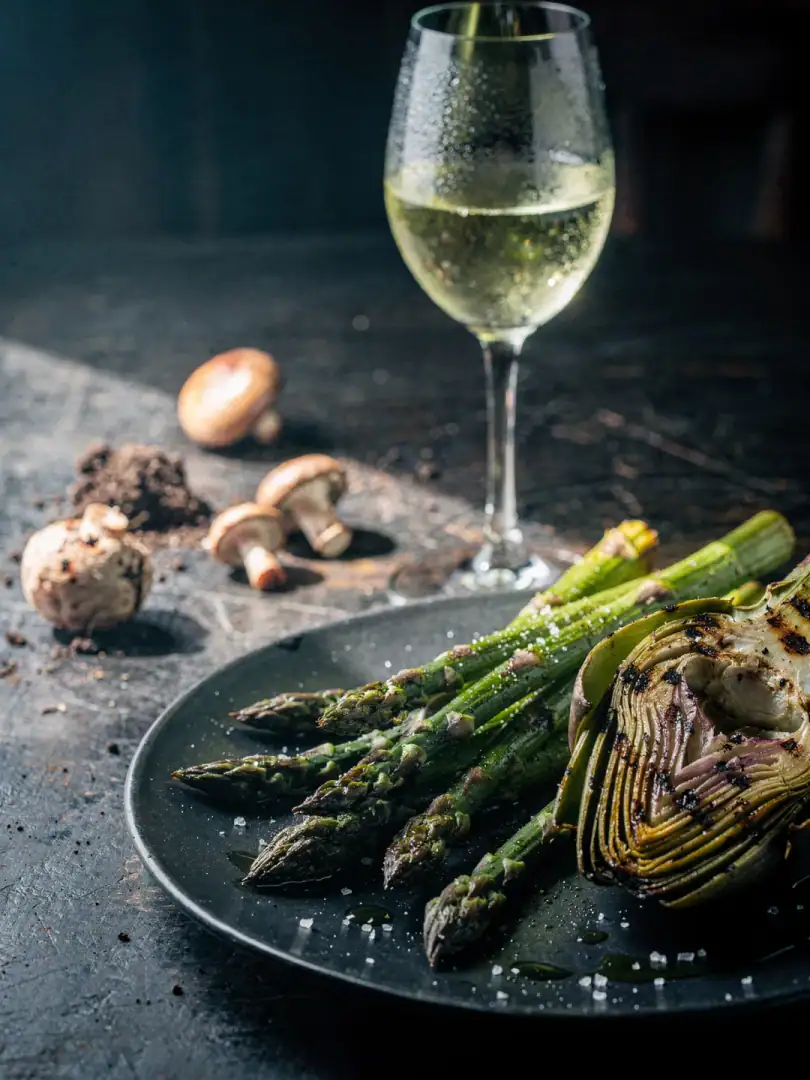
The Artichoke, the Best-Known Problem
Artichokes contain a compound called cynarin, which stimulates sweetness receptors on the tongue without properly triggering them, making almost everything you drink afterward taste unusually sweet or metallic. This effect occurs reliably in a large share of people, barely at all in others, and it affects water just as much as wine. That's why artichokes are traditionally considered one of the few vegetables that almost no wine can truly win against.
Anyone determined to serve wine with artichokes anyway should reach for very green, herbaceous white wines with plenty of acidity, such as a crisp Sauvignon Blanc, whose own green notes make the artichoke feel less out of place. Even so, it's never a sure bet, and some sommeliers honestly recommend, for a dish built entirely around artichoke: just have water instead.
Asparagus and Other Difficult Cases
Asparagus contains sulfur compounds that, much like the artichoke, can make many wines taste metallic or bitter, especially when it's simply boiled and served without sauce. Here too, a green, acid-driven white wine helps best, since it carries the same vegetal note as the vegetable itself, rather than fighting against it. Green asparagus is generally easier than white, as it brings more intense flavors that align more closely with the wine.
Spinach, green salad, and raw leafy greens contain oxalic acid, which leaves a rough, slightly metallic sensation on the tongue and additionally intensifies tannin. Red wine with a big green salad almost always ends up tasting unpleasantly harsh as a result. A dressing with oil and a touch of acidity softens the problem somewhat on the plate itself, but a light, low-tannin wine remains the safer choice regardless.
Root Vegetables and Cooked Dishes
Cooked root vegetables like carrots, parsnips, or beets behave far more amiably, since cooking breaks down some of the difficult compounds and releases mild sweetness instead. A fruity, not-too-dry white wine or a light red with soft acidity pairs well with such vegetables almost every time, because the sweetness in the vegetable and the fruit in the wine support each other.
Mushrooms form their own, very rewarding category here, since their earthy, savory flavors seem almost tailor-made for an equally earthy wine. A Pinot Noir, with its characteristic forest-floor note, often accompanies a mushroom risotto or sautéed porcini more impressively than any white wine, because like meets like here, following the very strategy laid out in station two of this journey.
Vegetarian Doesn't Automatically Mean Light
Many vegetarian dishes draw their power from roasting, cheese, or legumes, and end up carrying far more weight than the absence of meat would suggest. A creamy lentil soup or a cheese-topped bake calls for a wine just as full-bodied as a meat dish would, minus the tannin question from station four. Anyone who automatically reaches for light wines with vegetarian food often underestimates just how much weight a dish can carry without any meat at all.
A useful guiding question: how heavy does the dish actually feel in the mouth, regardless of what it's made of? A rich pumpkin risotto calls for a full-bodied white wine, a grilled vegetable skewer for a medium-bodied red, a clear vegetable broth for a very light white. The meat is missing, but the rules about weight stay exactly the same.
Vegetable Wine in Brief
Artichoke and asparagus are the toughest cases of all. A green, acidic white wine helps most of the time. Cooked root vegetables, on the other hand, are easy and forgiving. Mushrooms love Pinot Noir, almost effortlessly. Cheese or legumes make a dish heavy, with no meat required.
If you're unsure, take your cue from the weight of the dish rather than the ingredient list. A creamy sauce counts as heavier than a clear broth, regardless of whether meat is involved. This one observation is usually enough to hit the right wine class with vegetarian food.
One last note: raw is almost always trickier than cooked. Boiling and roasting break down many of the problematic compounds and make vegetables more wine-friendly. If you're unsure about a raw vegetable dish, it's better to serve water alongside it, just in case.
Raw is tricky. Cooked is easy. Earthy pairs with earthy. Creamy pairs with creamy. You hardly need more rules than that.