The short answer
With mild asparagus, I'd first try a restrained white wine. A rich sauce or bold roasted notes make more body in the glass interesting.
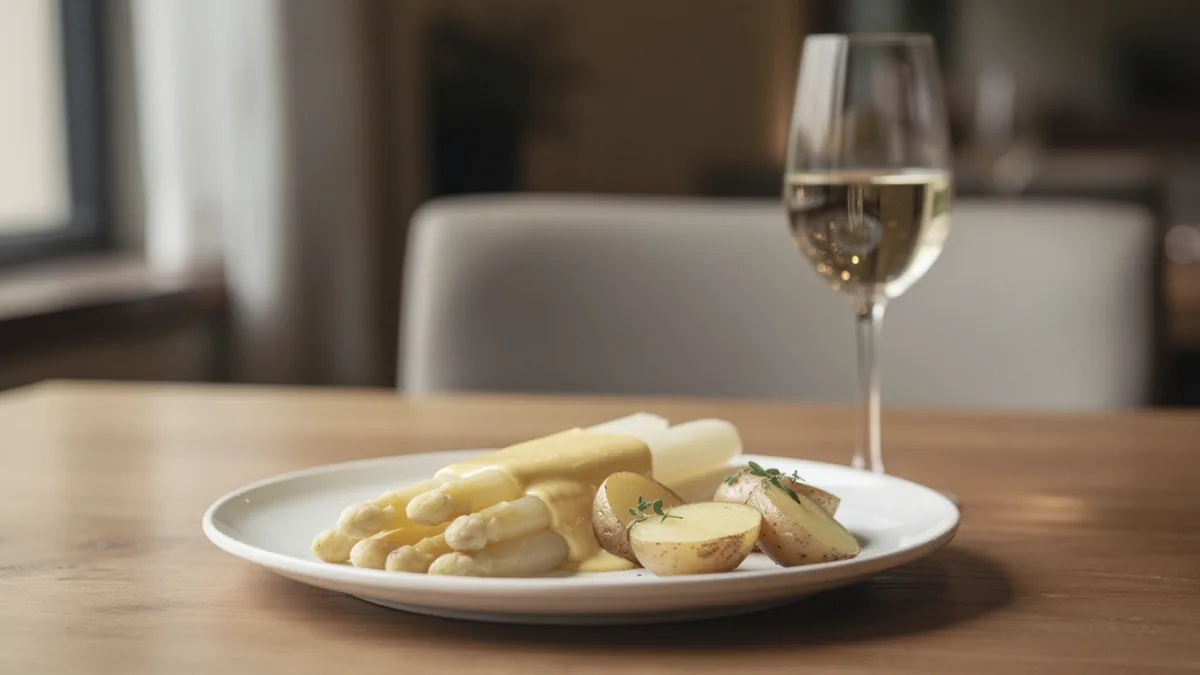
Starting with a Quiet Companion
Silvaner is one possible direction if you're after a subtle aroma. Pinot Blanc is also worth trying. These are suggestions for a mildly prepared plate, not a rule for every asparagus dish.
The grape variety alone doesn't determine the style. Heavy oak aging can shape the dish more than the variety name would suggest. Oak aging means the wine spent time in a barrel and picked up aroma from it. So ask for a more restrained version.
Restrained here means: the wine doesn't push itself forward. You won't smell anything too pronounced. On the palate it stays clean and dry. After the sip, you're left with the asparagus in mind, not the glass. This is practical with a mildly cooked plate, since the asparagus itself brings fairly delicate aromas that a loud companion could easily mask.
At the shop, a simple question helps: how was the wine aged? If it sat in a steel tank or a large, older barrel, it tends to be calmer than a wine from new, small oak. Whoever's behind the counter can answer that in one sentence. The label rarely tells you, and the price certainly won't.
Factoring in Butter, Sauce, and Grill Marks
With hollandaise, I'd compare a wine with a bit more body than with asparagus dressed in just a little melted butter. With grilled green asparagus, roasted notes come into play. Ham or a spicy cheese changes the impression further still.
When choosing for guests, describe these exact sides when shopping. A small selection that pleases most people makes more sense than searching for the supposedly one true asparagus wine. If someone doesn't like wine, the season is no reason to start.
The reason lies in the sauce itself. Hollandaise brings fat to the plate, and next to that a very lean wine seems thin. A bit more body in the glass holds up better without overpowering the asparagus. If you're using just a little melted butter, this effect is much weaker—then you're back to the quiet companion from the first section.
Roasted notes from the grill are a different matter. The dark, slightly bitter spots on green asparagus don't call for a powerful wine, but one that isn't bothered by them. Ham adds salt, a spicy cheese brings its own strength. Both often shift the overall impression more than the question of whether white or green asparagus is on the plate.
Which Wine Goes with Which Asparagus Preparation?
Three typical asparagus plates, each with a wine to start with and the characteristic that matters for this pairing. The wine suggestion is a starting point for tasting, not a pairing that has to be exact.
If your plate mixes several directions—say, hollandaise and ham together—go by the boldest element. That's usually the sauce or the smoked component, rarely the asparagus. And if a line in the comparison doesn't appeal to you, that's a useful result too. You'll know what not to reach for next time you shop.
| On the Plate | Suggestion to Try | What Matters Here |
|---|---|---|
| Mild, with a Little Butter | Restrained white wine, such as an appropriately described Silvaner | The delicate aromas should stay recognizable. |
| With a Rich Sauce | More body in the white wine | The sauce is part of the equation, not just the asparagus. |
| With Bold Grill Marks | A more expressive wine by comparison | Taste the roasted notes and sides together. |
The Asparagus Isn't the Problem
The most common misconception is searching for the one true asparagus wine. During the season, this comes up a lot, even though the asparagus itself is the mildest part of the dish. Butter, hollandaise, or grill marks change the plate considerably. Choosing based on the preparation gets you to something fitting more often than someone who only looks at the vegetable.
The second misconception concerns the variety name. Silvaner and Pinot Blanc tell you which grape is in the glass. They don't tell you how loud the wine is. Two bottles of the same variety can differ significantly once one has seen heavy oak aging. So ask about the style, not just the variety.
And one more thing: the season doesn't obligate you to anything. If wine isn't your drink, it won't become one just because asparagus is in season.
Trying Asparagus With and Without Sauce
For your own comparison, split a portion of asparagus across two plates: one with just a little melted butter, the other with hollandaise. Alongside, set out two wines—one restrained, one with a bit more body. In just a few minutes you'll taste what the sauce does to the pairing. You don't need four bottles for this.
Pour small amounts—two fingers' width is enough. Taste in turns: first the wine alone, then a bite, then another sip. Afterward, jot down in one or two words which pairing felt right. At your next purchase, you'll have a description that someone at the shop can actually work with.