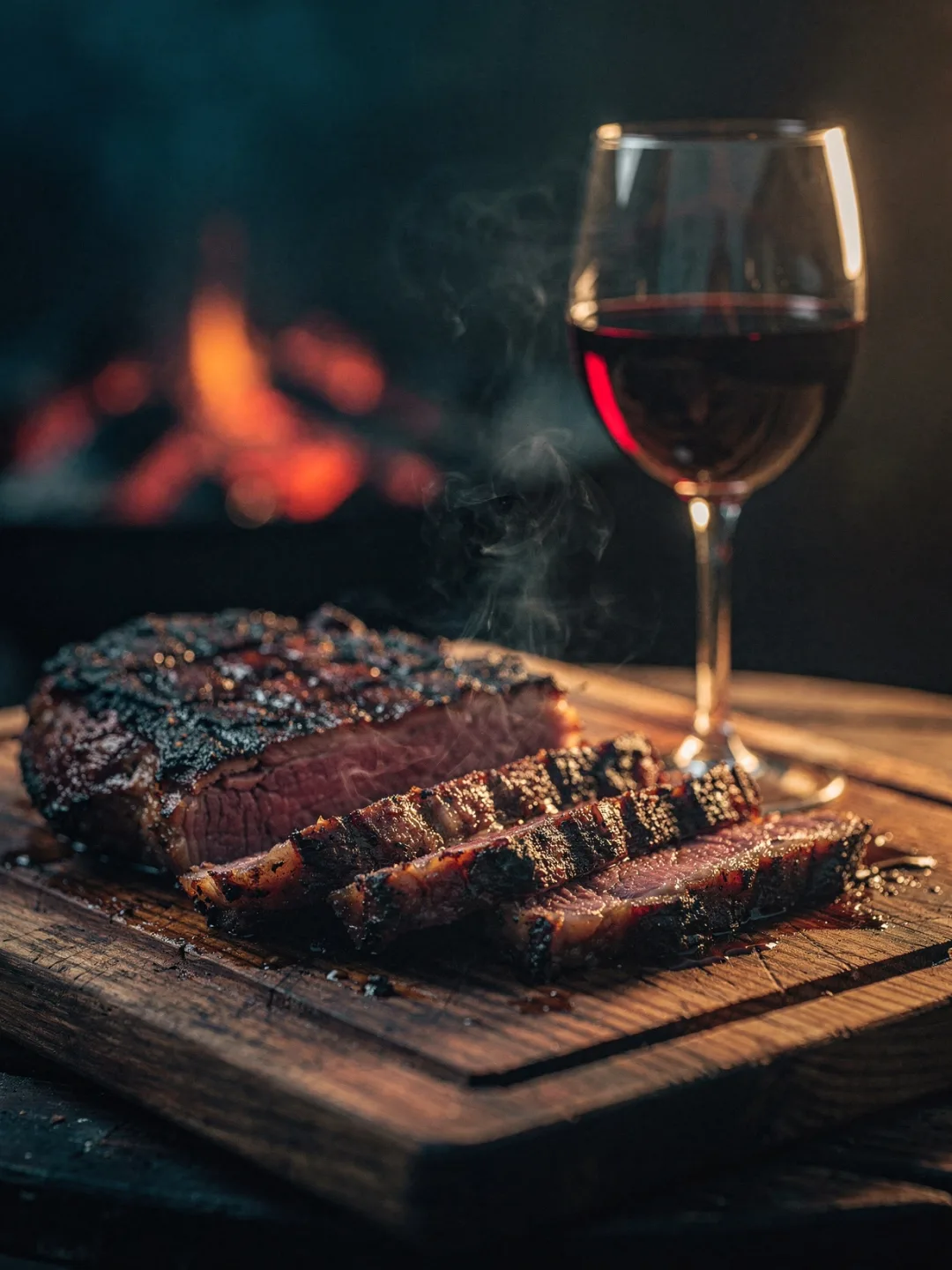
Power against Power
Meat and the Grill
The grill produces charred, roasted flavors that never occur in a pot, and it's precisely these roasted notes that call for a wine able to stand up to them. Here, power meets power, not restraint.
What Grilling Does to Meat
Grilling triggers the so-called Maillard reaction, creating a dark, slightly bitter crust full of new flavors, ranging from roasted to smoky to almost caramelized. This crust changes the taste of the meat so dramatically that the same cut, if fried or boiled instead, would call for a completely different wine. A bold, oak-aged red wine with its own toasty and vanilla notes from the barrel picks up these flavors and carries them forward, rather than fighting against them.
At the same time, grilling often brings a certain bitterness to the charred spots that a too-delicate wine simply can't absorb. Firm tannin and a full body act here as a natural counterweight, much as the opposite holds true for lean fish. A Syrah or a robust Cabernet Sauvignon from a warm climate is well matched to this kind of intensity.
Red Meat from the Grill
Beef steaks, lamb chops, and hearty burgers can handle the boldest red wines on the entire wine list, because fat, protein, and roasted flavors all appear together here and can absorb plenty of structure from the wine. A young, tannic wine feels soft and round alongside such meat, even though it would seem angular on its own. It's exactly this transformation that makes the steak a classic proving ground for any young, powerful red.
With more delicate red meats like lamb or leaner beef, on the other hand, a wine with a bit more fruit and less sheer power pays off, so the meat isn't overwhelmed. A spicy Tempranillo or a mature Merlot brings enough structure without overshadowing the more tender meat. The grill marks alone don't decide the outcome — the weight of the meat underneath matters just as much.
Poultry and White Meat
Chicken, turkey, and lean pork naturally carry less fat than beef or lamb, even though they develop the same roasted flavors on the grill. Here, a middle path pays off: a red wine with moderate tannin, or even a robust rosé, that picks up the toasty notes without crushing the lighter meat. Grilled chicken with a dark crust pairs surprisingly well with a light Grenache or a spicy Pinot Noir.
Marinated meat changes this equation further, since marinades often bring sweetness, acidity, or heat, through honey, lime, or chili, for example. In such cases, the marinade ends up mattering almost more than the meat itself, and the rules on acidity, sweetness, and spice from earlier stations take the lead again.
Beer as an Honest Competitor
At the grill, wine enters a competition it doesn't always win: a malty, lightly roasted beer pairs with charred flavors at least as well, often even more effortlessly, since its carbonation adds extra refreshment. Anyone determined to stick with wine should take this competition seriously and deliberately reach for wines with their own toasty or smoky character, rather than purely fruity, light styles.
In the end, the same principle applies at the grill as everywhere else, only more sharply: underestimate the intensity of the dish, and you'll end up with a wine that's too weak. Better too powerful than too timid, since smoke, crust, and open flame forgive little restraint in the glass.
Grill Wine in Brief
Smoke wants power. Roasted flavors want tannin. Fat can be generous, it absorbs both. Lean meat calls for more caution, or the wine will overpower the food. Marinades change everything, then sweetness, acidity, and spice matter more than the meat itself.
Anyone forced to choose just one grill wine is almost always safe with a medium-bodied, spicy red. It works with beef, lamb, and dark poultry alike, and even survives an unplanned dose of chili sauce without falling apart completely. Only with very lean, white meat does a lighter alternative pay off.
In the end, the heat itself often has the final say: the darker the crust, the bolder the wine can be. A cut that's only briefly seared can handle noticeably less than one grilled long and hot. This simple observation replaces plenty of more complicated deliberations on grilling night.
One last memory aid helps. Dark and smoky wants power. Pale and lean stays restrained. When in doubt, go bolder.