The Classic Pairing
Acidity Meets Fat
Few interactions are as reliable as this one: acidity in wine cuts through fat in food, cleanses the palate, and makes room for the next bite. Anyone who masters this one rule already has half the wine list under control.
Why Acidity Works Against Fat
Fat settles as a thin film over the tongue and palate, dulling every further impression, much like fogged glass clouds your view. Acidity in wine, by contrast, acts like a quick, vigorous wipe: saliva flow increases, the fatty film is lifted, and the mouth is ready for the next bite. Without this effect, a fatty meal would feel heavier in the mouth with every bite, until eventually there's hardly anything left to taste.
This is exactly why so many classic combinations that seem simple at first glance actually work: a crisply fried fish with a zesty Sauvignon Blanc, or a rich cream sauce that calls for a taut Chablis. In every case, the acidity takes on the same job: it keeps the fat moving instead of letting it settle.
How Much Acidity Is Enough
The amount of acidity has to match the amount of fat, not just point in the same direction. A lightly dressed salad can handle a mild white wine, while a Sauce Hollandaise or a confited goose roast demands a wine with noticeably more acidity, otherwise the wine will suddenly seem dull and flat next to the food. As a test: if a wine tastes almost too sour on its own, it usually pairs exactly right with a very fatty dish.
The same principle applies in reverse for lean food. A very acid-driven wine next to a plain steamed flounder feels aggressive, because there's no fat present to absorb the acidity. Here you need a milder wine, whose acidity supports rather than dominates. The rule therefore runs in both directions: more fat calls for more acidity, less fat calls for less.
Sparkling Wine and Champagne as a Special Case
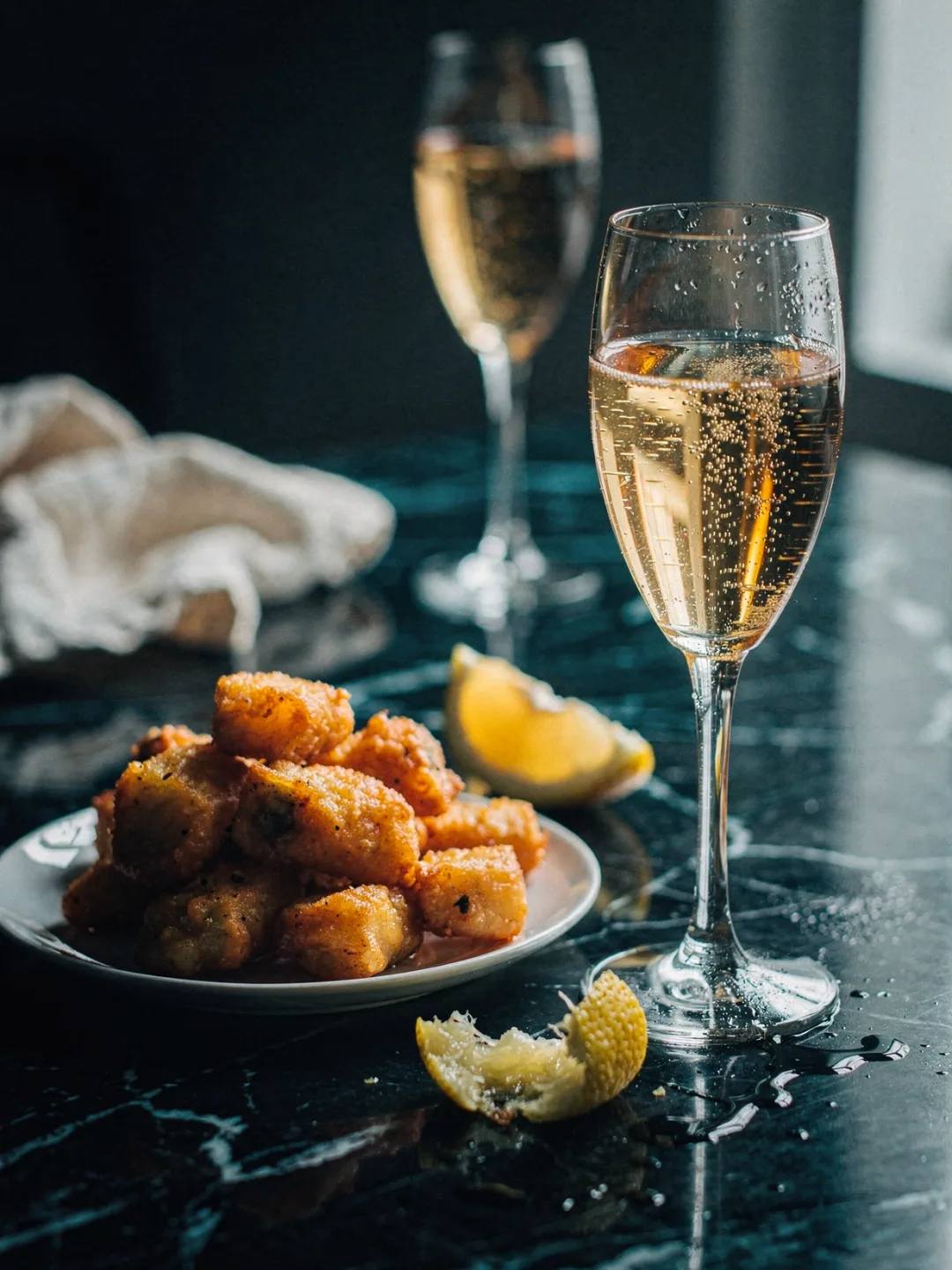
Carbonation intensifies the cleansing effect even further, because the bubbles actually break up the fatty film. That's why dry sparkling wine or Champagne is considered one of the most reliable partners for fried and fat-rich food of all kinds, from fries to cheese pastries to fried bacon. The combination of high acidity and fine perlage creates an almost fresh start in the mouth after every bite.
Anyone without sparkling wine on hand will find the same effect in still white wines with pronounced acidity, for instance from cooler wine regions. What matters is less the origin than the style: cool-picked grapes, little oak aging, a wine that stays fresh and direct. This very crispness is what makes it a reliable counterpart to fat on the plate.
When Acidity Goes Too Far
As reliable as this rule is, it has a limit. When a very acidic wine meets a dish that already thrives on vinegar, lemon, or tomato, both acidities add up instead of complementing each other, and the wine ends up tasting thin and sharp rather than fresh. In such cases, a wine with a bit more age or a trace of residual sweetness helps round out the overall impression again.
The rule of thumb remains: acidity against fat works almost always, acidity against acidity almost never. Anyone who sticks to this one distinction avoids the most common disappointment at a table where everything was otherwise supposed to be done right.
Acidity and Fat, Briefly Summarized
Fat dulls flavor. Acidity wakes it back up. That's the whole rule in two sentences. Still, it's worth looking at a few concrete cases. Fried food calls for plenty of acidity, ideally paired with carbonation. A rich cream sauce needs a taut, cool white wine. Roasted goose or duck likes a touch of sweetness alongside the acidity. Buttery pastries can handle almost any dry sparkling wine. Oily fish like mackerel practically calls out for a splash of citrus in the glass.
The opposite happens too. A very lean salad with little oil can't handle a wine that's too acidic, otherwise everything together tastes sharp and thin. A mild soup without much fat calls for calm in the glass rather than attack. As a memory aid, a glance at the plate is enough: if it glistens with fat, the wine can be assertive. If it looks dry and lean, the wine can afford to stay more restrained. This one rule is that simple to apply in practice, with no tables or point systems needed.
Anyone without time for analysis can orient themselves around a single bottle: dry sparkling wine. It pairs with a surprisingly wide range of fatty dishes, from fries to tempura, almost always reliably. No other wine style covers so many fat-rich situations at once. That makes it the safest backup wine for an evening with unfamiliar dishes.