Red Wine and Meat
Tannin Meets Protein
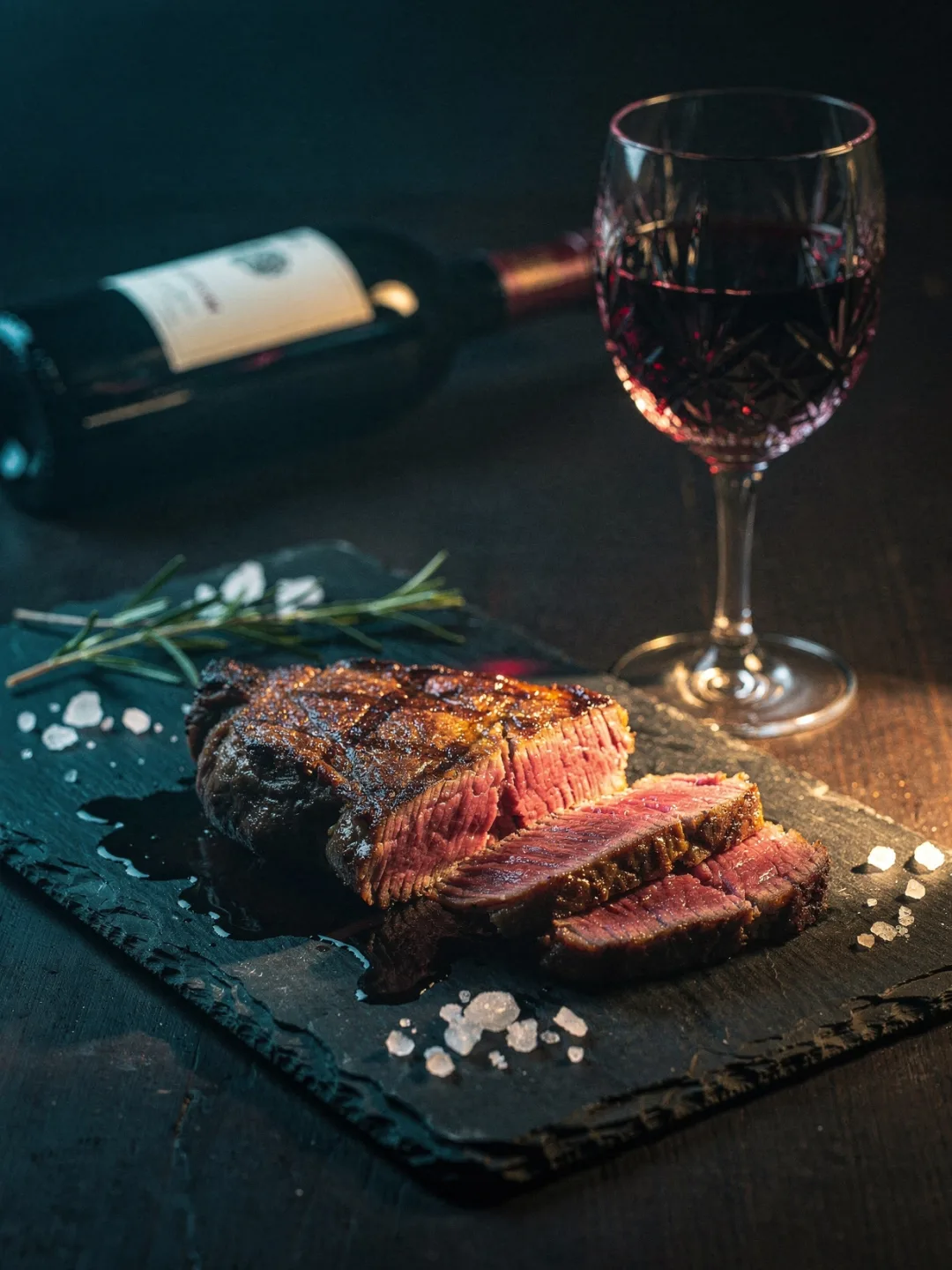
Red wine and red meat are considered the safest pairing of all, and there's actually a simple chemical reason behind it: tannin binds to protein. That's exactly what explains why one and the same wine can taste soft with a steak and suddenly turn bitter and metallic with a fish fillet.
What Tannin Does in the Mouth
Tannin comes from the skins, seeds, and sometimes the oak barrel of the wine, and it's responsible for the furry, slightly drying feeling on the tongue and gums known as astringency. This feeling occurs because tannin binds to proteins in the saliva that would otherwise keep the mouth smooth, reducing their lubricating ability. In a very tannic young wine, this can feel almost like sandpaper.
When the same wine meets a piece of meat, the equation changes completely. The protein in the meat binds part of the tannin before it ever reaches the proteins in your own saliva, and the wine ends up tasting rounder and softer than it ever could on its own. Fat in the meat intensifies this effect even further, because it additionally shields the tongue from the astringency. A well-marbled steak noticeably tames a young Cabernet Sauvignon.
Why Tannin Fails With Fish
Lean, pale fish lacks exactly the antidote it needs. Without much fat and without firm muscle fibre, tannin remains almost unchecked, and a second effect compounds the problem: iron, present in every wine, reacts with the polyunsaturated fatty acids in fish and produces a metallic, faintly fishy aftertaste. Red wine carries considerably more iron on average than white wine, which is why a robust red often tastes unpleasantly bitter and metallic alongside steamed pollock, even though the same wine tastes perfectly fine on its own.
The solution isn't to banish red wine from the table altogether, but to choose low-tannin reds, such as a young, cool-climate Pinot Noir. Wines like this bring fruit flavours and some acidity without the troublesome astringent grip. With richer, oilier fish like tuna or salmon, this approach often works surprisingly well.
Preparation Matters Too
How a piece of meat is cooked significantly changes how much tannin it can handle. A quickly seared, rare fillet calls for less tannin than a slow-braised goulash, because braising breaks down extra fat and connective tissue that can themselves bind tannin. A very powerful, young barrique-aged wine therefore suits a juicy grilled rump steak better than a delicate veal medallion.
Cooking time and the wine's own maturity work together too. The longer a red wine has aged in barrel and bottle, the more its tannins have already combined into larger, softer molecules that feel less aggressive. A twenty-year-old Bordeaux often feels gentler than a two-year-old wine from the same vineyard, even though both share the same underlying structure.
The Grilling Rule in Short
For everyday use, one simple rule suffices: the more fat and protein on the plate, the more tannin the glass can handle. A lean chicken breast tolerates far less tannin than a well-marbled rib-eye, even if both are grilled. Once you've internalised this single rule of thumb, there's hardly anything else to remember when pairing wine with meat.
Conversely, when in doubt, reach for a medium-bodied wine rather than an extreme one. A Merlot or a mature Tempranillo forgives more misjudgement than a very young, very tannic wine, because its structure is naturally a bit more forgiving. That leaves room for surprises at the table without the pairing falling apart.
Tannin and Protein in a Nutshell
Tannin needs protein and fat, otherwise it comes across as harsh. This one formula explains almost every experience at the table. Steak reliably tames tannin. Lean poultry barely does. Fish actually makes the harshness worse, because of the iron in wine. A mature wine needs less help, since its tannin has already softened. A young wine needs more fat on the plate just to shine at all.
A quick test helps when in doubt. Take a sip of wine on its own and pay attention to the feeling in your mouth. If everything puckers up, the plate is lacking fat. If your mouth stays smooth, the pairing already works. Once you've done this test consciously a single time, you won't need a chart again. The feeling in your own mouth is more honest than any rule of thumb from a book.
The sauce matters too, just as much as the meat itself. A pepper sauce can handle more tannin than a pale cream sauce on the same steak. A sweet-and-sour marinade can even shift the choice toward white wine. Still, the basic rule holds: more fat and protein allow for more tannin, regardless of the exact preparation.