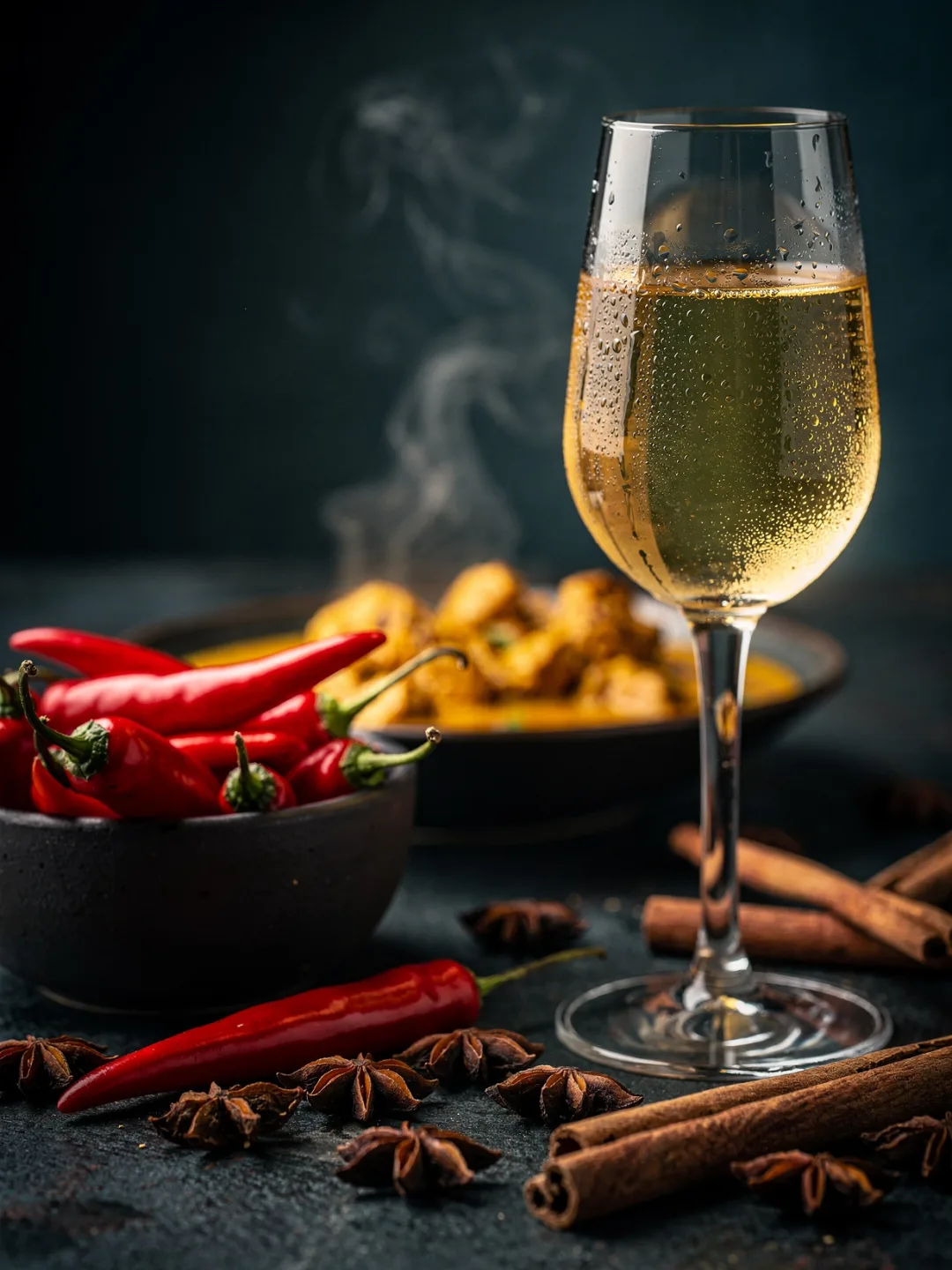
When It Burns
Heat and Spice
Spicy food is considered the trickiest case in all of wine pairing, because heat isn't a taste at all — it's a pain signal. That's exactly why it reacts to wine differently than sweetness, acidity or salt do, and the usual rules only apply to a limited extent here.
Why Heat Isn't a Flavour
The burning sensation from chilli comes from capsaicin, a compound that activates the same nerve receptors as actual heat, without the temperature in your mouth actually rising. Capsaicin dissolves readily in alcohol, so a high-alcohol wine actually intensifies the burning sensation rather than soothing it. A powerful, high-alcohol red wine paired with a spicy curry will noticeably make the dish hotter, not milder.
Tannin makes this problem even worse, because astringency is felt more intensely on irritated mucous membranes than on calm ones. A young, tannic red wine paired with spicy food therefore often feels like it's fanning the flames of the heat even further. For both reasons: powerful, tannic red wines and spicy food rarely get along.
What Actually Helps
Cool, slightly sweet white wines work almost every time, because residual sugar noticeably dampens the pain response, much like milk or yoghurt does with very spicy food. An off-dry Riesling or an aromatic Gewürztraminer also brings fruit and floral notes that pair well with many Asian spices like ginger, lemongrass or coriander, without amplifying the heat.
Lower alcohol content helps directly too, since less alcohol dissolves less capsaicin. A light wine at around eleven percent alcohol feels noticeably milder with a spicy dish than a wine at fourteen percent, even if the two otherwise taste similar. So if you're eating spicy food, it pays to check the alcohol level on the label specifically.
Spices Without Heat
Not every spice burns, and many aromatic cuisines work with fragrance rather than heat: cumin, turmeric, cinnamon or star anise add complex, often faintly sweet notes without irritating pain receptors at all. Wines can afford to be much bolder with dishes like these — a spicy Syrah alongside a lamb stew seasoned with cumin, for example — because here there's no heat to tame, just aromas that need to find common ground.
The key is telling the two apart: a dish can be heavily spiced and still mild, or barely spiced and still fiery hot. Anyone who only reads the ingredient list instead of actually tasting the dish will easily end up choosing the wrong wine.
A Region as a Role Model
German and Austrian wine culture has had a ready answer to this problem for a long time, because Asian cuisine met native white wines there early on. Off-dry Riesling has long been considered one of the most reliable partners for Thai, Vietnamese and Sichuan cuisine, because it combines sweetness, acidity and low alcohol all in a single glass. That exact combination pulls all three levers at once: sweetness against the heat, acidity against often oily sauces, low alcohol against the burn.
If you don't have a German Riesling on hand, you'll find similar qualities in many cool-climate, off-dry white wines around the world. What matters is the combination of traits, not the origin: some sweetness, noticeable acidity, moderate alcohol. Together, these three beat almost any level of heat.
Heat, Briefly Explained
Heat is pain, not flavour. Alcohol makes it worse, not better. Sweetness reliably eases it. Chilling helps too — a well-chilled wine feels milder than a warm one. Tannin has no place in the glass at all when the food is spicy. An off-dry Riesling beats almost any spicy sauce in the world.
If you don't care for Riesling, simply look for the same three traits in another wine: some sweetness, noticeable acidity, low alcohol. This combination exists in many countries, under many names, from many grape varieties. The name on the bottle matters less than these three qualities combined.
One last practical tip: when in doubt, lean sweeter rather than drier. A wine that's too sweet will at worst seem harmless next to spicy food. A wine that's too dry and too high in alcohol, on the other hand, will noticeably intensify the burn. This small precaution guards against the bigger mistake.