Staying Delicate
Fish and Seafood
Fish and seafood are considered white wine's domain, and there's a clear reason for that: delicate flavours need an equally delicate partner that accompanies rather than dominates. But the rule has more exceptions than its reputation would suggest.
Why Red Wine Often Fails
Fish contains polyunsaturated fatty acids that react with the iron in wine, producing a metallic, fishy aftertaste that doesn't occur with meat. Red wine carries considerably more iron on average than white wine, plus usually more tannin, whose astringency further disrupts the delicate flesh of fish. Together, these two effects explain why a powerful red wine quickly turns unpleasant next to steamed pollock or pan-fried plaice.
Exceptions are rich, meaty fish like tuna or salmon, whose own fat content and firm structure can genuinely handle a light, low-tannin red. A chilled, young Pinot Noir or a light Provençal rosé often pairs surprisingly well with grilled tuna, because the weight and fat content are closer together here than you might first think.
Mussels, Oysters and the Acidity Question
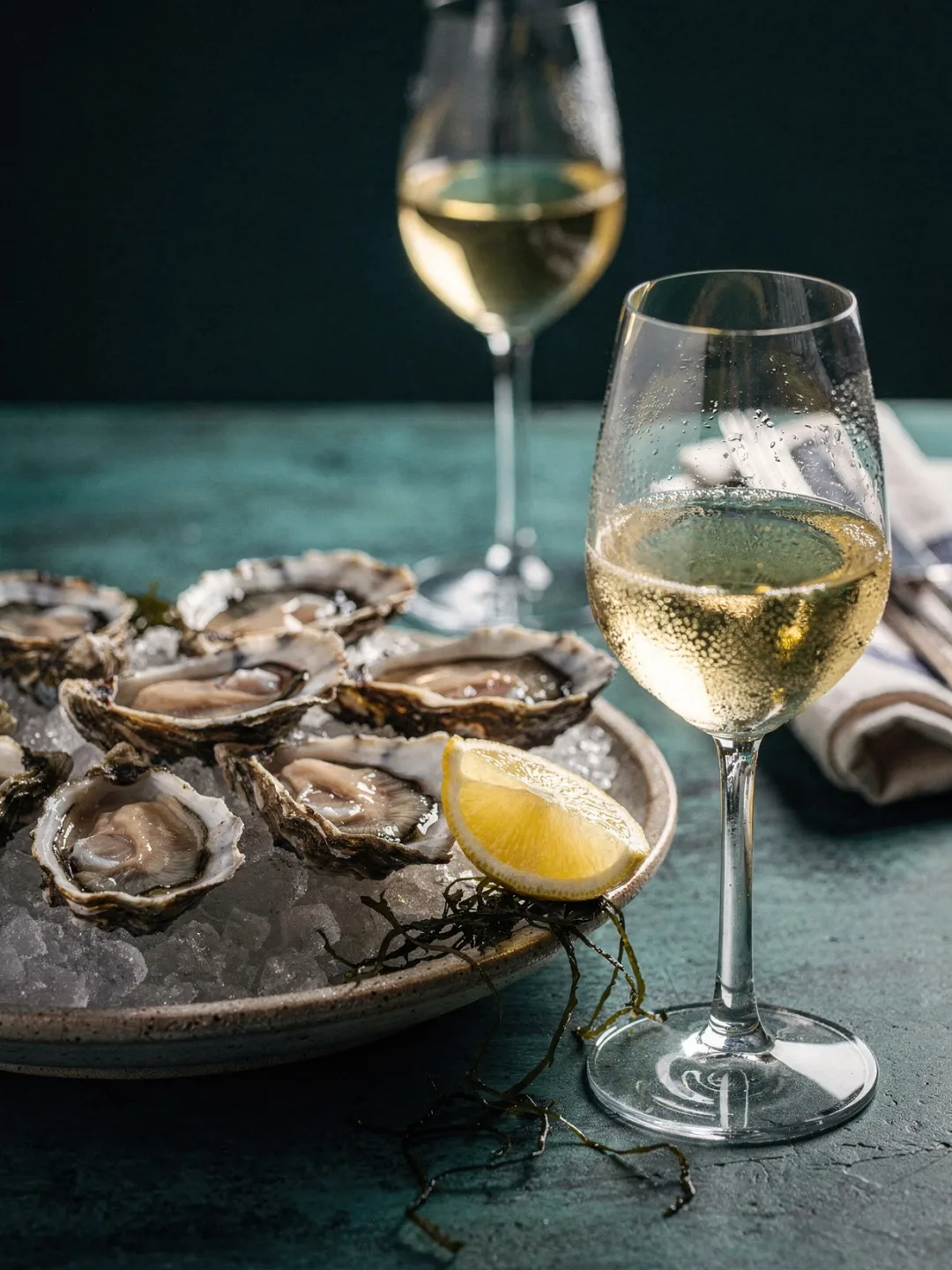
Raw oysters and mussels bring an intense, briny saltiness that calls for a very dry, very high-acid white wine. A young Muscadet or a crisp Chablis alongside raw oysters feels almost like an extension of their freshness rather than something layered on top. Too much fruit or residual sweetness, on the other hand, destroys this effect instantly and makes the oyster taste artificial.
Cooked mussels, say in a white wine broth with herbs, open up the range again a little, since cooking binds part of the raw saltiness. Here the wine can be a bit rounder and less severe, as long as it retains its basic freshness. A Sauvignon Blanc with its green, herbaceous notes suits this particularly well, since it picks up directly on the aromatics of the broth.
Richer, Fattier Fish
Salmon, mackerel and herring contain considerably more fat than plaice or pollock, and that fat fundamentally changes which wine suits them best. A wine with noticeable acidity still cuts through the fat here, but it can also afford a bit more body than it would with lean fish, otherwise the balance tips too far in the fish's favour. A full-bodied Chardonnay with moderate oak ageing therefore often suits pan-fried salmon better than a very lean, unoaked white wine.
Smoked fish calls for yet another answer of its own, because smoke brings a bitter, sometimes faintly sweet note that handles extra acidity, or even a touch of residual sugar, quite well. A dry to off-dry Riesling therefore traditionally pairs reliably with smoked salmon, since it combines acidity and fruit in a single glass without overwhelming the delicate smoky notes.
Seafood in Spicy Sauces
Prawns, squid and crab are often served in richly spiced, sometimes hot sauces, as in Thai or Mexican cuisine, and here the rules of heat apply as well: cool, slightly sweet, low alcohol. An aromatic Riesling or a dry Gewürztraminer kills two birds with one stone here, suiting both the delicacy of the seafood and the spiciness of the sauce.
If you're unsure, orient yourself with seafood using a simple sequence: first assess the weight of the fish itself, lean or fatty, then the preparation method, raw, steamed, fried or smoked, and only at the end the sauce. Thinking in this order leads you astray far less often than looking only at the general type of fish.
Fish Wine Pairing, Summed Up
Lean and raw calls for acidity and chill. Fatty and cooked allows more body, even a touch of red wine. Smoke can take a hint of sweetness. Mussels and oysters want pure, dry white wine with no distractions. Spicy sauces bring the rules from station six back into play.
As a reserve wine for almost any fish, a simple, dry white wine with noticeable but not aggressive acidity is the safe bet. It rarely fails and often shines, even if it isn't the best conceivable choice for every single fish. Anyone who cooks fish often will learn the finer points over time, naturally.
A look at the color of the fish flesh also helps: the paler the flesh, the more restrained the wine can stay. The darker and fattier, as with tuna or salmon, the more body the glass can handle. This rule of thumb works surprisingly reliably, even with unfamiliar fish species.
One last memory aid: pale stays delicate. Dark can be bold. Raw stays cold and acidic. Cooked can be warmer and rounder.