Three Opponents
Sweetness, Salt and Bitterness
Three basic tastes cause most of the surprises when paired with wine: sweetness, salt and bitterness. Understanding how they reinforce or soften each other helps you avoid the most common disappointments with a cheese board or dessert plate.
The Basic Rule of Sweetness
A wine must be at least as sweet as the dish it's paired with, or it will taste sour and thin by comparison, even if it isn't actually either of those things. Taste a dry wine right after a slice of cake and it will seem almost vinegary at first, because your tongue has calibrated itself to the sugar in the cake. This effect isn't imagined — it can be reliably triggered in virtually anyone.
This gives us one of the few truly fixed rules in all of pairing: the wine must be sweeter than the food, never the other way around. A medium-dry wine paired with a very sweet dessert therefore almost always disappoints, while the same wine can shine alongside a lightly sweetened fruit salad. Sweetness in the glass should be thought of as relative to the plate, not absolute.
Salt as the Counterweight to Bitterness
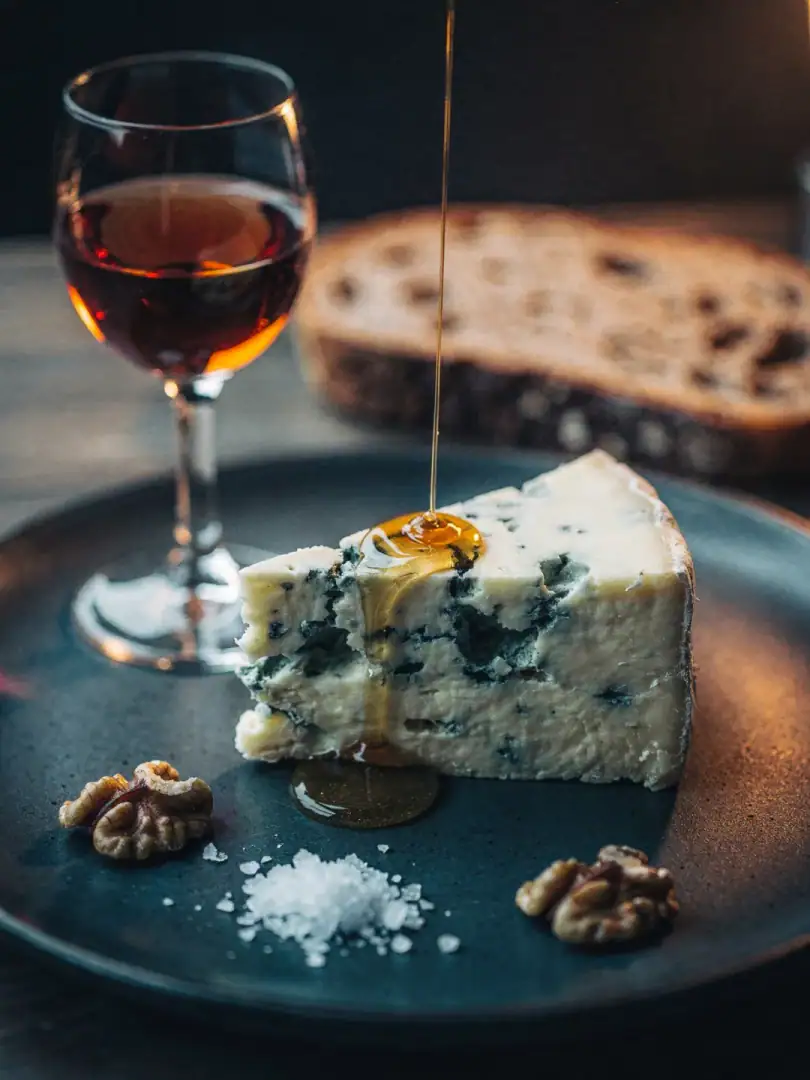
Salt tames bitterness and astringency in a way that surprises many people. A highly tannic red wine that seems almost harsh on its own can suddenly taste round and harmonious next to a salty, aged cheese, because the salt simply masks part of the perceived bitterness. For the same reason, blue cheese is traditionally paired not with red wine but with sweet wine: its intense saltiness demands a strong counterweight, and sweetness delivers that better than tannin ever could.
This knowledge helps with savoury dishes too. A well-salted soup or a slice of smoked salmon can soften even a young, angular white wine, because the salt rounds out the wine's acidity without masking it. So if you want to rescue a wine that's a touch too acidic, reach for a pinch of salt on the plate rather than more sugar.
Bitterness as the Trickiest Partner
Bitterness is the most awkward of the three tastes when it comes to wine pairing, because two bitter elements in the mouth rarely cancel each other out — they usually reinforce one another and become unpleasant. Dishes with strong natural bitterness, such as artichokes, Brussels sprouts or radicchio, tip almost any dry wine off balance, making it taste harsher and more metallic than it really is.
One trick still helps: fat and sweetness within the dish itself, say from butter, honey or crisped bacon, bind part of the bitterness right there on the plate before the wine even comes into play. Brussels sprouts sautéed in olive oil with Parmesan can therefore handle far more wine than the same sprouts served raw or simply steamed.
Thinking of All Three Together
In practice, sweetness, salt and bitterness rarely appear alone — they mix and recombine in almost every dish. An Asian sauce can be sweet, salty and slightly bitter from roasted notes all at once, and the right wine has to respond to all three elements simultaneously. This is exactly why some textbook recommendations feel oddly off at a real table: they address only one component, even though the dish brings three.
As a rule of thumb: sweet beats sour, salt beats bitter, and combining both often gives you more leeway than the individual rules would suggest. If you're unsure, lean toward a wine with a touch of residual sweetness rather than a very dry one, since sweetness is easier to balance in the mouth than its absence.
The Three Rules in Short, for On the Go
Sweet always beats sour. Just remember this one sentence. A wine must be sweeter than the dessert, never the other way around. With cheese, the opposite is often true: here, salt helps more than sweetness. Blue cheese wants a sweet wine. Hard cheese can handle a dry red just fine. Bitter vegetables don't really want any wine at all if left raw. A little fat on the plate rescues almost any bitter situation.
If you're unsure, pay attention to your tongue right after the last bite. If the wine then tastes thin, it wasn't sweet enough. If it tastes harsh, the plate was missing salt or fat. This small check replaces any textbook. It costs nothing more than one extra sip and a bit of attention.
The order of things on the plate matters too. Salty first, sweet after — that's the safest order for the tongue. Reverse that order and you'll need noticeably more sweetness in the glass to achieve the same effect. A simple trick, then, that often matters more than the choice of bottle itself.