Europe's vines are dying
The Phylloxera Catastrophe
No event hit European viticulture harder than phylloxera. A tiny, barely visible louse from North America destroyed most of Europe's vineyards within a few decades. It forced the entire industry to start over from almost nothing.
An invisible immigrant
In the 1850s, British botanists brought American vines to Europe purely out of a passion for collecting, with no idea of the consequences this would have. Unnoticed, phylloxera, a tiny insect, traveled along on their roots. American vines had evolved alongside it over a long period and were therefore largely resistant.
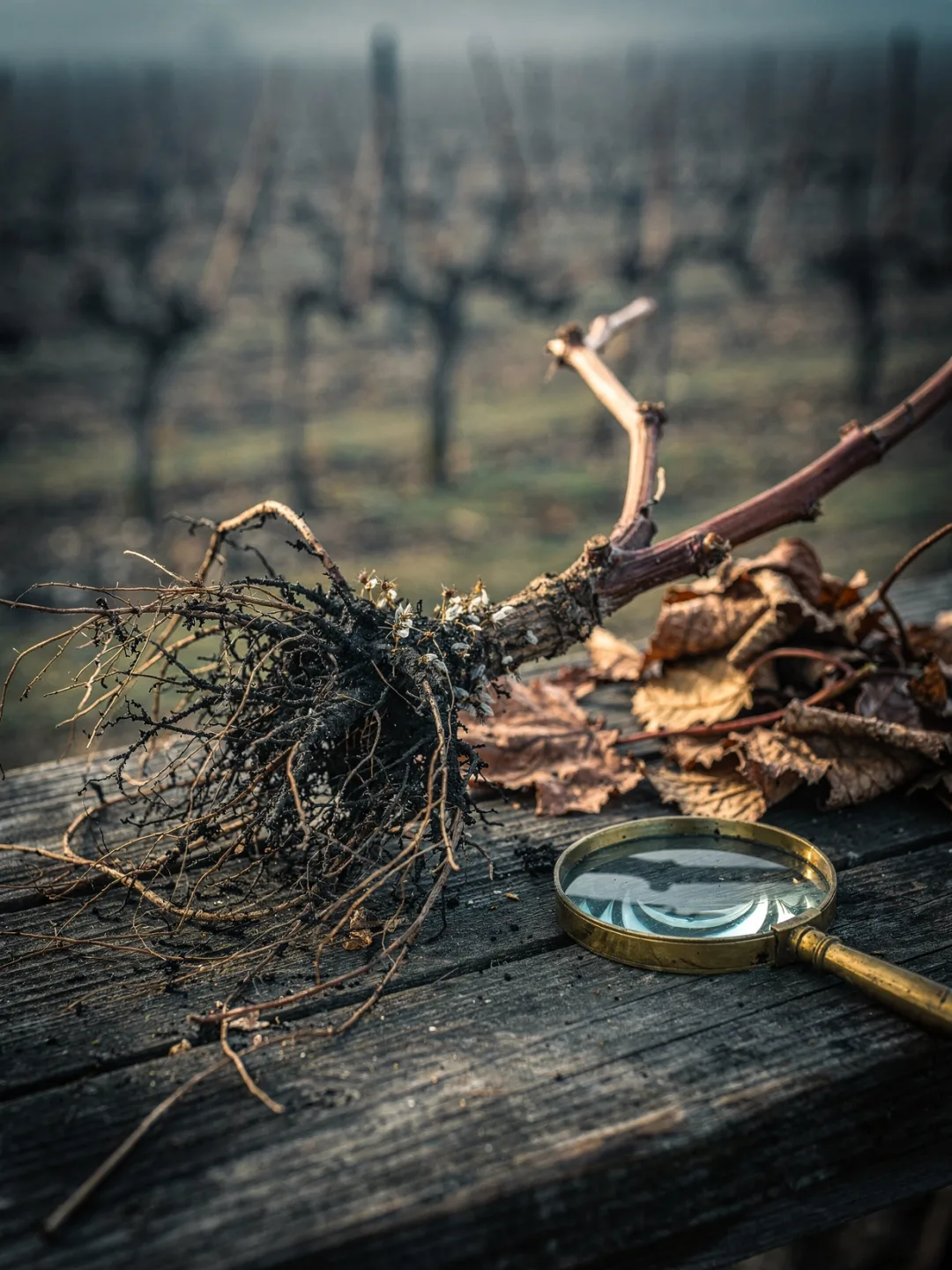
European vines of the species Vitis vinifera had never before come into contact with this pest and had no natural defenses against it whatsoever. The louse attached itself to the roots, fed there, and opened wounds through which fungi could additionally enter. Within a few years, an infested vine would wither and die, without winegrowers initially understanding where this sudden death was even coming from. From the outside, an infested vine often still looked healthy, while the real disaster was already unfolding invisibly beneath the soil. For this reason, the disease was long considered mysterious and almost uncanny. Only microscopic examination of the roots finally brought the tiny louse itself to light, named by scientists Phylloxera vastatrix, the devastator of leaves and roots.
1863: The first vines die
In 1863, winegrowers in the southern French Rhône region and in Languedoc first noticed vines weakening and dying for inexplicable reasons. From there, the problem spread rapidly across large parts of France in the following years. It soon reached other countries in Europe too, from Germany to Italy, Spain, and Portugal.
Winegrowers and scientists were initially at a loss over the phenomenon. They tried all manner of countermeasures, from flooding the vineyards to chemicals that had barely any effect. Estimates suggest that a substantial share of France's vineyard area fell victim to phylloxera by the 1880s. Some regions lost almost their entire historic vine stock within a few decades. Whole villages that had lived off wine sales for centuries fell into economic hardship. Many winegrowing families moved to the cities during this period, because their livelihood was literally rotting away beneath the soil.
Salvation comes from America
The solution to the problem lay, of all places, where it had originated. From around 1870, American scientists proposed grafting fine European vine cuttings onto the roots of resistant American rootstocks, instead of continuing to search for a poison against the louse. The American root remained resistant, while above ground the familiar European grape variety continued to grow and ripen.
This method spread across Europe in the 1880s and 1890s. Many tradition-minded winegrowers initially resisted it, fearing it would change the taste of the wine. In the end, however, there was hardly any alternative: anyone who wanted to save their vineyard had to grub it up and replant it with grafted vines, a process that plunged entire regions into economic hardship for years.
What the catastrophe left behind
To this day, almost all of Europe's vineyards stand on American rootstock, invisible beneath the soil, while classic varieties such as Riesling or Cabernet Sauvignon continue to grow above ground. Only a very few, mostly sandy or isolated sites were spared by phylloxera, because the insect can barely move through pure sand. These sites still carry ungrafted, own-rooted vines to this day.
The crisis also permanently changed the composition of some wine regions. After grubbing up their vineyards, some winegrowers switched to higher-yielding or easier-to-tend varieties instead of replanting what had been there before. Out of this hardship, new fungus-resistant crossings such as the grape variety Regent were later developed. They are a late, indirect echo of the crisis that once brought European viticulture to the brink of ruin. Wine from own-rooted vines that have never been grafted is considered a rarity among connoisseurs today and is marketed specifically as such, because it is seen as the last direct link to the vines that existed before the catastrophe.